Auchenberg: AI native founders are replacing engineering teams with agents
The Death of Artisanal Software and the Rise of the AI Native Founder
We are witnessing a fundamental shift in how companies are built, transitioning from a world where humans wrote 80% of code to one where 80% is generated by models. This isn't just a technical evolution; it's an existential change for the startup ecosystem. As a former operator at Microsoft and Stripe, I’ve seen the transition from hand-crafted "artisanal" software to what is now becoming "mass-produced" software. For the first time since the 1960s, the capabilities we once only dreamed of in computer science are becoming reality through Large Language Models.
The barrier to entry for prototyping has vanished. We are now in the era of "vibe coding," where a founder with a clear vision can iterate faster than a traditional engineering team ever could. This creates a new expectation in the venture capital world. If you show up to a pitch for a pre-seed or seed round without a working prototype, you are sending a signal that you haven't embraced the current paradigm. AI native founders are prioritizing building over deck-perfecting, and those who spend their nights vibe coding are the ones winning the market.
The New Economics of Capital Efficiency and Distribution
In the previous generation of startups, a seed round was essentially a hiring mandate. You raised a few million dollars to hire five engineers and sat in a basement for nine months to ship a product. Today, the AI native playbook is radically different. We are seeing founders hire a single engineer and then spend their remaining budget on "fleets of agents," tokens, and sophisticated workflows. The cost of building has collapsed, leading to a massive reallocation of capital toward distribution, brand, and marketing.
This capital efficiency is creating a competitive environment where speed is the primary weapon. One of the most striking pitches I've seen recently featured a founding team comprised of an engineering manager and five "Devins" from Cognition AI. For roughly $2,500 a month, they were doing the work that would have previously cost hundreds of thousands in payroll. This shift forces us to rethink what a "company" actually looks like. If the cost of the "act of building" goes to near zero, then value must be found elsewhere.
Defensibility in a World of Carbon-Copy Software
If an agent can look at a competitor’s website and replicate a feature in an afternoon, where does defensibility come from? The answer lies in the "good old moats" of the 2010s: distribution, data, taste, and brand. To survive, founders must become subject matter experts who own the holistic workflow of a problem. A customer buys Linear not because they can't find another issue tracker, but because the team at Linear has the best "taste" and expertise in how project management should actually work.
Owning the workflow is also the only way to build a data moat. By facilitating the full journey of solving a problem, you collect the specific reinforcement learning data needed to train agents that are better than generic models. A generic AI won't know the nuances of a specific accounting operation or how a venture capitalist reviews a deal. If you don't own the workflow, you can't collect the data, and if you can't collect the data, you can't build a specialized agentic system. This is where the next generation of giants will be built.
Agent Experience is the New Developer Experience
We are moving beyond Customer Experience (CX) and Developer Experience (DX) into the era of Agent Experience (AX). As startups increasingly use tools like Lovable, Cursor, and Replit to build their products, the underlying infrastructure must adapt. These "vibe coding" tools are not just toys; they are the new primary users of APIs.
Take Resend as an example. When a user asks Lovable to build an email flow, the agent recommends Resend. This creates a massive growth loop where the GDP of a business is directly correlated to the GDP of vibe coding. Infrastructure providers now need to treat agents as a first-class client type. This means optimizing APIs for agent consumption, much like we once optimized web experiences for mobile phones. My former team at Stripe is already doing this with specialized servers that agents can talk to directly. If you aren't optimizing for agents, you are invisible to the most productive builders in the market.
Bridging the Atlantic Gap in Tech Ambition
Having spent decades in both Copenhagen and New York, the cultural divide between European and American tech ecosystems remains stark. In Denmark, there is often a "tall poppy" syndrome where success is defined by a stable middle-management role. While this has improved, the US still holds a significant lead in celebrating risk and taking "big swings." Europe has traditionally used American primitives to build vertical SaaS, but the next decade offers an opportunity for Europe to build its own sovereign infrastructure and cloud primitives in a new geopolitical reality.
However, for a European founder to truly scale, they must adopt a global mindset early. Expanding from Denmark to Germany isn't a big swing; the real market is the US. New York City has emerged as the ideal landing spot for these founders. It is the second-largest tech ecosystem in the world and offers a time zone that allows for seamless collaboration with engineering teams back in Lisbon, Stockholm, or Copenhagen. If you want to build a foundational company, you need to be where your customers are, and for enterprise tech and AI, that is increasingly New York.
Inside the AlleyCorp Incubation Machine
At AlleyCorp, we don't just wait for the right founder to walk through the door; we build the companies we want to see. Our incubation process is born from operational conviction. If we see a tangible problem in healthcare, robotics, or AI that nobody is solving correctly, we put a team together and lead as the interim CEO. This allows us to lean into our experience as former operators to de-risk the earliest stages of company building.
A prime example is Radical AI. We saw a massive opportunity at the intersection of material science and AI, incubated the team, and a year later they raised $60 million to build foundational models for new materials. This model works because we have an in-house engineering team that acts as an execution capacity for our portfolio. We aren't just writing checks; we are building the machine that builds the companies. In an agentic world, this ability to rapidly prototype and validate ideas is the ultimate competitive advantage.
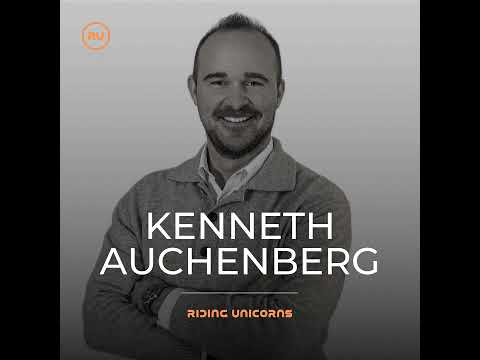
Building, Backing & Scaling in an AI-Native World with Kenneth Auchenberg, Partner @ AlleyCorp
WatchThe Riding Unicorns Podcast // 47:27

A podcast featuring the world's best minds from venture and startups. Hosted by James Pringle & Hector Mason.