Bajwa warns AI labs will devour shortsighted startups during Dev Day
The Art of Early Stage Investing in a Liquid Market
Akash Bajwa, Principal at Earlybird Venture Capital, views the current venture landscape as a collision between decades of institutional wisdom and a frantic new reality. Earlybird Venture Capital, founded in 1997, prides itself on being the longest-standing early-stage fund in Europe. This longevity provides a unique vantage point: the ability to analogize the current AI wave with the mobile and cloud shifts of previous decades. However, the old playbooks are being rewritten in real-time. The "art" of investing now requires a delicate balance between rigorous data-driven sourcing and a qualitative, almost artisanal assessment of founders who are breaking all previous patterns.
The shift is visceral. In the Cloud SaaS era, experience was the ultimate currency. Investors sought founders in their 30s and 40s who understood the labyrinthine systems of record like ERP and CRM. Today, the premium has shifted toward neuroplasticity. Young, scrappy builders who have no prior "SaaS baggage" are often better equipped to build AI-native architectures because they don't have to unlearn the legacy form factors of the last twenty years. This creates a cognitive dissonance for veteran operators who must now compete with founders learning at a velocity that traditional corporate structures simply cannot match.
Velocity Over Credentials in the Founder Stack
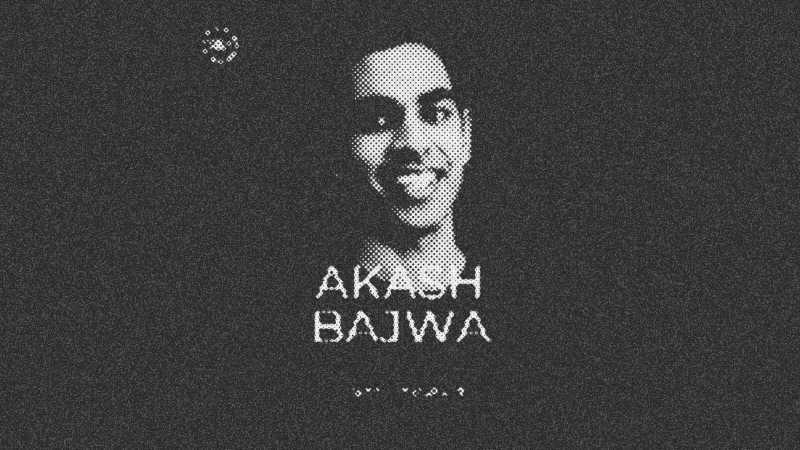
When evaluating the next generation of outlier founders, Akash Bajwa emphasizes "learning rate" over CV credentials. In a market where ChatGPT reached a billion monthly users in three years, the window of opportunity for slow, methodical validation has slammed shut. Velocity—defined as speed with a clear direction toward demand—is the primary indicator of success. The teams that win are those uncovering customer insights and iterating on their wedge products faster than the competition, often revising their core assumptions on a weekly basis.
This need for speed does not negate the value of domain expertise, particularly in vertical AI. For startups targeting offline industries—like Briefcase, which focuses on the accounting sector—the ability to speak the language of the buyer remains critical. However, the technical requirement for a CTO has evolved. It is no longer just about building a stable product; it is about being "close to the bare metal." Founders like those at Briefcase and Spatial succeed because they obsessively track the bleeding edge of research, such as new releases from DeepSeek, and understand how to apply those scientific breakthroughs to specific business workflows immediately.
The Infrastructure Trap and Ephemeral Pain Points
One of the most dangerous areas for modern investors is the infrastructure layer. Akash Bajwa identifies a recurring pattern he calls the "Red Herring" in AI investing. Many startups are building solutions for pain points that are temporary or ephemeral. A prime example is the recent fervor around vector databases. While pure-play vector databases saw massive initial growth, incumbents like MongoDB quickly integrated vector search capabilities, effectively bundling the startup's entire value proposition into an existing suite.
The "Red Wedding" of AI—where OpenAI or Anthropic release a feature that kills dozens of startups overnight—is now a recurring seasonal event. Startups building tiny middleware solutions, such as those aggregating Model Context Protocol (MCP) tools, are at high risk. If a problem is immediately adjacent to the core roadmap of a well-funded lab, that lab has every incentive to solve it. To survive, infrastructure companies must focus on areas that labs find dilutive or non-core, such as model-agnostic routing or highly specialized security frameworks that require deep enterprise trust beyond what a horizontal provider offers.
Vertical AI and the Battle for Pilot Conversion
The real opportunity for disruption lies in rethinking human-computer interaction at the application layer. The "Innovator's Dilemma" is particularly acute for incumbents who are reluctant to migrate their massive customer bases to new, AI-native UIs. While an incumbent might add a chatbot as a sidecar, a startup can build an entire experience around voice, dictation, or ambient assistance. This is why Earlybird Venture Capital backed Spatial, which tackles the 3D modality—a space where physics-aware worlds require scientific breakthroughs that horizontal labs haven't yet commoditized.
Defensibility in vertical AI comes from the engineering effort required to move a client from a pilot to full production. In high-stakes fields like legal or finance, the gap between 90% and 99% accuracy is the difference between a toy and a tool. Companies like Harvey or Leyra thrive not just because they have data, but because they have invested in the specific evals, guardrails, and prompt augmentation necessary for their vertical. Even when Anthropic announces finance-specific features, the sheer depth of vertical-specific AI engineering required to handle sensitive internal data warehouses often keeps specialized startups ahead of the horizontal giants.
Implications for the Future of Enterprise Software
We are moving toward an "agent economy" where software traffic will be increasingly redistributed from humans to agents. This shift demands a total redesign of product form factors. The winners will be those who nail "time to value" in one specific scope before earning the right to expand. Akash Bajwa points to the "Hollywood production" vs. "Lean Startup" methodology, firmly siding with the latter in the age of AI. Releasing a viral demo, as Cluey did, allows a team to build a community and a feedback loop that informs the roadmap in real-time, rather than building in a silo for years only to find the market has moved.
The future of venture capital in Europe depends on identifying these high-velocity teams early. As the asset class institutionalizes, the ability to marry data-driven sourcing with an intuitive understanding of founder-market fit will separate the longest-standing funds from the tourists. The objective remains the same: find the problem, build the solution, and ignite the market before the labs decide it’s their turn to play.
- Akash Bajwa
- 16%· people
- Earlybird Venture Capital
- 12%· companies
- Anthropic
- 8%· companies
- Briefcase
- 8%· companies
- Spatial
- 8%· companies
- Other topics
- 48%
AI, Infra vs Apps & Spotting Red Herrings with Akash Bajwa, Principal @ Earlybird
WatchThe Riding Unicorns Podcast // 47:16

A podcast featuring the world's best minds from venture and startups. Hosted by James Pringle & Hector Mason.