Passfort co-founders reveal how $150 million exit grew from a near-collapse
Meeting of the minds in the New Forest
The story of Passfort began not in a boardroom, but among the trees of the New Forest. Henry Irish and Donald Gillies met on the first day of the Entrepreneur First program, a high-pressure incubator designed to smash potential co-founders together and see if they stick. They were barely 21, brimming with the kind of raw intensity and academic success that often leads to friction when applied to the messy reality of business. As they carried a tree through the forest—a literal and metaphorical burden—they hashed out the early ideas for what would become a leader in financial compliance software. It was the classic startup trope: ideas scribbled on a napkin, later followed by a massive manifesto of an email from Donald that signaled the beginning of a decade-long commitment.
However, the early days were far from smooth. Both were "Type A" personalities with strong views and very different domains of expertise. Henry, the technical lead, and Donald, the commercial driver, faced a massive information asymmetry that frequently led to blowups. One such falling out was so severe just before their demo day that it required external reconciliation. They had to learn, and learn fast, that being liked is secondary to being respected. Trust isn't granted at the start of a partnership; it is earned through over-communication and the grit of surviving early disagreements. This foundation of mutual respect eventually transformed their relationship into one where they became each other's most trusted confidants.
The invisible struggle behind the growth curve
To the outside world, Passfort appeared to be a steady climb to its reported $150 million exit to Moody's Corporation. The reality was a grueling three-year flatline before the revenue ever began to hockey-stick. Between 2015 and 2018, the company wasn't a venture capital darling; it was the quiet underperformer that investors frequently compared to faster-growing peers. During this period, the founders faced a terrifying technical realization: they had built a "monolith." To scale, they had to sit in a cafe and admit they needed to rebuild the entire product architecture into microservices. This was a decision that cost precious time and capital, yet it was the only way to make the software configurable enough for the enterprise market.
This "trough of sorrow" is where most startups die. The reg-tech market didn't even have a name yet, and customers weren't budgeting for automated KYC (Know Your Customer) or AML (Anti-Money Laundering) tools. Henry and Donald were essentially educating the market while simultaneously rebuilding their own engine. They resisted the urge to burn cash to manufacture growth, opting instead to stay in the game and iterate. They understood a fundamental truth of entrepreneurship: you cannot skip the iterations. The learning cycle is the journey. By 2018, the product-market fit finally aligned with a maturing regulatory landscape, and the business began to capture the value they had spent three years architecting.
Surviving the COVID-19 crucible
Every startup faces a climax where the entire venture hangs by a thread. For Passfort, that moment arrived with the pandemic. Having just raised a series of funding and invested aggressively in expansion, the team suddenly saw sales cycles freeze. The founders were forced into a corner. They had to pivot from a growth-at-all-costs mindset to a path to profitability almost overnight. This wasn't just a strategic shift; it was a human one. They had to rescind offers to new hires who were days away from starting and ask their core team to take significant pay cuts in exchange for stock options.
This was the hardest moment of their professional lives. Henry and Donald chose radical transparency, treating their employees like adults and laying out the grim reality of the cash flow. They didn't try to sugarcoat the situation or hide behind "market conditions." This honesty unified the team. By focusing everyone on the single goal of reaching cash-flow break-even, they created an optionality that few startups possessed during the crisis. This resilience wasn't about luck; it was about the disciplined management of capital. They treated every dollar like it was their own, a philosophy that eventually made them attractive to a strategic acquirer like Moody's.
Life after the nine-figure exit
When the exit finally happened in 2021, the emotional outcome was more complex than a simple celebration. For Henry, the financial windfall was almost overwhelming, leading to a period of pretend-normality where his only major purchase was a pair of headphones. For Donald, who grew up without wealth, the exit was a life-affirming vindication of every academic and professional risk he had taken. Yet, both experienced the "post-exit void." Donald moved to Paris to study at Le Cordon Bleu, seeking a physical craft to counter the years spent behind a screen, while Henry found himself growing jealous of the founders he was angel investing in.
Today, Henry is back in the trenches with his new venture, Platformed, tackling the procurement bottlenecks he suffered through at Passfort. Donald has moved into property development and investment through his holding company, Fidra, seeking a different pace of value creation. Their relationship has evolved from stressed co-founders to genuine friends who can visit each other's homes without discussing sales targets. They have transitioned from the high-octane world of software to a more intentional phase of life, having learned that the exit isn't the finish line—it's just the moment you get to choose your next mountain.
The discipline of the long game
Reflecting on their decade together, the founders emphasize that work ethic and discipline consistently outperform raw talent. Henry warns against the trap of "external referencing"—the habit of comparing your internal mess to every other founder's curated LinkedIn success story. He argues that making active, conscious decisions about where you spend your energy is the only way to avoid being swept away by the default paths of the industry. Donald’s advice is even more pragmatic: size your VC’s check relative to their fund. If you are a small check for a massive fund, you are just an option, and those investors may veto an exit that would be life-changing for you but a rounding error for them.
Ultimately, the Passfort story is a testament to the power of staying in the game. By managing their cash conservatively—spending only about £5.7 million to reach the revenue levels that triggered a $150 million sale—they maintained control of their destiny. They didn't chase the "shiny object" status; they built a high-performance culture where the biggest draw for talent was the quality of the colleagues. In a world of hype and rapid burn, Henry and Donald proved that the most disruptive thing a founder can do is be disciplined, transparent, and relentlessly focused on the problem until the market finally catches up.
- Charlie Munger
- 7%· people
- Donald Gillies
- 7%· people
- Entrepreneur First
- 7%· companies
- Fidra
- 7%· companies
- Hector Mason
- 7%· people
- Other topics
- 64%
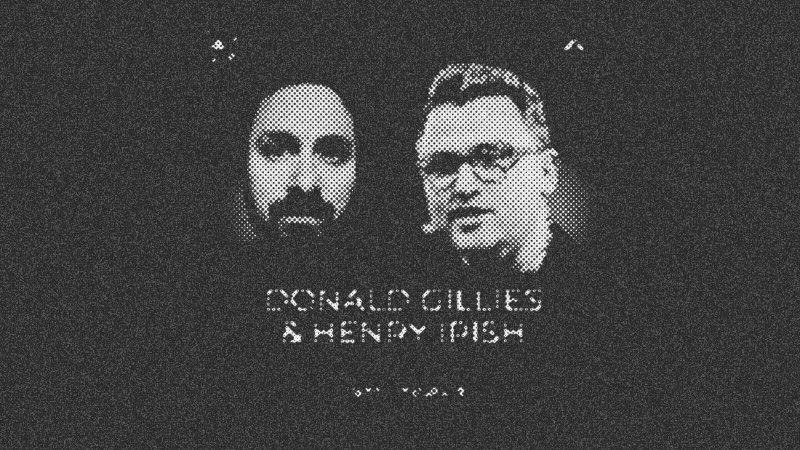
Henry Irish & Donald Gillies, Co-Founders @ Passfort (acquired by Moody's)
WatchThe Riding Unicorns Podcast // 46:05

A podcast featuring the world's best minds from venture and startups. Hosted by James Pringle & Hector Mason.