Meri Beckwith targets $80 billion clinical trial market with 'anti-CRO' model
The $80 Billion Incentive Misalignment Problem
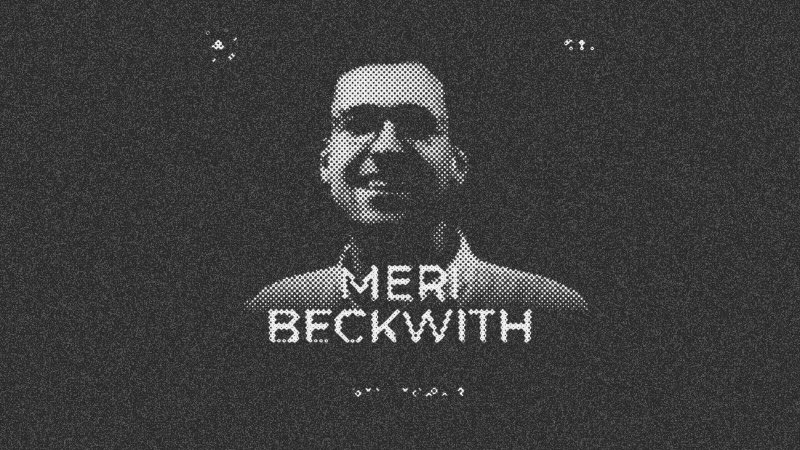
To understand the disruption Meri Beckwith is leading at Lindus Health, you have to look at the perverse incentives that have governed the life sciences industry since the early 1990s. The clinical trial space is dominated by Contract Research Organizations (CROs). These massive entities operate on a billable-hour model, much like traditional law firms or consultancies. While that might sound innocuous, the implications for drug development and patient health are devastating. In a model where revenue is tied to time spent, a CRO literally makes more money the worse a trial goes.
Delays, bureaucratic friction, and "change orders" aren't just inconveniences; they are profit centers. This creates a situation where the gatekeepers of medical progress are financially incentivized to move slowly. Beckwith identifies this as a fundamental moral and business failure. When a trial for an oncology drug is suspended or delayed, it isn't just a line item on a balance sheet—it’s a life-or-death scenario for patients waiting for treatment. Lindus Health was born from the realization that the only way to fix the industry was to abandon the CRO label entirely and build an "anti-CRO" that aligns its success with the speed and success of the trial itself.
From Venture Capital Side-lines to the Operator Arena
Transitioning from a Venture Capitalist to a Founder provides a unique vantage point on market disruption. Beckwith spent five years at Oxford Sciences Innovation (now Oxford Science Enterprises), watching from the sidelines as tech-bio founders struggled against the same brick walls. The observation was always the same: brilliant science was being throttled by outdated operational execution. However, the final catalyst wasn't a spreadsheet; it was personal experience.
Becoming a patient in several clinical trials—including a major COVID-19 vaccine trial—revealed a shocking lack of technological maturity. Beckwith describes a world where websites lacked SSL certificates and required Internet Explorer for sign-ups. When the lifetime value of a single patient in a trial is estimated between $50,000 and $100,000, the user experience should rival the most polished consumer apps. Instead, it was a fragmented mess. This gap between the financial stakes and the operational reality is where the biggest opportunities for disruption live. It’s about taking those VC insights and applying them with the granular, high-agency focus that only an operator can provide.
The Founder Mindset and the Myth of Satisfaction
One of the most candid reflections Beckwith shares is the inherent dissatisfaction that drives high-growth founders. There is a common misconception that success brings a sense of completion. In reality, the "highs" of winning a big contract or closing a funding round are quickly assimilated into the baseline. For the ambitious, the goalposts are constantly moving. This lack of satisfaction is a double-edged sword; it pushes the company to iterate and improve relentlessly, but it also risks burnout if not managed.
Building resilience in this environment isn't about ignoring the lows; it’s about smoothing out the emotional response to both wins and losses. If you lean too heavily into the dopamine hit of a win, you leave yourself vulnerable to an equal and opposite reaction when things go sideways. The most effective founders develop a steady-state mindset, treating every event as data rather than a verdict on their worth. This psychological stability is what allows a leader to maintain a long-term vision while the daily fires of a startup rage around them.
Actionable Practices for Disrupting Archaic Markets
For those looking to enter a regulated, "scary" market like clinical trials, the strategy is not to hire experts to solve the problem for you immediately. Beckwith argues for a "Do It Yourself First" approach. Founders must get an "okay" version of every function running—from marketing to regulatory affairs—before delegating it. If you don't understand the first principles of a role, you cannot hire effectively for it. You end up hiring for experience over motivation, which is a fatal mistake in the early stages of a startup.
In hiring, the "gut instinct" is often dismissed as unscientific, but it is actually the result of the brain processing thousands of subtle signals. Beckwith suggests a hybrid approach: use structured scorecards to filter for competence, then layer gut feeling on top to assess trust and motivation. Early-stage success depends on hiring "high-agency" individuals—people who don't just identify a problem but feel empowered to fix it without asking for permission. This cultural foundation is what enables Lindus Health to move radically faster than the $80 billion giants they are competing against.
Embracing the Outsider Advantage
There is a massive strategic advantage in being an outsider. In highly regulated industries, there is a tendency toward "blind precedent"—doing things a certain way simply because that’s how they’ve always been done. Experts often tell you that your ideas are impossible or that no one will trust a new entrant with something as critical as a clinical trial.
Beckwith’s advice is clear: speak to fewer experts and more customers. Experts are often too close to the existing system to see how it can be dismantled. Customers, on the other hand, are the ones feeling the pain of the status quo. If you can solve a customer’s problem—like cutting trial timelines or improving data quality—they won't care if you're an industry veteran or a first-time founder. Market disruption doesn't come from following the playbook; it comes from having the audacity to rewrite it from the ground up.
A Vision for Future Human Horizons
Reflecting on the nature of risk, Beckwith looks to the great explorers of the past, like Bartolomeu Dias. These individuals sailed into the unknown with horizons much wider than our own, often risking everything for discovery. Modern entrepreneurship is the closest we have to that age of exploration. Whether it’s reinventing clinical trials or pushing the boundaries of Agile methodology as John Boyd did for aerial combat, the goal is the same: further Humanity’s horizons.
The future of Lindus Health is not just about being a better service provider; it’s about making the entire life sciences market 10 to 100 times larger by removing the friction that holds it back. When clinical trials are faster and more reliable, more life-saving treatments reach the market. That is the ultimate impact-driven business model. The risk of trying something new is nothing compared to the risk of leaving the world’s medical progress in the hands of a broken system. Find the problem, build the solution, and ignite the market.
- Agile
- 7%· products
- Bartolomeu Dias
- 7%· people
- Creandum
- 7%· companies
- Firstminute Capital
- 7%· companies
- Hector Mason
- 7%· people
- Other topics
- 64%
Meri Beckwith, Co-Founder @ Lindus Health
WatchThe Riding Unicorns Podcast // 42:48

A podcast featuring the world's best minds from venture and startups. Hosted by James Pringle & Hector Mason.