Sokk says European banks sit on 19 trillion Euros of clunky investments
Dismantling the Box to Build the 10x Product
To build something truly disruptive, you have to stop looking for incremental improvements and start looking for structural failures. Martin Sokk, the co-founder and CEO of Lightyear, argues that the most common mistake in product management is the failure to truly understand the 'box' before trying to think outside of it. In the European financial landscape, that box is a cluttered, expensive, and archaic mess of systems built in the year 2000.
Building a 10x product isn't about a prettier UI; it’s about dismantling the entire operational stack. In the US, product management often leans toward marketing and the 'wow' effect. In Europe, it’s a game of operations. Success on this continent requires the stomach to dive into the unsexy infrastructure—the plumbing of finance—and rebuild it from the ground up. If you can take a process that costs ten dollars and make it cost ten cents, you haven't just improved a product; you’ve shifted the market's center of gravity.
The Lethal Trap of Second-Hand Customer Experience
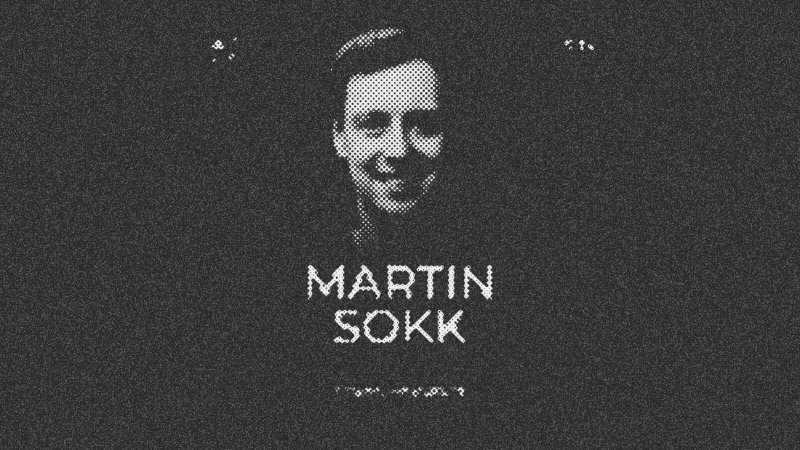
There is no substitute for the discomfort of a direct customer confrontation. Founders often hide behind research teams and synthesized reports, but Martin Sokk warns that second-hand experience is the death of innovation. You have to be the one asking the hard, uncomfortable questions. You have to be the one listening when a potential user tells you your 'baby' is useless because they already have a solution that works better.
That moment of dismantling is where the real answers live. Most people say they talk to customers, but few actually listen to the parts that hurt. True product discovery involves pitching to the most knowledgeable, skeptical people you can find—the influencers and experts who will tear your idea apart. If you can survive that, you’ve found a kernel of truth. If you can't, you've saved yourself years of building a solution for a problem that doesn't exist.
Challenging the 19 Trillion Euro Status Quo
The European retail investment market is a sleeping giant, paralyzed by inertia. While the US has seen over 60% of its population embrace investing, Europe languishes at less than 20%. The reason isn't a lack of capital—there is 19 trillion Euros currently sitting in European banks—it’s a lack of accessible, modern infrastructure.
Lightyear is betting that the saturation of the European market is a myth. While there are 40,000 financial institutions, they are almost all running on legacy software that demands high transaction fees. The opportunity isn't just to be another bank; it's to be the paneuropean backbone that solves the local nuances—taxation, language, and regulation—across 30 different markets simultaneously. This is the ultimate moat. Anyone can build an app; very few can build the taxation and regulatory engine for 30 different jurisdictions under one roof.
Cultivating the Talent Flywheel and the Startup Mafia
Innovation is a social contagion. Martin Sokk points to the Skype and Wise (formerly TransferWise) effects as the blueprint for building a tech ecosystem. Estonia, a tiny nation of 1.3 million people, has become a unicorn factory because its founders don't just exit; they reinvest. They provide the capital, the connections, and most importantly, the psychological permission for the next generation to think big.
When hiring for Lightyear, the focus isn't just on pedigree, but on 'weird' drive. Sokk looks for the person who writes a law book or teaches themselves advanced mathematics just because they were curious. These are the people who have a track record of self-inflicted 'pain'—the grit required to survive the low points of a startup journey. A company shouldn't just be a place to work; it should be a training ground for the next wave of founders. When your employees leave to start their own ventures and you're the first one to write them a check, the flywheel is complete.
Navigation Through the Perennial Global Crisis
Building a company in the current era means accepting that 'once-in-a-lifetime' crises will happen every six months. In three years, Lightyear has navigated Brexit, COVID-19, stock market crashes, and war. Resilience in this environment isn't about having a perfect plan; it's about the order of operations.
The mission is to move Europeans from financial fragility to financial safety. When you realize that most people are one job loss away from a crisis because their mortgage exceeds their pension, the work takes on a different level of urgency. That impact—seeing a customer start investing for the first time because you made it simple—is the only thing that pulls a team through the bad days. Growth isn't about guessing; it's about building a machine that responds to organic traction and refuses to blink when the market gets volatile.
The Visionary’s Final Charge
Stop waiting for the perfect market conditions. The most successful businesses are often built when the world is in chaos because that’s when the cracks in the old systems are most visible. Find the unsexy, complicated problem that everyone else is avoiding. Build a solution that is ten times better, not ten percent better. If you aren't feeling the 'pain' of the grind, you aren't pushing the limits far enough. The 19 trillion Euro opportunity is waiting for those brave enough to dismantle the box and build something that actually works for the modern world.
- Lightyear
- 20%· companies
- Martin Sokk
- 15%· people
- 19 trillion Euros
- 5%· misc
- Brexit
- 5%· misc
- COVID-19
- 5%· misc
- Other topics
- 50%
The talent flywheel, product management and more with Martin Sokk, Co-Founder & CEO @ Lightyear
WatchThe Riding Unicorns Podcast // 44:54

A podcast featuring the world's best minds from venture and startups. Hosted by James Pringle & Hector Mason.