Paul McCartney reveals how Liverpool's postwar grit forged the Beatles' sound
The intersection of cultural history and musical genius often reveals that legendary figures are as much products of their environment as they are architects of it. Paul McCartney, in a deep exploration of his origins, suggests that the specific alchemy of Liverpool in the 1940s and 50s provided the essential foundation for what would become a global phenomenon. It was a city defined by its Irish roots, its status as a grand historic port, and a resilient populace that had just survived the Blitz. This postwar landscape, littered with physical and emotional debris, forced a generation to cultivate a unique brand of defensive humor and defiant optimism.
The wartime resilience of the Liverpool spirit
Growing up in a city where bombs were a literal part of the scenery, Paul McCartney and his peers developed a psychological armor that later protected them against the pressures of international fame. He recalls the "bomie," the local bomb sites where children played football, as a normalized part of life. This exposure to destruction didn't breed cynicism; instead, it fostered a culture of "laughing it off." This refusal to be defeated by circumstances became a hallmark of the The Beatles when they faced the cynical New York press in 1964. They gave as good as they got, a trait Paul McCartney directly attributes to his upbringing.
His parents, celebrated in his new song Salesman Saint, embodied this resilience. His mother, Mary McCartney, worked as a community midwife, often cycling through heavy snow to deliver babies. This sense of duty and "carrying on" regardless of the hardship permeated the Paul McCartney household. It was an environment that prioritized aspiration, with his mother encouraging her children to speak "posh" and aim for professional careers, perhaps as doctors, long before the lure of rock and roll took hold.
Global gateways and the scarcity of sound
For a young musician in the 1950s, Liverpool functioned as a unique portal to the world. As a major port city, it was the first point of entry for American records brought over by sailors in the merchant navy. These physical artifacts—records from New Orleans and the American South—were rare treasures. This scarcity created a self-selecting community of enthusiasts who traded records and shared knowledge like a secret society. Paul McCartney describes a world where finding someone who knew a "new chord" warranted a trip across town to learn it.
This oral tradition of music transference was foundational. None of the The Beatles could read or write music; they operated in a "bic" tradition similar to Irish folk music, where ideas moved directly from mind to mind. This immediacy allowed them to build a sophisticated musical vocabulary by copying riffs from Buddy Holly or learning from the records of Carl Perkins. When the band eventually entered the studio with George Martin, this ability to communicate ideas purely through sound allowed them to record complex songs in mere minutes.
Literary influences and the novelistic song
As the The Beatles matured, their songwriting transitioned from simple romantic themes to more complex, almost novelistic narratives. Paul McCartney identifies their shared grammar school education as a critical, often overlooked factor. Exposure to William Shakespeare, Thomas Hardy, and Lewis Carroll acted as a sponge-like influence. He notes that the rhyming couplets of Hamlet eventually resurfaced in the ending of The End, where the love you take is equal to the love you make.
This literary sensibility manifested in character-driven songs like Eleanor Rigby. Paul McCartney would often help elderly women on his housing estate with their shopping, listening to their wartime stories. These interactions birthed a sense of compassion and generosity in his writing. He began to view songs as films or books, populating them with characters that felt real and lived-in. This shift was evident in tracks like Norwegian Wood, where the collaboration between John Lennon and Paul McCartney pushed the boundaries of pop music into the realm of sophisticated storytelling.
The unreliable nature of historical memory
Perhaps the most provocative insight from Paul McCartney involves the unreliability of history itself. He recounts a story of George Harrison receiving an electric shock while sitting on a battery during a hitchhiking trip. For decades, Paul McCartney told this story as his own memory of George Harrison. However, George Harrison's widow, Olivia Harrison, recently told him the story with the roles reversed, claiming it was Paul McCartney who sat on the battery.
This "morphing" of memory highlights the difficulty of establishing objective facts in history, particularly when a subject has been as heavily documented as the The Beatles. Paul McCartney draws a parallel to the Bayeux Tapestry and the death of Harold Godwinson, questioning how much of what we accept as historical truth is simply a well-reproduced narrative. For a man who is himself a world-historical figure, this awareness of the myth-making process adds a layer of humility to his immense legacy.
Conclusion
The enduring power of the The Beatles is often credited to their innovation, but Paul McCartney makes it clear that their foundation was built on the communal resilience of Liverpool. Their ability to find joy in hardship and synthesize influences from American rock and British literature allowed them to create a universal language. As Paul McCartney continues to explore these themes in his new album, The Boys of Dungeon Lane, he serves as a living bridge between the grit of the postwar era and the boundless possibilities of the future.
- Paul McCartney
- 33%· people
- The Beatles
- 12%· music groups
- George Harrison
- 7%· people
- Liverpool
- 7%· places
- Bayeux Tapestry
- 2%· misc
- Other topics
- 40%
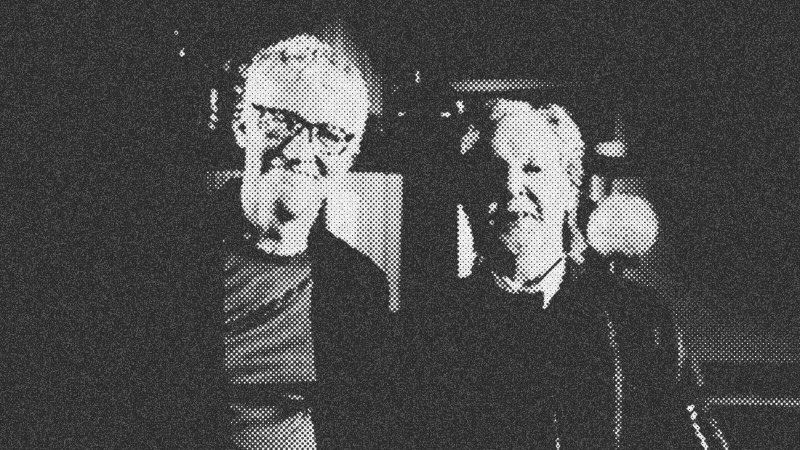
Tom Holland Meets Paul McCartney
WatchThe Rest Is History // 38:03

Take a deep dive into History’s biggest moments with Tom Holland & Dominic Sandbrook. Explore the stories of History’s most brutal rulers, deadly battles, and world-changing events. From the rise and fall of the Roman Empire, the Nazi conquest of Europe, and Hitler’s evil master plan for world domination, to the French Revolution, the sinking of the Titanic, or the Norman Conquest of England in 1066, Tom and Dominic bring the past to life with gripping storytelling and expert analysis, as they unpack the high-drama moments that shaped our world.