D’Annunzio and the meat grinder that broke the Italian state
The cynical conspiracy of the sacred egoism
By the spring of 1915, the initial romanticism of the Great War had dissolved into the industrial slaughter of the Western Front. While the rest of Europe was already bleeding, Italy stood apart, a neutral observer to the carnage. The Italian people overwhelmingly opposed intervention; they saw no reason to participate in a conflict that promised only ruin. Yet, beneath the surface of public reluctance, a web of diplomatic deceit and radical agitation was being woven by the Prime Minister Antonio Salandra and a small clique of interventionists. They viewed the war not as a tragedy to be avoided, but as a mechanism for national completion—a chance to seize territory from the Austro-Hungarian Empire.
This policy was christened sacro egoismo (sacred egoism). It was a philosophy of pure national opportunism. Salandra and his cohorts were not interested in defending democracy or the rights of small nations; they were shopping for an empire. While maintaining a formal alliance with Germany and Austria, they began secret negotiations with the Allies in London. The resulting Treaty of London was a masterpiece of greed, promising Italy vast swaths of the Adriatic coast, the South Tyrol, and even pieces of the Ottoman Empire should it collapse. To the British and French, Italy was the "harlot of Europe," a mercenary power to be bought with promises they had little intention of keeping. To the Italian leadership, it was the price of blood required to transform their "invented" country into a true great power.
D'Annunzio and the liturgy of slaughter
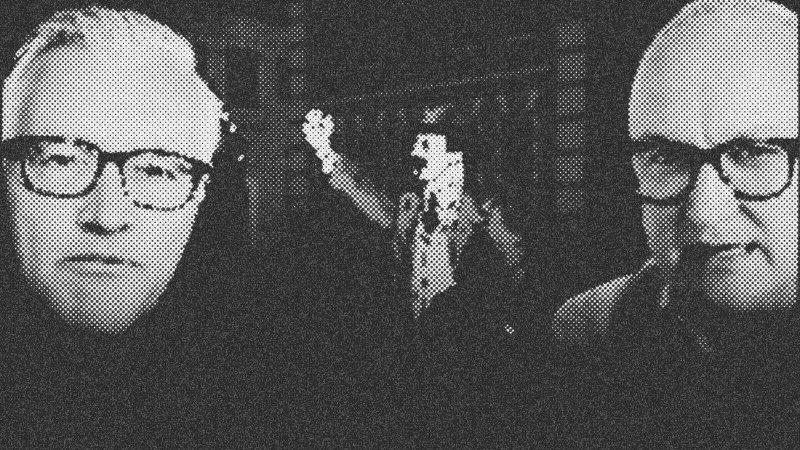
The gap between the government's secret treaties and the public's anti-war sentiment was bridged by one of the most bizarre and dangerous figures of the twentieth century: Gabriele D'Annunzio. A poet, dandy, and decadent, D'Annunzio was a national celebrity who specialized in a brand of ultra-nationalist mysticism. When he returned from exile in Paris in May 1915, he acted as a nationalist Messiah. His speeches were not mere political oratory; they were pseudo-religious rituals that perverted the language of the New Testament to sanctify violence. He famously parodied the Sermon on the Mount, proclaiming, "Blessed are the young who hunger and thirst for glory, for they shall be satisfied."
D'Annunzio’s rhetoric introduced a toxic new element into Italian politics: the glorification of the squad and the proscription of "traitors." He incited crowds in Rome to hunt down neutralist politicians like Giovanni Giolitti, describing them as "diseased cattle" to be swept into the sewer. Among the rapt listeners to these tirades was a young journalist named Benito Mussolini. Mussolini, who had recently abandoned his socialist roots for the cause of intervention, watched as D'Annunzio invented the aesthetic and rhetorical playbook of fascism. The poet's performance on the Capitoline Hill, where he kissed a naked blade and abandoned his soul to "delirium," effectively paralyzed the Italian parliament. Fearful of civil war and cowed by the mob, the legislature voted for war on May 20, 1915, sending a bewildered peasantry into the jagged peaks of the north.
Cadorna and the limestone purgatory of the Isonzo
Commanding the Italian war effort was Luigi Cadorna, a man who personified the most rigid and disastrous traits of old-world militarism. Cadorna was obsessed with the "frontal attack," a tactic he had committed to paper in 1898 and refused to revise despite the clear evidence of its obsolescence provided by machine guns and barbed wire. He viewed his soldiers not as citizens, but as raw material to be expended. Under his command, the Italian army moved with agonizing slowness toward the Isonzo River in Slovenia. This was the Isonzo Front, a landscape of jagged limestone that turned the war into a unique form of purgatory.
In the Karst highlands, the terrain itself was a weapon. Because the ground was solid rock, soldiers could not dig the deep, protective trenches found on the Western Front. Instead, they huddled in shallow gullies. When Austrian shells struck the limestone, they sent up thousands of razor-sharp stone shards that acted like secondary shrapnel, blinding and eviscerating men far from the point of impact. The heat of the summer turned the trenches into "fields of filth" where the stench of unburied corpses was inescapable, while the winter brought frostbite so severe that soldiers' feet would swell until their boots burst. Cadorna's response to the failure of his tactics was a "rolling purge" of his officer corps, sacking hundreds of generals and colonels for the crime of being unable to achieve the impossible.
The Slavic soul versus the Italian machine
Opposing the Italian onslaught was the Austro-Hungarian Fourth Army, led by Svetozar Boroević. Boroević was a fascinating contradiction: a loyal servant of the Habsburg crown who was himself a South Slav. Unlike the Austrians who had performed poorly against Russia, the troops on the Isonzo—many of them Slovenes and Croats—were fighting with their "whole soul" to defend their own hearths from Italian annexation. Boroević implemented a sophisticated defense-in-depth, instructing his men to hold their fire until the Italians were within 100 yards, essentially inviting them into a killing zone of pre-sighted machine guns.
Between 1915 and 1917, Cadorna launched eleven separate battles along the Isonzo. Each followed the same tragic pattern: a massive, insufficient bombardment followed by waves of infantry charging uphill into barbed wire. In the second battle alone, the Italians lost 42,000 men for a gain measured in yards. There were moments of strange, haunting humanity amidst the slaughter; Austrian officers frequently shouted for the Italians to "go back" rather than be massacred, sometimes even declaring informal ceasefires to allow the collection of the dead. Yet Cadorna persisted, convinced that one more push would break the Habsburg monarchy. He was wrong. It was the Italian army that eventually cracked at the Battle of Caporetto, a collapse so total that it remains a byword for disaster in the Italian lexicon.
The mutilated victory and the shadow of the Duce
When the war finally ended in November 1918, Italy stood among the victors, but it was a nation shattered. 689,000 soldiers were dead, a million were wounded, and the economy was in ruins. At the peace table, the Allies reneged on many of the promises made in the Treaty of London, citing the new principle of "national self-determination." Italy received Trieste and the South Tyrol, but was denied Dalmatia and the grand Adriatic empire the nationalists had craved. This perceived betrayal gave rise to the myth of the vittoria mutilata (mutilated victory).
The resentment birthed in the limestone trenches of the Isonzo became the fuel for the fascist fire. D'Annunzio, ever the provocateur, led a paramilitary force to seize the port of Fiume in defiance of the international community, declaring himself "Duce." His short-lived regime served as a laboratory for the rituals, uniforms, and rhetorical styles that Mussolini would soon adopt on a national scale. The veterans of the Isonzo, brutalized by Cadorna’s discipline and embittered by the peace, found a new commander in Mussolini. The "meat grinder" of the First World War did not just destroy a generation of young men; it destroyed the fragile liberal foundations of the Italian state, clearing the path for two decades of fascist tyranny. The ruins of the Isonzo whisper a warning: when a nation is dragged into war through cynical conspiracy and mystical delusion, the ghosts of that conflict will eventually return to haunt the streets of the capital.
- Allies
- 5%· organizations
- Antonio Salandra
- 5%· people
- Austro-Hungarian Empire
- 5%· places
- Austro-Hungarian Fourth Army
- 5%· organizations
- Benito Mussolini
- 5%· people
- Other topics
- 75%
Why Italy Was Completely Useless in WWI | EP 2
WatchThe Rest Is History // 1:06:40

Take a deep dive into History’s biggest moments with Tom Holland & Dominic Sandbrook. Explore the stories of History’s most brutal rulers, deadly battles, and world-changing events. From the rise and fall of the Roman Empire, the Nazi conquest of Europe, and Hitler’s evil master plan for world domination, to the French Revolution, the sinking of the Titanic, or the Norman Conquest of England in 1066, Tom and Dominic bring the past to life with gripping storytelling and expert analysis, as they unpack the high-drama moments that shaped our world.