The Razor’s Edge: Engineering the World’s Thinnest Street Legal Ford
The journey began with a 1988 Ford Festiva, a vehicle often dismissed as one of the most underwhelming specimens of automotive history. Yet, beneath its diminutive and somewhat pathetic exterior lay the perfect bones for a radical experiment in spatial engineering. The goal was simple but audacious: transform this small car into the thinnest street-legal vehicle ever to grace the pavement. To achieve this, the car wouldn't just be modified; it would be surgically dismantled, with a significant portion of its width removed before being fused back together into a slender, two-seater needle.
Surgical Precision with Liquid Nitrogen and Lasers
Before the first cut could be made, the interior had to be completely gutted. One of the most stubborn hurdles was the industrial glue lining the floorboards. Instead of hours of scraping, I opted for a more theatrical and efficient solution: a 500-pound tank of liquid nitrogen. By flash-freezing the adhesive at -321 degrees Fahrenheit, the glue became brittle enough to shatter with a hammer, clearing the way for the primary transformation.
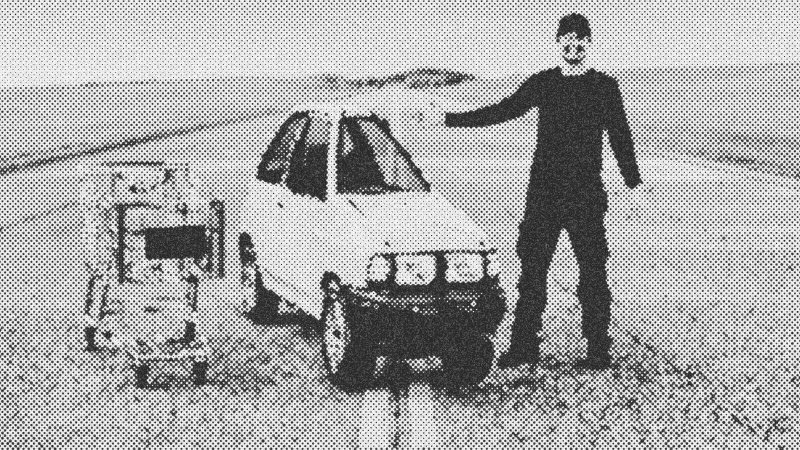
Then came the high-stakes moment of the split. Using an xTool MetalFab handheld laser cutter, I sliced through the steel body with a precision that felt more like science fiction than a garage build. The laser produced a cut so thin it was almost invisible, allowing the two outer halves to be sandwiched back together seamlessly. This process effectively removed the entire center section of the chassis, including the space where a traditional engine would sit. To bridge the gap, I used a laser welder, which provided a robust bond that looked factory-grade despite the car’s bizarre new proportions.
Engineering the Electric Heart and Pedal Paradox
With the chassis narrowed, the original internal combustion engine was far too wide to fit. The solution lay in electrification. I cannibalized a high-performance electric dirt bike, harvesting its motor and controller to power the rear wheels. The setup featured a surprisingly heavy-duty rear end, akin to an NHRA dragster, to handle the torque. One of the strangest engineering challenges was the cockpit ergonomics. Because the car was so narrow, my feet were shoved directly against the dashboard, leaving no room for traditional pedals. The fix? A vertical, "clown-shoe" style brake lever that required a downward stepping motion, turning every stop into a minor leg workout.
The Battle Against Nature and Aesthetics
Finishing the car required more than just mechanical integrity; it needed to look the part. I chose a sleek battleship gray paint job, but the process was a constant battle against the elements. Working outdoors meant dealing with curious bugs that seemed determined to embed themselves in the wet clear coat. Despite these small imperfections, the final aesthetic—complemented by 3D-printed headlight housings and a custom-designed dashboard—transformed the "pathetic" donor car into a futuristic, albeit tiny, marvel. When the tape finally came off, the 1988 Ford Festiva had been reborn as a vehicle that looked as though it had been squeezed through a pasta maker.
Nashville’s Reaction and the Power of Non-Threatening Road Rage
Taking the thinnest car to the streets of Nashville proved that the project was a resounding success in social engineering as much as mechanical engineering. The car, nicknamed "Slim," became an instant celebrity. On Broadway, tourists and locals alike were baffled by the sight of two grown men sitting tandem in a car barely wider than a motorcycle. One of the most liberating aspects of driving the car was its inherent friendliness. I discovered that you can perform aggressive maneuvers in traffic, and people simply laugh because the vehicle is too non-threatening to inspire genuine anger. It fits into the smallest gaps, parks in the corner of any garage, and even managed to pick up a passenger for a makeshift Uber ride.
The Philosophy of the Small Build
This project served as a reminder that automotive joy isn't always found in horsepower or luxury. Sometimes, it’s found in the absurdity of the attempt. By stripping away the unnecessary width of a standard car, I gained a new perspective on urban mobility. The car is reliable, surprisingly quick, and brings a smile to everyone who sees it. It proves that with the right tools—and a healthy dose of curiosity—you can take the most overlooked machines and turn them into something unforgettable. The lesson is clear: don't be afraid to cut your problems in half, even if those problems happen to be a 1980s hatchback.
- 1988 Ford Festiva
- 25%· products
- Broadway
- 13%· places
- Incogni
- 13%· companies
- liquid nitrogen
- 13%· products
- Nashville
- 13%· places
- Other topics
- 25%
I Built the THINNEST Street Legal Car
WatchProp Department // 22:36

Hi I'm Tyler Fever, aspiring mad scientist learning engineering with no degree. I'm building extreme vehicles, robots, props, and more. With every project I push myself to learn something new and build my skills so I can make an impact on the world. Join me! Instagram @propdepartment Facebook: https://www.facebook.com/share/1DSVKpMNhw/?mibextid=wwXIfr