Chaos Engineering: Ranking the Most Extreme Automotive Builds
The boundary between genius and insanity often looks like a garage full of welding sparks and oversized tires. When engineering moves past simple utility and into the realm of pure experimentation, the results are both terrifying and mesmerizing. These builds aren't just vehicles; they are stress tests for physics and mechanical endurance. By breaking down these projects through the lenses of difficulty, creativity, and danger, we gain a unique window into the mind of high-stakes fabrication.
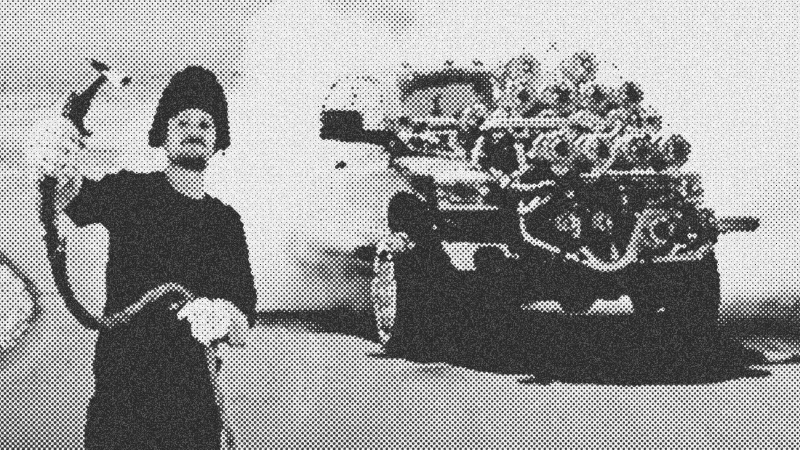
The Over-Engineered Excess of the 18-Turbo Truck
While most performance enthusiasts struggle to tune a twin-turbo setup, this build pushes the Cummins platform to a literal extreme with 18 individual turbochargers. The technical hurdle here wasn't just the sheer volume of metal, but the fluid dynamics of oil. Standard engine oil pumps cannot handle the flow requirements of nearly twenty turbines. This forced the team to engineer a dedicated external oiling system housed entirely within the front bumper. Plumbed with complex reducers and wonky 90-degree pipes, the system funnels all 17 auxiliary intakes into a single primary charger, proving that even a "cluttered" engine bay can function with precise fabrication.
Weaponizing Nostalgia: The RC Chieftain Tank
Converting a Chieftain Mark 11 main battle tank into a remote-controlled vehicle is a masterclass in high-stakes coding. At 130,000 pounds, a software glitch doesn't just crash a computer; it levels a building. The build required a complete mechanical redundancy system, utilizing a backup nitrogen tank to ensure the brakes and steering would function if the primary electric actuators failed. Beyond the digital integration, the physical restoration involved replacing factory thin-gauge armor with quarter-inch steel plates to withstand the inevitable abuse of extreme filming environments.
The Lethal Physics of the Jet Engine Merry-Go-Round
Combining a school bus axle with the raw thrust of a jet engine creates a centrifugal nightmare. This project represents the pinnacle of creative danger, requiring a foundation of two cement trucks' worth of concrete just to keep the structure anchored to the earth. The balancing act was literal: a heavy weight box had to counteract the engine's mass on the opposite side of the iron circle. The inherent instability of this build was highlighted when the engine spontaneously detached during operation, illustrating the razor-thin margin between a successful stunt and a total mechanical failure.
Gravity-Defying Geometry: The 10-Foot Tesla
Putting a Tesla Model 3 on 10-foot wheels is more than a visual gag; it is a test of structural integrity and precision. To avoid the "bouncing" effect of imperfect circles, the first wheel was hand-fabricated as a master template, with the subsequent three clamped directly to it during welding. Interestingly, the hubs were recycled from old missile-shaped fuel tanks, and the front track was spaced wider than the rear to permit steering without the massive rims crushing the chassis. This build remains a testament to the idea that with enough steel and a long enough tow hook, even a modern EV can be transformed into a towering, upside-down curiosity.
- Chieftain Mark 11
- 14%· products
- Cody Detwiler
- 14%· people
- Cummins
- 14%· companies
- Elon Musk
- 14%· people
- Monster Max
- 14%· products
- Other topics
- 29%
The Secrets Behind WhistlinDiesel's INSANE Builds
WatchProp Department // 19:17

Hi I'm Tyler Fever, aspiring mad scientist learning engineering with no degree. I'm building extreme vehicles, robots, props, and more. With every project I push myself to learn something new and build my skills so I can make an impact on the world. Join me! Instagram @propdepartment Facebook: https://www.facebook.com/share/1DSVKpMNhw/?mibextid=wwXIfr