Retro Revisionism: Dissecting the 1970s 'Girl Talk' Potato
The Allure of the Vintage Spud
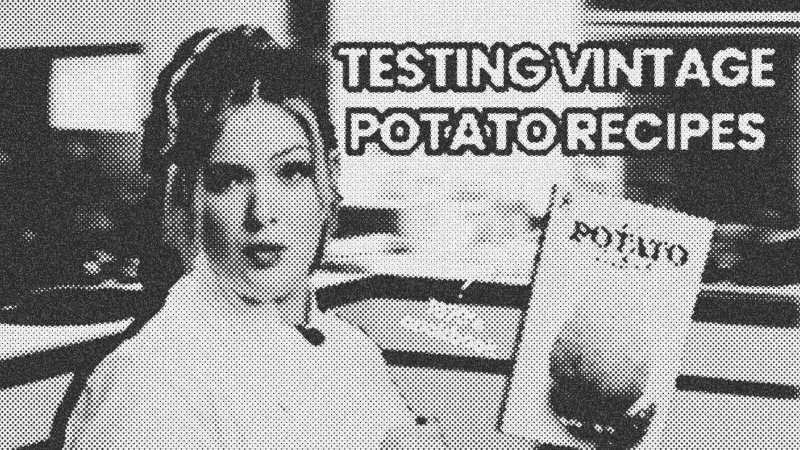
Culinary heritage often hides in the dusty pages of mid-century paperbacks. In this exploration of the 1970s classic The Potato Cookbook by Gwen Robyns, we confront a recipe that encapsulates the era's bizarre relationship with nutrition and social dining: "Girl Talk" Potatoes. The dish promises a deceptive indulgence, allegedly designed to trick "weight-conscious" diners into enjoying the very carbohydrates they claim to shun. It is a fascinating study in 1970s kitchen psychology, where heavy dairy mask the humble potato in a cloak of social acceptability.
Anatomy of a 1974 Dairy Bomb
The ingredient list for this vintage creation reads like a manifesto for the pre-cholesterol-awareness era. It demands four large potatoes, hard-boiled eggs, cottage cheese, cheddar, butter, and sour cream. The technique involves par-boiling the potatoes, stripping them of their nutrient-rich skins, and excavating the centers to create a "boat." This hollowed vessel then receives a filling of mashed potato innards vigorously blended with the aforementioned fats. The final flourish involves reassembling the halves, dousing them in more sour cream, and baking them into a soft, homogeneous mass.
Execution and the Lost Art of Seasoning
One striking element of Gwen Robyns' original text is the total absence of seasoning. The instructions assume a baseline level of intuition, omitting any mention of salt or pepper—a cardinal sin in the modern kitchen where we prioritize the flavor profile of the starch itself. The process of "blending" the filling creates a curiously lumpy yet pasty texture, punctuated by the inclusion of chopped hard-boiled eggs. While the addition of eggs offers a protein boost, the removal of the potato skins eliminates any hope of a structural or textural contrast. The resulting dish is anemic, pale, and entirely reliant on the richness of its fats.
Final Verdict: Culinary Pass
Despite the nostalgic charm of the Mean Girls-esque sabotage—feeding high-fat dairy to dieting friends—the "Girl Talk" Potato fails to justify its existence in a contemporary repertoire. While the filling is surprisingly fluffy and luxurious due to the egg yolk, the lack of crispness and the muddied flavors make it a "Pass." You can achieve far superior results using the same ingredients by retaining the skin for a traditional twice-baked potato method. Modern palates demand more than just soft dairy; we require the respect for the ingredient that only a crisp, well-seasoned skin can provide.
- Gwen Robyns
- 40%· people
- Girl Talk Potatoes
- 20%· products
- Mean Girls
- 20%· movies
- The Potato Cookbook
- 20%· books
Testing Retro Potato Recipes From the 1970s - "Girl Talk" Potatoes
WatchPoppy Cooks // 16:45
