Tom Freston bid $1.7 billion for Facebook before Viacom fired him
From Smuggling Apparel to Building a Music Monolith
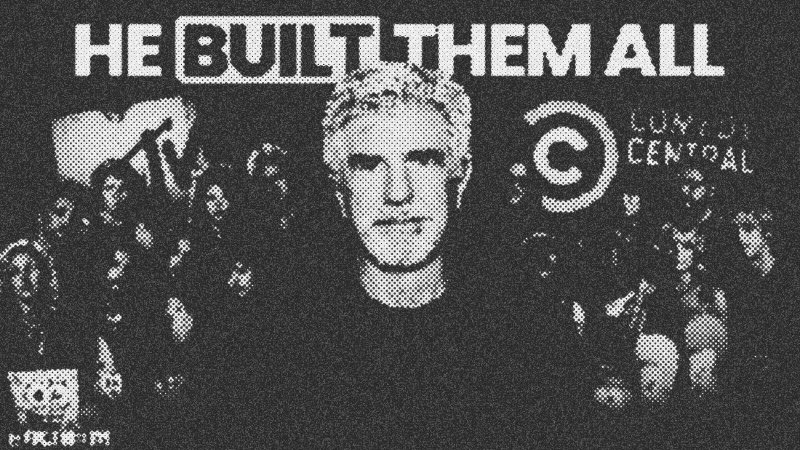
In 1979, Tom Freston was broke, bankrupt, and drowning in debt. He had just spent years running a clothing design and manufacturing operation across India and Afghanistan. He made his first million on paper in his twenties, but geopolitics destroyed his hustle. First came a communist coup in Afghanistan, then a sudden trade embargo on clothing imports from India. In a desperate final move, Freston smuggled three tons of clothes over the Saint Lawrence River to fulfill a delivery contract with Bloomingdale's. Despite the sweat and risk, the business collapsed under his feet. He returned to New York at 33 with empty pockets while his peers settled into mortgages and stable careers.
He needed a pivot. He bought a copy of the self-help classic What Color Is Your Parachute? and sat at his kitchen table mapping out his transferable skills. He possessed an encyclopedic knowledge of rock and roll and a gut instinct for youth trends. By March 1980, he landed a job at WASEC, a joint venture between American Express and Warner Communications. The team consisted of just eight people developing an experimental, niche television station. They paid him a salary of thirty-five thousand dollars a year, which was more than anyone else on the launch team. This small group was tasked with launching a twenty-four-hour music channel called MTV.
The Narrowcast Bet That Scared Cable Monopoly Holders
When MTV launched in 1981, the dominant television broadcast networks operated under a simple mandate: produce general-interest shows that appeal to everyone. Freston and his team flipped the script. They pioneered the concept of "narrowcasting," dedicating an entire network to a single genre targeted at a hyper-specific demographic. They did not build the network around scheduled shows; they built it as a physical place. You did not tune in to watch a program; you tuned in to watch MTV.
This visionary model was backed by twenty-five million dollars in seed capital. It almost ran down to zero before the business model took off. Cable operators, who held monopoly power over regional markets, refused to pay ten cents a subscriber per month for the channel. The conservative executives running the cable companies despised rock and roll. Freston knew the youth market would go crazy for music videos if they could actually see them. At the time, MTV only had 160 videos, mostly low-fi clips imported from the UK because American labels had not started producing them. To force the hand of regional operators, Freston launched an aggressive promotional campaign that turned young viewers into a relentless pressure group, demanding their cable providers carry the channel.
Spotting Aberrant Creatives Before the Rest of the World
MTV grew into a high-margin money machine, generating billions of dollars in revenue alongside sister networks Nickelodeon, VH1, and Comedy Central. The crown jewel of the portfolio was not MTV, but Nickelodeon, which became a commercial powerhouse by capturing the children's market. Freston did not build this empire by playing it safe or relying on traditional Hollywood structures. He realized early on that corporate suits cannot manufacture cool. He deliberately structured the company as an eccentric, loose, and casual environment. The office dress code was famously summarized in one rule: no frontal nudity.
To keep the pipeline full of original ideas, Freston placed creative people in charge of the networks and sought out what his colleague Judy McGrath called "aberrant" talent. These were difficult, trouble-making individuals sitting in the back of the class who had zero respect for authority. Under Freston's watch, the company became a talent magnet, green-lighting projects in minutes that traditional networks would have strangled in development. They found Mike Judge after seeing a raw animation short called Frog Baseball at an Austin festival, which birthed Beavis and Butt-Head. They backed Matt Stone and Trey Parker on a crude Christmas video card that turned into South Park. They let two interns pitch hip-hop, launching Yo! MTV Raps and bringing underground black music to mainstream white suburbs.
Eliminating Writers to Invent Modern Reality Television
In 1992, the creative team wanted to build a soap opera targeting young people to compete with emerging broadcast hits on the Fox network. The production budget came back with a massive line item for traditional TV writers. Freston rejected the cost. He told the producers they did not have the cash to hire writers if they wanted to maintain their low production budgets.
The producers returned with an unprecedented compromise: eliminate the writers entirely. They decided to select seven or eight strangers, stick them in a loft on Broadway and Prince Street, point hidden cameras at them, and use their post-production and editing skills to construct a story. This wild experiment became The Real World, the blueprint for modern reality television. A decade later, they repeated this formula when Sharon Osbourne complained to programming chief Brian Graden about her hectic family life. Graden put a crew in her house, spawning The Osbournes and launching the era of celebrity reality television.
The $1.7 Billion Zuckerberg Bid and the MySpace Fallout
By 2005, the media landscape was experiencing a massive digital shift. Freston, now running MTV Networks under the corporate parent Viacom, saw that social media would bypass traditional media gatekeepers. He sought to acquire these digital platforms rather than attempt to build them from scratch.
In February 2005, a twenty-one-year-old Mark Zuckerberg walked into the MTV offices in Times Square wearing a hoodie and flip-flops. At the time, Facebook was restricted to college students and generated just eight million dollars in annual revenue. Freston and his team put a formal bid of $1.7 billion on the table to buy the social network, offering roughly $900 million in upfront cash with the remainder structured as an earnout. Negotiations stalled, and Zuckerberg eventually turned them down. Freston’s team was trying to buy businesses outright, but the young founders of the digital era were true believers who refused to sell their equity.
Shortly after the Facebook talks fell through, old-school media mogul Rupert Murdoch purchased MySpace over a single weekend for $580 million with zero due diligence. This bold move infuriated Viacom's controversial chairman, Sumner Redstone. Redstone, an obsessive and litigious corporate operator, believed Freston had let the digital prize slip into the hands of a rival. Although MySpace eventually collapsed and was sold years later for a fraction of its purchase price, Redstone fired Freston in 2006, publicly blaming him for missing out on the social media boom.
Scaling Creativity in a Decoupled Digital Age
Freston's abrupt firing closed a legendary twenty-six-year chapter in cable history, but it opened immediate new opportunities. He was pursued by Steve Jobs, Bono, and other global visionaries. He spent time consulting for Oprah Winfrey during the launch of her cable network, OWN.
Looking back at his journey, Freston highlights a fundamental truth about building a culturally dominant business: you must align your work with your genuine obsessions and seek out industries on an upward trajectory. The era of the television monoculture, where a few executives controlled access to the public, has dissolved. Today, anyone can broadcast, and creators can connect directly with their audience through platforms like Substack or Patreon. The challenge is no longer fighting for space on the cable pipe. The challenge is standing out in a crowded digital space. To win today, you must master distribution while retaining the raw, risk-tolerant creative energy that allowed a bankrupt apparel importer to build the most influential media brand of the twentieth century.
- American Express
- 3%· companies
- Bono
- 3%· people
- Brian Graden
- 3%· people
- Comedy Central
- 3%· companies
- 3%· companies
- Other topics
- 83%
This guy owned MTV & Comedy Central (but fumbled Facebook)
WatchMy First Million // 59:47

two guys, talking about business. we've done it (sold our companies), and now we talk about new ideas, opportunities, and investments. hosted by Shaan Puri & Sam Parr -- produced by Hubspot. sometimes we bring on guests ranging from billionaires to stay at home moms who've got side hustles that are bringing in $10k a month. we like to have fun, and talk about business stuff.