Market Recalibrations: From PayPal's Institutional Collapse to Walmart's Trillion-Dollar Ascendancy
The Institutional Erosion of a Fintech Pioneer
PayPal once stood as the undisputed architect of digital commerce. Its legacy is etched into Silicon Valley history through the so-called PayPal Mafia, but that historical prestige no longer translates to market value. The company recently suffered its second-worst trading day on record, witnessing a 20% stock wipeout that brought its market cap below $40 billion. This is a staggering fall from its pandemic-era peak of $356 billion. The primary culprit is a catastrophic lack of execution in its high-margin branded checkout business, which has essentially flatlined, growing a mere 1% last quarter.
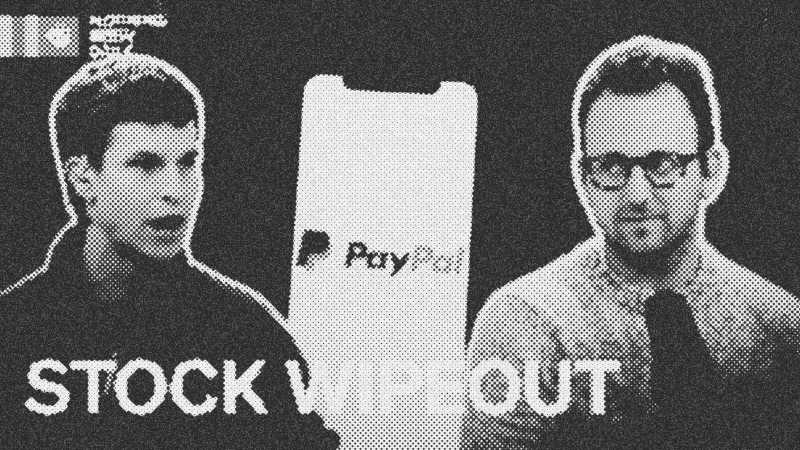
Internal leadership transitions reflect this desperation. Enrique Lores, formerly of HP, steps in as CEO to inherit a ship with no rudder. Critics, including former executive David Marcus, argue the company abandoned its product-led conviction in favor of financial optimization. By prioritizing loss minimization over innovation, PayPal allowed itself to be lapped by Stripe and Buy Now Pay Later giants like Affirm and Klarna. The verdict from Wall Street is clear: legacy status is no shield against a stagnant product roadmap.
AI Interdependence and the Trillion-Dollar Albatross
The symbiotic relationship between Nvidia and OpenAI is showing visible structural cracks. A previously rumored $100 billion investment has been downgraded to a "non-commitment" by Jensen Huang, as Nvidia signals caution regarding OpenAI's fiscal discipline. OpenAI is reportedly on the hook for $1.4 trillion in computing commitments—over 100 times its projected annual revenue. This massive debt load has transformed OpenAI from a market kingmaker into an albatross for its partners.
While Sam Altman attempts to stabilize the narrative, the underlying friction is technological. Eight internal sources suggest OpenAI is dissatisfied with Nvidia's latest hardware for inference tasks. As the industry shifts from training massive models to real-time execution, Nvidia's hardware dominance is facing its first genuine existential test. The "OpenAI tax" is now a reality for investors; exposure to the AI darling, once a guarantee for a stock pop, is now viewed through the lens of extreme capital risk.
The Death of Price Over Volume
PepsiCo is signaling the end of an era in consumer staples. After fourteen consecutive quarters of declining sales volume, the company is finally abandoning the strategy of perpetual price hikes. Retail prices for salty snacks rose nearly 40% between 2020 and 2024, but consumer elasticity has reached its breaking point. To regain market share, PepsiCo is slashing prices on staples like Lays Potato Chips and Doritos by 15%.
This pivot is a defensive maneuver against two distinct threats: the rise of GLP-1 weight-loss drugs and the mounting "Make America Healthy Again" sentiment. To fund these price cuts, the company is simplifying its business model, closing three plants, and reducing its product range by 20%. The era of profit growth driven purely by margin expansion is dead; volume is once again the metric of survival.
Walmart's Retail Hegemony
In stark contrast to PayPal's decline, Walmart has officially entered the $1 trillion market cap club. This achievement marks a profound decade-long transformation. Once feared to be a casualty of the Amazon era, Walmart has successfully integrated its physical footprint with a sophisticated digital infrastructure. It can now provide same-day delivery to 95% of American households, effectively neutralizing Amazon’s primary competitive advantage while attracting higher-income shoppers looking for value in an inflationary environment.
Global Regulatory Shifts and Protectionism
China is asserting its role as the global auto safety rule-setter by banning concealed door handles on Electric Vehicles. This design choice, popularized by Tesla, has been linked to fatal incidents during power failures. As the world's largest EV market, China's regulatory dictates will likely force global redesigns. Simultaneously, European cultural hubs like Rome and Venice are implementing "overtourism taxes" to manage the 1.5 billion international arrivals flooding the continent. From vehicle safety to urban access, the global economy is shifting from a period of unbridled expansion to one of targeted restriction and managed flows.
- PepsiCo
- 7%· companies
- Affirm
- 4%· companies
- Amazon
- 4%· companies
- Branded Checkout
- 4%· products
- Buy Now Pay Later
- 4%· products
- Other topics
- 79%
PayPal is crashing out after replacing its CEO
WatchMorning Brew Daily // 25:23

Morning Brew Daily, a daily talk show that covers the latest news on business, the economy, and everything else, with Neal Freyman and Toby Howell. Witty, informative and everything you need to start your day. Available on all podcasting platforms and Youtube. Listen to the podcast here: https://link.chtbl.com/MBD Follow us on Twitter: https://twitter.com/mbdailyshow Follow us on Instagram: https://www.instagram.com/mbdailyshow/ Follow us on TikTok: http://www.tiktok.com/@mbdailyshow Sign up for the Morning Brew Newsletter: https://www.morningbrew.com/daily/subscribe?utm_campaign=mbd_yt&utm_medium=multimedia&utm_source=youtube