The Silicon Carbon Standoff: Why Your Next iPhone Might Skip the Battery Revolution
The High-Density Promise of Silicon Carbon
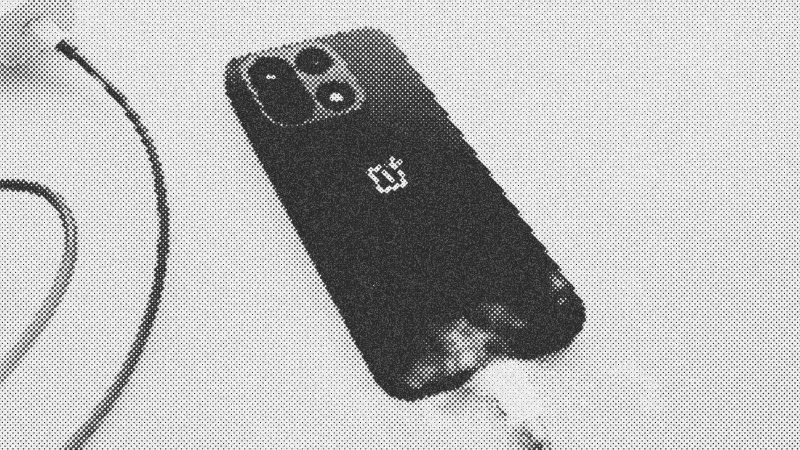
Traditional smartphone power relies on graphite-based lithium-ion cells, a technology hitting its physical ceiling. Silicon Carbon Batteries represent a radical shift by replacing graphite with silicon, which possesses a far superior capacity to hold energy. This transition allows manufacturers to create devices like the Honor Power 2 that pack a 10,000 mAh capacity into a chassis thinner than an iPhone 17 Pro Max. It effectively resets the baseline for mobile endurance without sacrificing aesthetics.
The Physics of Expansion and Failure
The hurdle preventing universal adoption is basic chemistry. During the charging phase, silicon absorbs lithium ions and expands up to three times its original volume. This rhythmic swelling and contracting creates immense mechanical stress. To combat this, engineers grind silicon into fine particles and use carbon as a buffer, but the risk of internal cracking remains high. Some designs even require a literal steel cage to physically restrain the battery's growth. If these safeguards fail, the result is thermal runaway—a catastrophic failure no major manufacturer wants to risk.
Scale, Risk, and the American Market
For industry giants like Apple, Samsung, and Google, the math of failure is sobering. While a one-in-250,000 error rate sounds acceptable for smaller batches, it translates to dozens of dangerous incidents when scaled to tens of millions of units. In the US market, where software ecosystems and "blue bubbles" drive loyalty more than hardware specs, there is little incentive for these companies to gamble on bleeding-edge battery tech. Conversely, in markets with intense hardware competition, brands like Xiaomi and Oppo are forced to embrace this risk to differentiate themselves.
The Longevity Waiting Game
We are currently in a data-gathering phase. While laboratory tests show promising cycle counts, they rarely replicate the messy variables of real-world use: extreme temperatures, drops, and humidity. Until Silicon Carbon Batteries prove their stability over a three-to-five-year lifecycle, the industry heavyweights will likely remain on the sidelines, favoring the safety of established lithium-ion standards.
- Silicon Carbon Batteries
- 14%· products
- Apple
- 7%· companies
- Galaxy S25 Edge
- 7%· products
- 7%· companies
- Honor
- 7%· companies
- Other topics
- 57%
The Problem with these Smartphone Batteries
WatchMarques Brownlee // 8:32

MKBHD: Quality Tech Videos | YouTuber | Geek | Consumer Electronics | Tech Head | Internet Personality! [email protected] NYC