The Skill of Change: Why Willpower Is a Myth
Beyond the Willpower Myth
We often treat personal growth like a moral fitness test. If you fail to stick to a diet or miss a morning workout, you likely tell yourself you just didn't want it enough. You search for more grit or wait for a surge of motivation that never arrives. This is the biggest lie about change. Relying on sheer willpower is a recipe for burnout because it ignores how our brains actually function. You aren't broken; your system is simply incomplete. Real transformation doesn't come from pushing through the pain, but from removing the friction that makes change feel like a battle.
The Engineering of Success
Katy Milkman emphasizes that change is a strategic endeavor rather than a character trait. If you can't reach a goal, look at your environment and your methods. Are you trying to do this alone? Is the process miserable? Effective change requires building support systems that make the right choice the easy choice. By treating change as an engineering problem, you shift from self-blame to problem-solving. You don't need more fortitude; you need better tools.
Actionable Design Principles
To bridge the gap between where you are and where you want to be, you must make the journey sustainable. First, make it social. We are influenced by those around us, so find a community that shares your goals. Second, make it enjoyable. If you hate the gym, you won't go. Pair the hard activity with something you love to create a positive feedback loop. Finally, view change as a skill you can practice. Like learning a new language or software, you will have setbacks. These aren't failures; they are data points that tell you to adjust your strategy.
A Mindset for Longevity
Stop blaming your design. You were built to seek comfort and avoid pain. Instead of fighting that biological reality, work with it. When you stop seeing change as a test of your soul, you gain the clarity to fix what actually matters: your habits and your environment. You have the power to achieve more, not by being harder on yourself, but by being smarter about your approach. This shift in perspective transforms you from a victim of your impulses into the architect of your future.
- Katy Milkman
- 17%· people
- Mel Robbins
- 17%· people
- The Let Them Theory
- 17%· books
- The Mel Robbins Podcast
- 17%· tv shows
- UPenn
- 17%· organizations
- Wharton School
- 17%· organizations
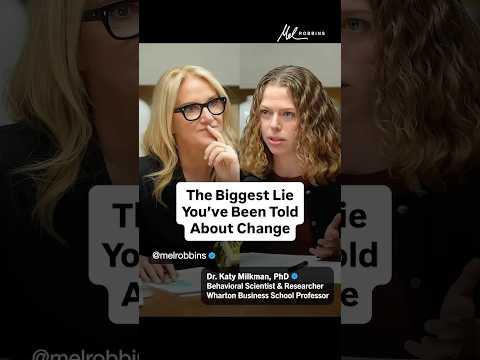
The biggest lie you've been told about change | Mel Robbins #Shorts
WatchMel Robbins // 2:16

Mel Robbins is the creator and host of The Mel Robbins Podcast, one of the most successful podcasts in the world, and a #1 New York Times bestselling author. She has 40M followers and is known globally for practical tools on mindset and behavior change. The Wall Street Journal calls her a “billion-view podcaster,” and TIME says she gives millions “a reason to believe in themselves.” Her books are published in 63 languages. The Let Them Theory is a #1 bestseller across every major list and a top-selling book of 2025 with more than 8M copies sold. She also wrote The 5 Second Rule and The High 5 Habit, and has seven #1 Audible releases. Her company, 143 Studios, produces award-winning podcasts, books, courses, and events for partners like Starbucks, Ulta Beauty, JP Morgan Chase, LinkedIn, and Audible. She has been honored by TIME 100 Digital Voices, Forbes 50 Over 50, USA Today, Apple Podcasts, Spotify, and The Hollywood Reporter.