Mel Robbins: seven reminders that snap you out of life's survival mode
We often mistake exhaustion for a character flaw. In a culture that prioritizes constant output, the moment we feel depleted, we label ourselves as unmotivated or falling behind. This internal narrative doesn't just drain our energy—it strips us of our power. As a psychologist, I see this frequently: individuals who are doing the Herculean work of navigating life's complexities but beating themselves up for not doing it with a smile and a surplus of energy. You aren't failing; you are simply human, and sometimes being human requires emotional jumper cables to jolt you back into your own skin. These seven reminders provide the psychological framework to shift from reactive survival to intentional growth.
Boundaries allow kindness to exist without resentment
One of the most destructive myths in personal growth is that kindness equals compliance. We have been socialized to believe that being a "good person" means saying yes to every request, hosting every potluck, and serving as the emotional dumping ground for everyone in our orbit. But kindness without boundaries isn't virtue; it's a fast track to becoming a human doormat. Mel Robbins highlights a vital truth: you can have a heart of gold and still tell someone to back off when they cross a line.
Psychologically, boundaries are not what you say to others; they are the contracts you sign with yourself. When you lack boundaries, you aren't actually being kind to others—you are being fearful. You are prioritizing their potential disappointment over your own mental health. This often stems from childhood conditioning where your value was tied to your utility. Real self-respect involves recognizing that other people's emergencies are not automatically your priorities. Saying "no" is a complete sentence and a necessary tool for protecting your peace. Without it, your kindness will eventually sour into a bitter shell of resentment.
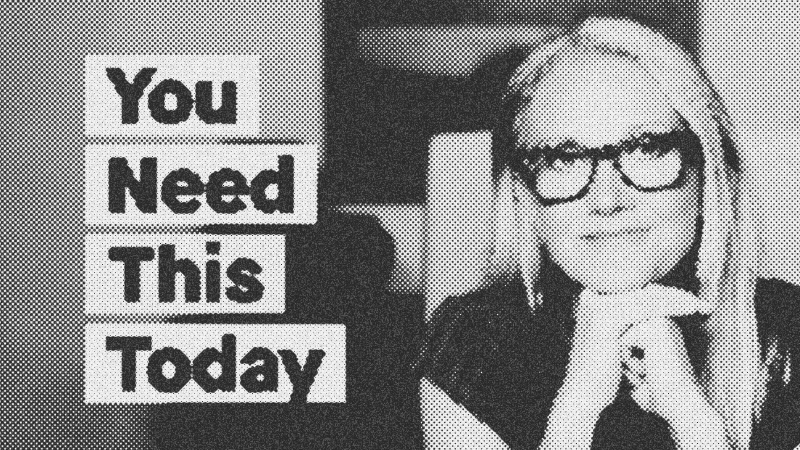
Stress hijacks your brain and mimics laziness
If you find yourself doom-scrolling or struggling to start a simple task, your brain isn't being lazy—it’s being hijacked. Dr. Aditi Nerurkar, a researcher at Harvard Medical School, explains that stress is a physiological state that shifts your brain from strategic thinking to survival mode. In this reactive state, your internal critic gets louder, your focus fractures, and your energy is entirely consumed by the invisible effort of just getting through the day.
When we are in survival mode, we lack the bandwidth for productivity or creativity. This is biological, not a lack of willpower. Consider the wisdom of Jim Kwik: if you only have 40% to give today and you give all 40%, you have technically given 100% of your available capacity. Beating yourself up during these periods is like kicking a car that has run out of gas. Instead of criticism, you need recovery. Recognizing that your current "slump" is actually a biological stress response allows the guilt to fade, making room for the rest your body is actually begging for.
Compassion acts as the glue for collective struggle
It is easy to become solipsistic when life feels heavy, assuming the universe is singularly targeting you. However, the reality is that nearly everyone is carrying an invisible burden. The aggressive driver, the silent coworker, and the rude family member are all likely navigating their own quiet catastrophes. When you acknowledge that everyone is going through a tough time, your own problems feel less like a personal persecution and more like a shared human experience.
This shift doesn't mean you should tolerate abuse, but it does mean you can stop taking people’s behavior personally. Compassion is a signal to your own nervous system that you still have something to give, even in a deficit. By holding a door or offering a small compliment, you prove to yourself that life hasn't taken your heart. This creates an interesting psychological synergy with boundaries: when you understand that everyone is struggling, you can be kind while still saying no, because you realize their disappointment is just part of their own journey, not something you are responsible for fixing.
Measure progress by who you used to be
We often fall into the trap of comparing our current reality to an idealized future version of ourselves. This "not enough" gap creates a perpetual state of dissatisfaction. To break this cycle, you must look backward. You may not be everything you want to be yet, but you are a lot of things you wanted to be two years ago. Whether it’s having the courage to speak up, leaving a toxic situation, or simply gaining a new skill, those wins count.
As Mel Robbins shares regarding the growth of her podcast and the launch of Pure Genius, progress is often messy and non-linear. Even when you achieve a goal, new challenges arise—like supply chain issues or growing pains. If you only validate yourself when things are perfect, you will never feel successful. Validating the progress you've already made provides the dopamine hit necessary to keep going. You are not the same person who had no clue what they were doing two years ago. Acknowledge the receipts of your growth; they are the evidence that your future evolution is inevitable.
Relinquish the burden of other people's opinions
One of the healthiest habits you can develop is the refusal to take anything personally. This concept, popularized by Don Miguel Ruiz in The Four Agreements, is a radical act of self-preservation. Most of what people say and do is a projection of their own reality, their own fears, and their own nervous system. When someone is in a bad mood, it isn't a report card on your existence.
To master this, apply the "Let Them" theory. Let them be wrong about you. Let them be disappointed. Let them have their opinions. By doing so, you stop auditioning for approval from people who are often too distracted or emotionally immature to give it. Your power returns to you the moment you stop letting someone else's volatile internal state dictate your day. Your life belongs to you; their mood belongs to them.
Evolution requires the courage to say goodbye
Becoming the best version of yourself is an additive process that requires subtraction. You cannot carry the habits, mindsets, and relationships that kept you small into the next chapter of your life. Growth is often accompanied by a series of goodbyes—some to people, but most to old versions of yourself. You may need to say goodbye to being a doormat so you can say hello to boundaries. You may need to say goodbye to perfectionism so you can say hello to momentum.
This isn't heartless; it's necessary. Every evolution requires shedding what no longer fits. If you feel like you're outgrowing your current environment, don't mistake that clarity for a loss. It is the creation of space. You are clearing the closet of your life to make room for what actually aligns with your values today. Loyalty to a version of yourself that no longer exists is just another way of staying stuck.
The clock is ticking on what matters
There is a invisible clock ticking for all of us, a reality that should spark urgency rather than fear. Dr. Karl Pillemer from Cornell University has studied thousands of life stories, and the findings are consistent: people on their deathbeds do not regret working less or having a smaller house. They regret not asking for forgiveness, not saying "I love you," and letting petty arguments steal years of connection.
Temporal discounting makes us believe we have more time than we do. We push off our dreams and our reconciliations to a "later" that isn't guaranteed. This reminder to enjoy your life and love those who love you is a psychological wake-up call. It forces you to shift from "someday" to "today." As Martin Luther King Jr. famously suggested, whatever your pace—flying, running, or crawling—the key is to keep moving forward. Use these seven reminders as your compass. They are weapons against playing small, ensuring that when the clock does stop, you have actually lived the life you were given.
- Mel Robbins
- 15%· people
- Alice Walker
- 8%· people
- Cornell University
- 8%· organizations
- Don Miguel Ruiz
- 8%· people
- Dr. Aditi Nerurkar
- 8%· people
- Other topics
- 54%
7 Things You Need to Hear Right Now
WatchMel Robbins // 1:04:30

Mel Robbins is the creator and host of The Mel Robbins Podcast, one of the most successful podcasts in the world, and a #1 New York Times bestselling author. She has 40M followers and is known globally for practical tools on mindset and behavior change. The Wall Street Journal calls her a “billion-view podcaster,” and TIME says she gives millions “a reason to believe in themselves.” Her books are published in 63 languages. The Let Them Theory is a #1 bestseller across every major list and a top-selling book of 2025 with more than 8M copies sold. She also wrote The 5 Second Rule and The High 5 Habit, and has seven #1 Audible releases. Her company, 143 Studios, produces award-winning podcasts, books, courses, and events for partners like Starbucks, Ulta Beauty, JP Morgan Chase, LinkedIn, and Audible. She has been honored by TIME 100 Digital Voices, Forbes 50 Over 50, USA Today, Apple Podcasts, Spotify, and The Hollywood Reporter.