Beyond Bootstrapping: Behind the $57M Strategy to Scale Laravel
The Evolution of the PHP Ecosystem
For over a decade, Laravel has stood as the gold standard for developer experience in the PHP world. Taylor Otwell built more than just a framework; he cultivated an ecosystem that prioritized "developer happiness" through tools like Forge, Vapor, and Envoyer. However, these tools always functioned as orchestrators for third-party infrastructure. Users still had to link their own AWS or DigitalOcean accounts, leaving them responsible for the underlying server management. This model worked well for years, but as neighboring ecosystems simplified deployment to a single command, the gap between PHP and modern competitors began to widen.
The recent announcement of a $57 million Series A investment from Accel marks a seismic shift for the project. For a company that remained bootstrapped and profitable since its inception in 2011, taking venture capital was never about survival. It was about reaching a fork in the road. On one path lay the comfort of coasting on existing success; on the other lay the ambition to build a managed infrastructure platform that could rival the ease of use found in the JavaScript or Rust communities. By choosing to "swing for the fences," the team has committed to a future where Laravel is not just a framework, but a holistic cloud provider.
The Vision for Laravel Cloud
Laravel Cloud represents the culmination of a ten-year journey toward seamless deployment. The goal is simple yet technically daunting: moving an application from a local machine to a production-ready, scalable environment in less than sixty seconds. This project addresses the "last mile" problem that has plagued PHP developers. While Laravel Herd solved local development by allowing users to go from a fresh laptop to a running application without even installing PHP manually, deployment still required server-side knowledge.
This new platform shifts the responsibility of monitoring, backups, and scaling from the developer to the Laravel team. It represents a move toward managed infrastructure where the environment is specifically tuned for the framework. By biting the bullet and managing the infrastructure directly, the company can offer a level of integration and performance that was previously impossible when working through third-party cloud providers. This isn't just about hosting; it’s about creating a default web stack where every piece of the puzzle—from the database to background jobs—is pre-configured and optimized.
Why Accel and the VC Path?
Raising $57 million from Accel wasn't a snap decision. The firm spent most of 2023 courting Taylor Otwell, showing up at Laracon events worldwide and demonstrating a deep understanding of open-source dynamics. Accel has a history of backing developer-centric powerhouses like Vercel, Sentry, and Pusher. This pedigree was crucial for a founder who identifies primarily as a programmer rather than a traditional corporate executive.
The capital allows for a significant team expansion, which has already grown from a lean group of nine to over thirty people. Building a global cloud infrastructure is capital-intensive and requires a level of engineering depth that a small, bootstrapped team simply cannot sustain while also maintaining thirty-plus open-source packages. Crucially, the partnership allows the core team to stay focused on product design. With the addition of Tom Creighton as COO and Andre Valentine as Director of Engineering, the company has added the necessary structure to manage its growth without drowning the creative process in red tape.
A New Era of Collaboration
The investment has also integrated Laravel into an elite tier of software companies. The funding round included angel investments from notable figures like Guillermo Rauch (CEO of Vercel), David Cramer (Founder of Sentry), and Bryant Chou (CTO of Webflow). These aren't just names on a cap table; they are fellow "hackers" who have built tools that define the modern web.
Guillermo Rauch, for instance, provides a blueprint for what Laravel Cloud aims to achieve for PHP. Vercel transformed the Next.js experience by making deployment an afterthought. By collaborating with these leaders, the team gains access to insights on scaling, infrastructure challenges, and community growth. This network effect ensures that as the ecosystem expands, it does so with the guidance of those who have already successfully navigated these waters.
Implications for the Developer Community
For the average developer, this shift promises more polished, robust tools. The fear that venture capital might dilute the "soul" of an open-source project is common, but the strategy here appears different. Instead of pivots or monetization of core features, the funding is being used to build the ambitious tools that were previously "too big" to attempt. The team remains committed to its open-source roots, continuing to triage pull requests and ship free packages while the cloud platform provides the financial engine for long-term sustainability.
This evolution aims to make PHP the default choice for the next generation of web developers. By removing the friction of server management and providing a world-class local-to-production pipeline, the ecosystem is positioning itself to capture developers who might otherwise drift toward more "modern" but often more fragmented stacks. The "Builder Ethos" remains the North Star: whether you are an indie hacker or an enterprise organization, the goal is to help you ship faster and sleep better at night.
- PHP
- 15%· software
- Laravel
- 10%· companies
- Accel
- 7%· companies
- Vercel
- 7%· companies
- Guillermo Rauch
- 5%· people
- Other topics
- 56%
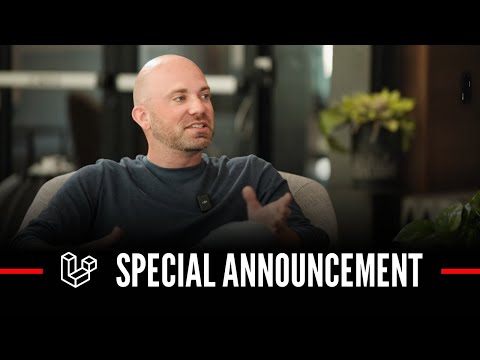
Special Announcement - Accel invests $57M into Laravel Products & Open-Source Framework
WatchLaravel // 35:13

The official YouTube channel of Laravel, the clean stack for Artisans and agents. We will update you on what's new in the world of Laravel, from the framework to our products Cloud, Forge, and Nightwatch.