Elevating Laravel Productivity: 5 Essential Livewire v4 Technical Patterns
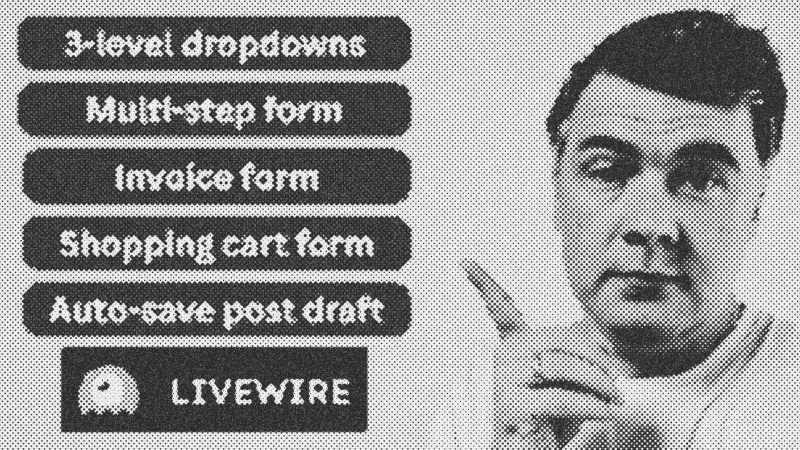
Modern web development demands highly interactive interfaces without the overhead of complex JavaScript frameworks. Livewire continues to bridge this gap, and its version 4 release introduces refined patterns that streamline the Laravel developer experience. By examining practical implementations, we can see how the framework balances performance with developer happiness.
Dynamic Three-Level Dependent Dropdowns
A common challenge in UI design is managing cascading data, such as selecting a country, state, and then a city. In Livewire, this is handled elegantly through updated hooks and computed properties. When a user selects a parent entity, the updated method triggers a refresh of the child datasets. By utilizing wire:model.live, the state synchronization occurs in real-time. For terminal nodes that don't trigger further UI changes, standard wire:model suffices, reducing unnecessary network requests while maintaining data integrity.
Structured Multi-Step Form Logic
Complex data entry often requires splitting forms into logical steps to avoid overwhelming the user. Livewire facilitates this by managing the currentStep state on the server. Developers can implement custom validation rules for each specific step, ensuring data is clean before the user progresses. The use of Tailwind CSS classes tied to the step state allows for dynamic visual feedback, such as disabling future steps or highlighting completed ones, creating a guided narrative for the end-user.
Advanced Invoice Management with Real-Time Totals
Building an invoice generator requires handling dynamic arrays of products and synchronized calculations. This pattern involves an invoiceProducts array where each entry tracks quantity and price. By leveraging computed properties for subtotal and grand total calculations, the UI stays in sync without manual event listeners. Livewire handles the complex object mapping required to add or remove items from the collection while ensuring taxes and totals are recalculated instantly as inputs change.
Component Communication in E-commerce Carts
Isolated components often need to talk to one another, such as a product list updating a shopping cart counter. Version 4 utilizes an elegant event dispatching system. When a product is added, a global event is fired, which the cart component "listens" for to trigger a refresh. This decoupling allows developers to build modular, reusable pieces of UI that remain synchronized across the entire page layout.
The Power of the Island Function and Autosave
One of the most impressive additions is the island function, which allows specific parts of a component to refresh independently. For content creators, an autosave feature for drafts is vital. By combining an island with wire:poll, developers can trigger a background save every 10 seconds. This ensures that only the necessary draft logic executes, preserving the main input state and providing the user with a "Saved at" timestamp for peace of mind.
Mastering these five patterns—cascading logic, multi-step flows, dynamic arrays, inter-component events, and background polling—provides a robust foundation for building high-performance Laravel applications that feel as snappy as a dedicated SPA.
- Livewire
- 50%· products
- Laravel
- 25%· products
- Laravel Daily
- 13%· organizations
- Tailwind CSS
- 13%· products
5 Livewire v4 Practical Examples in 16 Minutes
WatchLaravel Daily // 16:37
