Scanning for Trouble: A Real-World Test of the Ward Security Tool
A New Watcher for Laravel Projects
Securing a Laravel application usually involves a mix of automated dependency checks and manual code audits. Ward, a new security scanner authored by Yassine, enters this space with a unique proposition. Unlike most tools in the ecosystem, it isn't a PHP package. It is a standalone binary built with Go, designed to point at any folder or GitHub repository to sniff out vulnerabilities. This separation of the scanner from the language it scans suggests a focus on pure security principles over framework-specific conventions.
Under the Hood and On the Screen
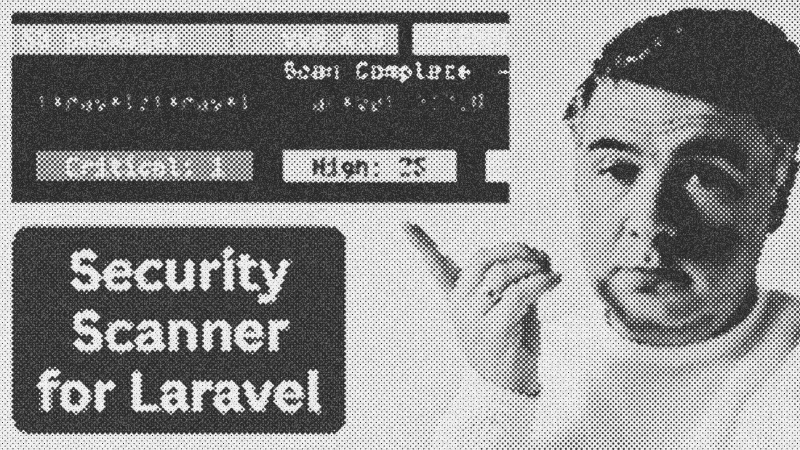
Installation requires a Go environment, as it functions through a global binary rather than a local vendor script. Once initialized, the tool creates a set of YAML configuration files to manage its rules. During testing on a stale demo project, the scanner blazed through the codebase in just four seconds. The interface uses a dual-pane terminal layout, though it demands a full-screen terminal window to actually read the remediation advice. It effectively flags critical dependency issues, such as outdated versions of Livewire that contain known exploits.
The Signal vs. Noise Problem
While Ward excels at catching low-hanging fruit, it struggles with the nuances of development environments. It frequently flags "High" or "Medium" risks that are actually intended behaviors in a local setup. For example, it warns about enabled debugging or empty database passwords—standard fare for a local Laravel Herd instance. More problematic are the false positives in code analysis. It flagged a raw SQL query as an injection risk despite the developer correctly using parameter binding. It also insisted that every route must have middleware, ignoring the common need for public-facing demonstration pages.
Verdict: A Specialized Second Opinion
Is Ward a replacement for GitHub's Dependabot or the native composer outdated command? Not entirely. Most of its critical findings are easily caught by standard package managers. However, its ability to run custom pattern-matching rules via YAML makes it a flexible secondary check for teams with specific security requirements. It provides a quick, aggressive audit, but developers must be prepared to filter out the noise of a security-first perspective that doesn't always understand the context of the code.
- Ward
- 23%· products
- GitHub
- 15%· companies
- Go
- 15%· products
- Dependabot
- 8%· products
- Laravel
- 8%· products
- Other topics
- 31%
Ward: New Security Scanner for Laravel (written in Go)
WatchLaravel Daily // 7:14
