Lance Hedrick finds multi-pour coffee recipes trigger aggressive astringency
The Variable of Agitation
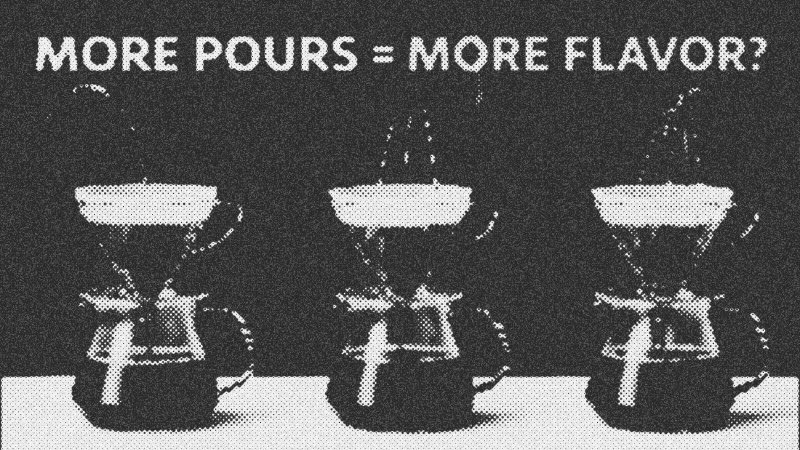
While water temperature and grind size dominate the discussion of coffee extraction, the number of pours—the act of staging water delivery into the filter—remains a powerful but misunderstood lever for flavor development. Every time water hits the coffee bed, it introduces agitation, refreshes the concentration gradient, and resets the extraction environment. Lance Hedrick highlights that this variable is uniquely difficult to isolate because changing the pour count inherently alters contact time and bed dynamics.
Controlled Testing of Pour Frequency
To analyze the impact of pour count, Hedrick conducted a controlled experiment using five distinct brews, ranging from a single pour to five pours, keeping the coffee, grind size, and total water volume identical. The results showed a direct correlation between pour count and extraction efficiency. The single-pour method, involving one large displacement of water, resulted in minimal agitation and rapid drawdown. Conversely, the five-pour method significantly increased contact time and extraction, but it came at a high cost to flavor clarity.
The Muddy Bed and Filter Efficiency
One critical observation during the multi-pour trials was the physical state of the coffee bed. As the number of pours increased, the bed became increasingly "muddy." This occurs because frequent water pulses disturb the coffee fines, causing them to migrate and eventually clog the pores of the paper filter. Furthermore, smaller, frequent pours utilize less of the filter's surface area. When brewing with a single large pour, the water level rises, allowing the upper walls of the filter to catch fines and keep the drawdown fast. Low-volume pours trap those fines at the base, leading to stalled brews and over-extraction.
Tasting the Plateau of Extraction
During the blind tasting, a clear pattern emerged: more is not always better. While the multi-pour brews (four and five pours) achieved higher Total Dissolved Solids (TDS) and extraction yields, they were marred by intense astringency—a physical drying sensation on the tongue often confused with bitterness. Hedrick noted that while the three-pour method offered a sweet, balanced profile, the four-pour method hit an extraction plateau where the TDS barely moved, yet the flavor profile shifted dramatically toward an acrid, unpleasant finish.
Chemistry of the Drying Sensation
Hedrick references emerging research from Ohio State University to explain these sensations. Astringency is not merely a taste but a tactile reaction involving mechanoreceptors on the tongue. In the context of multiple pours, the excessive agitation likely pulls out heavier compounds or particles that bypass the filter or result from localized over-extraction. The experiment suggests that even at identical extraction percentages, the method used to reach that number—whether through high temperature or high agitation—fundamentally changes the chemical makeup of the cup.
Practical Calibration for the Home Brewer
For those seeking to optimize their morning routine, the takeaway is one of simplicity. Hedrick advocates for a foundational "bloom plus one" recipe. If the resulting cup lacks complexity, rather than immediately adding more pours, one should first experiment with a finer grind size to increase extraction without risking the clogging and astringency associated with excessive agitation. By mastering the one-pour or three-pour methods, brewers can achieve the punchy acidity and tea-like clarity that define high-end specialty coffee, avoiding the muddy, dry finish of more complex, staged recipes.
- Brienne Lynn
- 20%· people
- Jonathan Gagne
- 20%· people
- Kafatek M98V
- 20%· products
- Lance Hedrick
- 20%· people
- Ohio State University
- 20%· organizations
A Simple Change with Huge Flavor Implications- Pour Count
WatchLance Hedrick // 22:32

What's up, everyone! Lance Hedrick here. Coffee Pro of a decade, coach two 2x World Barista Champion runner-ups, past Latte Art Champion, academic in remission, and extremely neurodivergent weirdo. I teach all interested in coffee everything about coffee, from coffee science, theories, brew methods, machine reviews, and more. And, I am a weirdo. I have a patreon listed below. I hope to purchase all products shown on this channel and subsequently giving them away to supporters. Cheers!