The Culinary Archaeology of 'Supreme Noodles': A Critical Assessment
Humanity's enduring quest for sustenance often intertwines with cultural identity, an intricate narrative woven through millennia. The modern pursuit of identifying the 'world's best noodles' reflects this ancient impulse, transmuting a fundamental need into a sophisticated culinary exploration. We scrutinize such endeavors not merely for their gastronomic conclusions, but for the profound cultural expressions embedded within each strand and broth. This assessment examines the very premise of such a quest, dissecting its implications for our understanding of global culinary heritage.
A Quest for Culinary Archetypes
The fundamental feature of this global noodle expedition lies in its explicit attempt to categorize and rank. This involves sampling various iconic noodle dishes, from the intricate umami of Japanese ramen to the aromatic complexity of Vietnamese pho, the sweet-sour dance of Thai pad thai, and the robust textures of Chinese hand-pulled noodles. Each dish represents a pinnacle of its cultural lineage, refined over centuries through local ingredients, historical exigencies, and communal palates. The very act of placing them in a comparative hierarchy, while potentially reductive, nonetheless highlights their distinct characteristics and the deep traditions they embody. It implicitly asks: how do diverse societies define perfection in a simple, foundational food?
Narratives of Texture and Tradition: An Analytical View
The strength of such an exploration lies in its implicit celebration of global culinary diversity. It compels observers to appreciate the distinct methodologies and philosophies underlying noodle creation across continents. We witness the precision in Japanese broth preparation, the vibrant freshness characterizing Vietnamese cuisine, and the fiery, balanced flavors central to Thai culinary arts. These are not merely recipes; they are historical documents, each ingredient whispering tales of trade routes, agricultural ingenuity, and societal evolution. The journey fosters an appreciation for the tireless craftspeople who preserve these traditions, ensuring their continuity into the modern age.
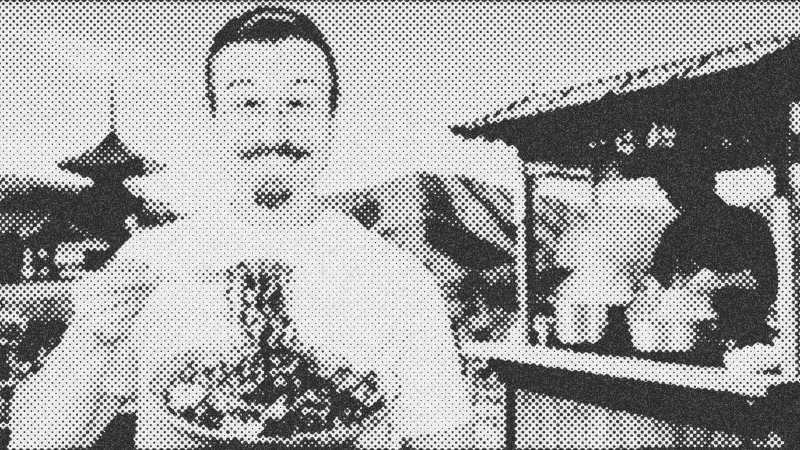
Yet, this comparative approach carries inherent limitations. Declaring a singular 'best' inevitably flattens the rich, nuanced histories of these dishes. It risks reducing a living cultural artifact to a mere commodity, stripped of its original context—the street vendor's stall, the family kitchen, the communal feast. The subjective nature of taste, deeply influenced by individual upbringing and cultural conditioning, renders any definitive ranking inherently tenuous. Moreover, the methodology of a casual tasting, however enthusiastic, rarely captures the full sensory and historical depth that gives these dishes their true meaning.
Echoes of Ancient Palates: A Comparative Glance
Harkening back to ancient civilizations, we find similar quests for culinary excellence, though rarely framed in global competition. The Romans prized certain grains; the Mayans revered cacao. Each culture developed its staple foods not in isolation, but in dialogue with its environment and neighboring peoples. The evolution of noodles themselves, from ancient Chinese origins spreading across Asia, testifies to this cross-cultural exchange. Comparing a bowl of Tokyo ramen with a plate of Thai pad thai is not merely a taste test; it is a juxtaposition of distinct culinary evolutions. Ramen speaks of meticulousness and deep flavor extraction, a testament to a culture of disciplined artistry. Pho, by contrast, speaks of adaptability, French colonial influence, and the art of aromatic layering. Pad Thai embodies a national dish forged in the fires of modern identity, a balance of vibrant, accessible flavors.
Culinary Cartography: A Valued Endeavor
While the notion of definitively crowning the 'world's best noodle' remains an appealing, yet ultimately elusive, endeavor, the journey itself holds immense academic value. Such explorations, despite their limitations, serve as a vital form of culinary cartography, mapping the incredible diversity of human ingenuity in the realm of food. They prompt inquiry, stimulate cross-cultural dialogue, and, crucially, remind us that the simplest foods often carry the weightiest cultural narratives. We recommend engaging with such content not for a definitive answer, but for the opportunity to reflect on the profound connections between our sustenance and our shared human story. It is a palatable entry point into the vast, complex world of human civilization.
- chinese noodles
- 8%· noodle dishes
- hand pulled noodles
- 8%· noodle dishes
- ichiran ramen
- 8%· noodle dishes
- japanese noodles
- 8%· noodle dishes
- korean noodles
- 8%· noodle dishes
- Other topics
- 58%
I Tested The World's Best Noodles
WatchJoshua Weissman // 24:06

Hi, I'm Josh and I make entertaining, exciting, and inspirational videos about food and cooking. I'm obsessive about bread, and I like to eat things that have a large quantity of butter in them. All I want is to entertain and excite YOU about food, and maybe inspire you to go cook something yourself. Find me on: https://instagram.com/joshuaweissman https://twitter.com/therealweissman https://facebook.com/thejoshuaweissman https://joshuaweissman.com For any Business, brand or partnership enquiries Email: [email protected]