Lucia Solis exposes the marketing myths inside your morning coffee cup
The Invisible Engine of Coffee Flavor
Most people view coffee as a simple crop. You pick the cherry, roast the seed, and brew the cup. Yet, a silent, biochemical transformation occurs long before the green beans reach a roaster. Coffee Fermentation dictates the flavor profile of almost every cup consumed globally. While many consumers believe fermentation is a modern specialty trend, it is actually an ancient utility. Historically, producers used microbial action simply to strip away sticky fruit mucilage, not to design flavor. Today, a shift in perspective is changing how we understand this vital step.
Beyond Simple Rot: The Mechanics of Microbial Action
To understand the process, one must look at a coffee wet mill. For generations, farmers used fermentation as a functional tool. After harvest, a machine squeezes the seeds out of the cherry. However, a stubborn layer of sugary mucilage remains. Microbes—yeasts and bacteria—naturally consume these sugars, breaking them down into acids and aromatic compounds. Once dissolved, the mucilage washes away easily, leaving a clean seed ready for the drying patios.
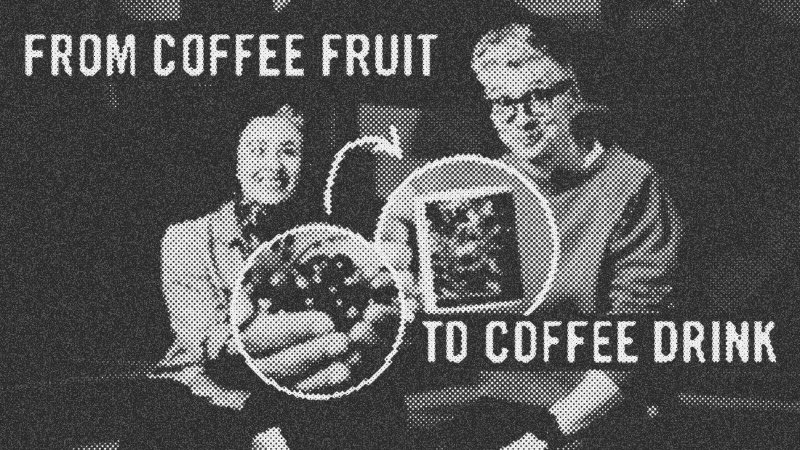
Some dismiss this process as controlled rotting. Yet, fermentation consultant Lucia Solis, who transitioned from the Napa Valley wine industry to coffee, draws a sharp line. The difference between rot and fermentation lies in intention, not flavor. Uncontrolled microbial action yields defects, while deliberate management yields consistency.
Dismantling the Industry’s Favorite Buzzwords
As specialty coffee grows, marketing terms often outpace scientific reality. Solis and specialty coffee authority James Hoffmann recently examined these gaps on-site at a farm in Guatemala.
The Illusion of "Anaerobic" Processing
The term "anaerobic fermentation" dominates modern coffee labels, suggesting a high-tech, oxygen-free method. Solis warns that this is a scientific redundancy. Fermentation, by definition, is an anaerobic metabolic pathway. Dissolved oxygen tests in wide-open, outdoor concrete tanks show oxygen levels quickly dropping below two parts per million. This environment is technically anaerobic, even without sealed plastic containers. The term has become a misleading shorthand for container design rather than microbial activity.
Co-Ferments Versus Chemical Infusions
A similar confusion surrounds "co-fermented" coffees, which boast wild flavors like strawberry or watermelon. True co-fermentation involves adding actual fruit to the tank. This process adds more sugar and wild local microbes, acting like wood thrown onto a fire to fuel the existing fermentation.
However, many intensely flavored coffees never encounter real fruit. Instead, producers add cheap flavor crystals or spices directly to the tank. Since the tank is the traditional site of fermentation, farmers culturally label the resulting crop as "co-fermented." In reality, adding cinnamon—which is antimicrobial—acts as an infusion or a flavor block rather than a true co-ferment.
The Brutal Reality of the Drying Patio
Once microbes finish their work, the final stage is removing water. On traditional concrete drying patios in Central America, workers spread coffee under the sun to drop its moisture content from 50 percent down to a stable 10.5 percent. This requires immense, backbreaking physical labor. Workers walk the patios, turning the seeds constantly.
Hoffmann highlights a stark truth: every single seed on these patios was plucked by hand. The massive physical scale of even a modest farm makes cheap supermarket coffee seem like an impossibility.
A More Educated Palate
Fermentation is not a gimmick to seek out on a retail shelf. It is a fundamental process that has always existed in your cup. By understanding the distinction between wild microbial action, targeted inoculation with yeast or lactobacillus, and simple chemical infusions, coffee drinkers can move past marketing hype and appreciate the true craft of the farm.
- Coffee Fermentation
- 25%· products
- Guatemala
- 25%· locations
- James Hoffmann
- 25%· people
- Lucia Solis
- 25%· people
I Went To Guatemala To Explain Why All Coffee Is Fermented
WatchJames Hoffmann // 25:45

Hi! My name is James, and I make videos about anything and everything to do with coffee, occasionally food and sometimes business/entrepreneurship. I create how-tos, guides, reviews, vlogs, video essays and mini-documentary films. In the real world, I've started a few companies, I wrote "The World Atlas of Coffee" and "How To Make The Best Coffee At Home". I do a little advisory work for startups too. If you want to get in touch, drop me a line but please read these two things first: 1. I don't do paid reviews. I have a Patreon that helps me buy the products I want to review to prevent bias (then I give them away!) 2. I get a lot of email, so sadly I can't help with queries about which equipment you should buy. TO GET IN TOUCH PLEASE REACH OUT VIA WEBSITE: https://www.jameshoffmann.co.uk/contact-me Management: Ziggurat XYZ