The Raw Authenticity of Jennifer Lawrence: Balancing Stardom with Radical Realism
The Unfiltered Evolution of an Icon
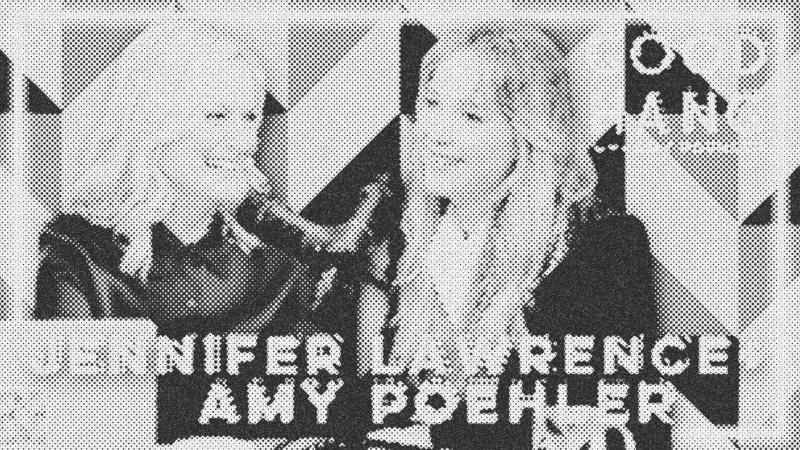
When Jennifer Lawrence first erupted into the cultural consciousness, she was often framed as the industry’s most relatable outlier. A decade later, that perceived “relatability” has matured into something far more substantial: a radical commitment to personal truth in an industry that demands artifice. In a deep-dive conversation with Amy Poehler, Lawrence peels back the layers of her surreal trajectory, from a chance encounter in Union Square to her current role as a savvy producer and mother. This isn't merely the story of a movie star; it is a case study in maintaining an unjaded psyche while navigating the dizzying mechanics of global fame.
Her producing partner Justine Ciarrocchi describes Lawrence as a "wild beast" during their early days in Los Angeles. This lack of traditional social anxiety or "jadedness" has become Lawrence’s most effective armor. While many of her contemporaries retreated into carefully managed personas, Lawrence remained strikingly transparent. This transparency, however, comes with a cost. She admits to being weary of the tabloid cycle where a stray comment about a reality star becomes a headline, yet she refuses to adopt the defensive mystery that defines many A-list careers. Instead, she leans into the irony of her position, acknowledging the absurdity of being both a "physical and spiritual" actor and someone who would happily spend her days folding laundry on a yacht.
From Louisville to the A-List: The Accidental Fastball
One of the most enduring myths of Hollywood is the "discovery" story, yet Lawrence’s origin remains one of the few that feels genuinely providential. Spotted by a scout while watching street dancers during spring break, she possessed no formal training and no local connections to the industry. She describes herself as having a "fastball" for acting that she didn't even know she possessed until it was called upon. This lack of a traditional pedigree allowed her to swerve the neuroses that often plague child actors. She didn't grow up performing in mirrors; she grew up training horses and babysitting in Louisville, Kentucky.
This grounded upbringing informs her approach to the work. When she discusses her early breakthrough in Winter's Bone or the grueling schedule of The Hunger Games, she focuses on the logistical and physical realities rather than the ego of the performance. Her career reached its most intense velocity between the ages of 19 and 22—a period she recalls with a mix of nostalgia and exhaustion. During this era, she was often too young to drink at the very Oscars ceremonies where she was being honored, creating a strange disconnect between her professional maturity and her personal timeline. It is this specific friction—being a global leader of a franchise while still feeling like a kid from Kentucky—that forged the resilient, witty persona the public sees today.
The Producer’s Gaze: Reclaiming Control via Excellent Cadaver
In recent years, Lawrence has shifted her focus toward the structural side of storytelling through her production company, Excellent Cadaver. This transition isn't just a business move; it's a reclamation of agency. After a career spent being the "face" of massive projects, she now obsesses over call sheets and the granular logistics of a set. She finds comfort in the systems and the "woman's brain" approach to organization. Working with Justine Ciarrocchi, Lawrence has curated a slate of films like Causeway and Die My Love that favor internal, stripped-back performances over the spectacle of her early 20s.
The Power of Female Collaboration
Lawrence notes that her formative experiences were shaped by female directors, a rarity in the industry. This early exposure to women in leadership roles made her realize that directing and producing were viable paths for her own future. She values the "logistics" of filmmaking as much as the artistry, often asking to see the post-production process and engaging with the technical crew. This collaborative spirit is evident in her partnership with Lila Neugebauer and her deep professional respect for actors like Brian Tyree Henry. By surrounding herself with trusted friends and brilliant creators, she has built a protective ecosystem that allows her to be her most creative self without the fear of exploitation.
Pop Culture, Millennials, and the "Fourth Turning"
Despite her status, Lawrence remains a voracious consumer of the very pop culture that often consumes her. Her insights into reality television, such as Below Deck and The Kardashians, reveal a woman who uses media as a decompression tool. She jokes about wanting to be a laundry stewardess on a yacht just to have a system and listen to murder podcasts in peace. This self-deprecation masks a sharper intellect; she is currently preoccupied with the concept of the The Fourth Turning, a sociological theory suggesting that millennials are the generation destined to save society from its current cycle of chaos.
Her perspective on the millennial experience is one of weary optimism. She laughs at the "gentle parenting" trends and the generational gap between herself and her 23-year-old assistant, yet she embraces the responsibility of being part of a cohort that has seen the world shift dramatically. Whether she is debating the physics of Emma Stone's "hollow bones" in a hypothetical race or singing Shania Twain classics, Lawrence represents a specific brand of millennial resilience. She is old enough to remember the world before total digital saturation but young enough to be the hero of the next era.
The Future of the "Wild Beast"
As she moves into her mid-30s, Lawrence seems less interested in the "movie star" label and more focused on the craft of longevity. She has written a comedy that she intends to direct and star in, marking a new chapter of total creative control. She continues to challenge herself with intense, physically demanding roles—such as the descending madness depicted in Die My Love—while maintaining a home life that she guards fiercely. The "wild beast" hasn't been tamed; it has simply learned how to build its own cage on its own terms.
Ultimately, Lawrence’s impact on the industry lies in her refusal to be a mystery. By choosing to be "real" in a world of filters, she has created a blueprint for how to survive fame without losing one's soul. She remains a champion of other women, a student of the industry's logistics, and a performer who still possesses that raw, unteachable fastball. The next decade of her career promises to be even more formidable as she steps behind the camera to shape the narratives she once only inhabited.
- Die My Love
- 7%· movies
- Justine Ciarrocchi
- 7%· people
- Kentucky
- 7%· places
- Alone
- 3%· tv shows
- Amy Poehler
- 3%· people
- Other topics
- 72%
Jennifer Lawrence | Good Hang with Amy Poehler
WatchGood Hang with Amy Poehler // 54:33

Come hang with Amy Poehler. Each week on her podcast, she'll welcome celebrities and fun people to her studio. They'll share stories about their careers, mutual friends, shared enthusiasms, and most importantly, what's been making them laugh. This podcast is not about trying to make you better or giving advice. Amy just wants to have a good time.