Seven Tour de France bikes reveal the brutal evolution of speed
The mountains do not compromise. They demand every ounce of grit you possess, and if your gear cannot handle the torture, the wild will simply break you. For over a century, the Tour de France has served as the ultimate proving ground for human endurance and mechanical evolution. The pace of technological change in this race has gone from a slow crawl to a vertical rocket launch. Seeing seven decades of machines side by side reveals that we did not just build better bikes; we completely re-engineered how humans battle gravity and wind.
Raw Steel and Friction: Suffering in the 1950s and 1960s
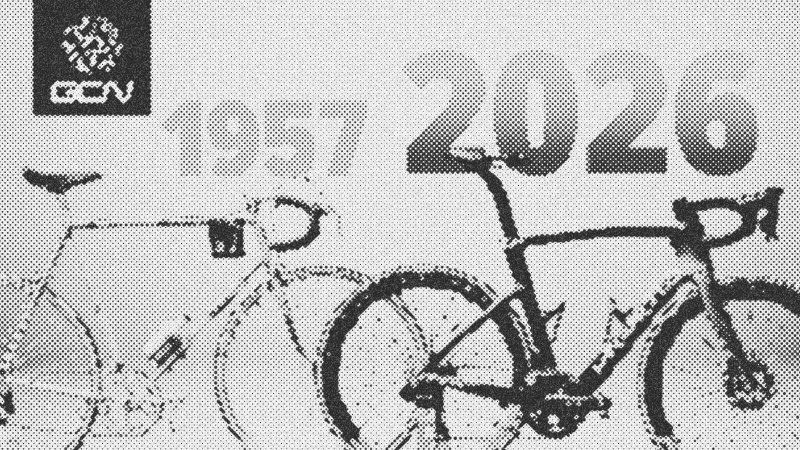
In 1957, racing was a rugged, brutal sport. The roads were mostly unpaved gravel. The bikes had to survive violent vibration. Enter the Fiorelli Coppi, handbuilt with heavy steel tubes and tipping the scales at 11 kilograms. It is a tank compared to modern rigs, but it got the job done. The real challenge lay in the cockpit and the drivetrain. This machine featured only 10 gears, operated by simple metal levers mounted on the down tube. There were no indexed clicks. To change gears, you had to reach down, grab a lever, and use pure muscle memory and finesse to align the chain.
By 1969, the legendary Eddy Merckx was dominating the mountains on a similar steel setup. His race machine relied on a Campagnolo group set that traded heavy steel for anodized aluminum. It was a step forward, but still a beast to climb with. The gears were massive, forcing riders to grind up brutal Alpine cols at 60 revolutions per minute. It was a leg-snapping, lung-burning struggle. On these vintage steel rigs, you are constantly fighting the bike. The steering is slow, the brakes require a business week's notice to bring you to a halt, and the drop bars force you into a grueling, stretched-out position. It is pure, unfiltered suffering.
The Birth of Indexing: How the 1980s and 1990s Swapped Guesswork for Precision
By the time the 1980s arrived, the technology finally began to match the ambition of the athletes. Steel was still the king of materials, but frame builders like De Rosa used lighter alloy blends to bring bike weights below the 10-kilogram mark. Drivetrains evolved to offer 14 speeds, introducing titanium parts to shed grams and add a premium aesthetic. Shifting was still on the down tube, but the mechanical feedback became sharper.
Then came 1994, and with it, a massive leap in shifting precision courtesy of Shimano. The steel Merckx ridden by British legend Sean Yates featured eight gears at the back, but more importantly, it introduced indexed shifting. No more guessing. No more finessing levers mid-climb. You simply clicked, and the derailleur snapped the chain into place with crisp, mechanical authority. Yates preferred down tube shifters over the newer brake-lever-integrated shifters of the era, showcasing the stubbornness of old-school pros. This era also embraced massive 46-centimeter-wide handlebars and absurdly long 180-millimeter crank arms for extreme leverage. It was twitchy, aggressive, and felt like a true race machine.
The Aluminum Rebellion: When the 2000s Compacted the Frame
At the turn of the millennium, steel was dead in the professional peloton. The 2001 Giant TCR represents a total departure from traditional design. Built from ultra-light, volatile aluminum, this frame weighed less than 1,000 grams. It was so thin that teams had to replace the frames every few races to prevent catastrophic failures.
The TCR pioneered compact geometry with a sloping top tube. This created a smaller, stiffer, and vastly more agile frame triangle. It handled like a Go-Kart. It was nimble, twitchy, and incredibly responsive to out-of-the-saddle efforts. Weight dropped significantly, making the ride feel lively and immediate. For the first time, frame designers also started paying attention to aerodynamics, shaping the carbon seat post to slice through the wind. Clipless pedals were now standard, locking the rider's feet directly to the drivetrain for maximum power transfer.
Carbon and Air: The Modern Aero Explosion
By 2010, carbon fiber had completely taken over. The Cervelo S3 ridden by Dan Lloyd became the benchmark for the aerodynamic revolution. Suddenly, it was not just about saving weight; it was about beating the invisible wall of air resistance. Designers began shaping every single tube to mimic airplane wings. This bike was fast, stiff, and unapologetic.
Fast forward to 2026, and the Pinarello Dogma F is essentially a Formula 1 car with pedals. It is a rocket ship. The frame features wireless electronic shifting, eliminating all visible cables. It utilizes 3D-printed titanium components, hydraulic disc brakes, and tubeless tires that are significantly wider than their vintage predecessors to drastically lower rolling resistance. The technology curve is no longer linear; it is a J-curve that has exploded upward.
Comparing the 1957 Fiorelli to the 2026 Dogma F is like comparing a wooden kayak to a carbon-hull racing boat. Both will get you across the water, but only one lets you fly. The old steel rigs offered a raw, primitive connection to the road, but the modern carbon weapon is built for pure, unadulterated speed. If you want to push your absolute limits in the wild, modern engineering has given us the ultimate tools to do it.
- Campagnolo
- 10%· companies
- Cervelo S3
- 10%· products
- Dan Lloyd
- 10%· people
- De Rosa
- 10%· products
- Eddy Merckx
- 10%· people
- Other topics
- 50%
We Test 7 Tour De France Bikes From 7 Decades
WatchGlobal Cycling Network // 32:46

The Global Cycling Network puts you in the centre of the action: from the iconic climbs of Alpe D’Huez and Mont Ventoux to the cobbles of Flanders, everywhere there is road or pavé, world-class racing and pro riders, we will be there bringing you action, analysis and unparalleled access every week, every month, and every year. We show you how to be a better cyclist with our bike maintenance videos, tips for improving your cycling, cycling top tens, and not forgetting the weekly GCN Show. Join us on YouTube’s biggest and best cycling channel to get closer to the action and improve your riding! Welcome to the Global Cycling Network!