The Power Paradox: Why Bulk is the New Aerodynamic Advantage
The Death of the Skeletal Climber
For decades, the cycling world worshipped at the altar of the 'Weight Weenie.' Pro riders looked like skeletal aliens, their skin stretched thin over protruding ribs, sacrificing every ounce of muscle mass to conquer the high mountain passes of the Tour de France. We were told that power-to-weight ratio was the only metric that mattered. If you weren't starving, you weren't trying. But a seismic shift is happening in the peloton. Look at the recent performance of Tadej Poga ar at Strade Bianche. He didn't just win; he dominated with a physique that looked noticeably stockier and more robust than in previous seasons.
This isn't an accident or a lack of discipline. It is a calculated evolution. Top-tier coaches and sports scientists are realizing that the obsessive pursuit of extreme leanness often leads to diminishing returns, hormonal imbalances, and a lack of raw, explosive power. When you're pushing for Paris-Roubaix or the brutal gravel sectors of Tuscany, you need more than just a high VO2 max; you need the structural integrity to withstand the punishment. The era of the wafer-thin cyclist is ending, replaced by a new breed of athlete who prioritizes functional strength over the number on the scale.
The Science of Mass and Metabolism
Olaf Alexander Bu, the world-renowned coach behind triathlon legends and now working with the Uno-X Mobility pro cycling team, is leading this charge. He argues that developments in modern nutrition allow athletes to fuel at such high levels—up to 120 or 150 grams of carbohydrates per hour—that the body can finally support more muscle mass without fading. In the past, riders were constantly in a state of glycogen depletion, meaning their bodies would eat away at their own muscle just to survive a three-week Grand Tour.
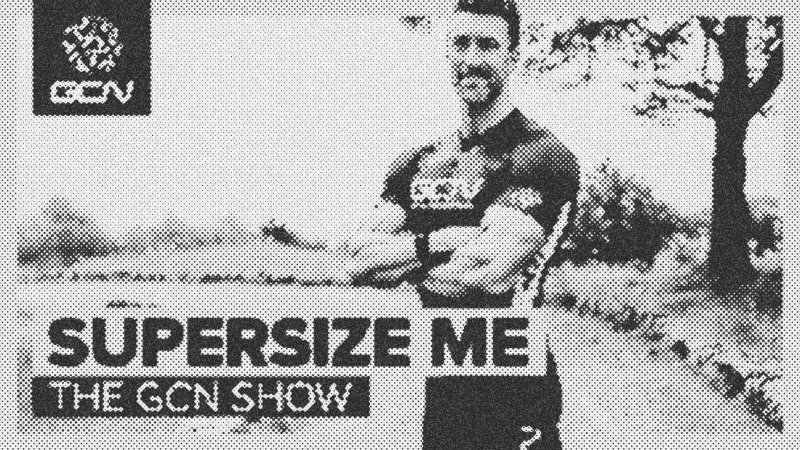
By carrying slightly more weight, specifically in the form of lean muscle, a rider gains a massive advantage in raw wattage. On flat or rolling terrain, the aerodynamic penalty of being slightly broader is often outweighed by the sheer force those extra muscle fibers can generate. It’s a simple trade: a few extra kilograms for an extra 20 to 30 watts of sustained power. For a rider like Tadej Poga ar, who is targeting the Milan-San Remo, that extra 'beef' provides the snap needed to drop world-class sprinters on the Poggio. It’s about becoming a more versatile weapon, not just a mountain goat.
The Psychological Toll of the Scale
Beyond the performance data, this shift toward a healthier body weight is a moral necessity for the sport. Cycling has long been haunted by the specter of eating disorders and body dysmorphia. When the 'pinnacle of health' looks like someone on the verge of collapse, the message sent to amateur 'weekend warriors' is toxic. Many riders spend years weighing every grape and obsessing over the scale, only to find themselves frequently sick, chronically fatigued, and eventually burnt out.
Breaking the habit of daily weighing is a victory in itself. When you focus on muscle mass and bone density, you build a body that is resilient. A heavier, stronger cyclist has a more robust immune system and recovers faster from the intense micro-trauma of training. This consistency is what actually leads to long-term gains. If you are too thin to stay healthy, you can't train. If you can't train, you won't get faster. True mental toughness is having the courage to ignore the 'skinny is fast' myth and build a body that can actually handle the work.
Engineering Speed: The 2024 Tech Wave
While the riders are getting stronger, the machines are becoming more efficient to match. The latest fleet of bikes for 2024 shows that manufacturers are no longer just chasing the lowest weight; they are chasing the best integration of aerodynamics, stiffness, and comfort. The new Giant Propel is a prime example. While it is incredibly light at 6.56kg, its real advantage lies in the 18-watt saving over its predecessor, achieved through narrower handlebars and reduced rolling resistance.
Other brands like Merida and Bianchi are following suit. The Merida Reacto and the Bianchi Infinito are designed for the 'real world.' They feature increased tire clearance—up to 40mm in the case of the Infinito—reflecting the reality that most cyclists aren't riding on glass-smooth tarmac. These bikes are built to be stable at high speeds, providing the platform necessary for a more powerful rider to put every ounce of effort into the road without the frame flexing or the ride becoming jarring. Even celebrities like Ed Sheeran are opting for these high-performance, aero-focused machines, proving that the desire for speed is universal.
Implications for the Amateur Athlete
What does this mean for the average rider who isn't vying for a podium in Italy? It means you should stop worrying about the carbon bottle cage that saves you 10 grams and start focusing on your deadlift. For the vast majority of cyclists, the limiting factor isn't their body weight; it's their lack of raw power and structural stability. Most amateur races or club rides aren't won on 10% gradients; they are won in the final 500 meters or on the rolling sections where strength is king.
Building muscle provides better bone density, which is critical for long-term health, especially since cycling is a non-weight-bearing sport. It also makes you more comfortable in your own skin. There is a certain irony in a cyclist who is 'mountain thin' but can't sustain a high tempo on a flat road because they have no core strength. By embracing a bit more mass, you become a more capable athlete in all areas of life, not just on the bike. Strength is a prerequisite for endurance, not an alternative to it.
A More Robust Future
Looking back at the 1960s and 70s, icons like Eddy Merckx and Bernard Hinault looked like powerhouse athletes. They had shoulders, they had biceps, and they looked like they could handle themselves in a scrap. Somewhere in the 1990s, the sport lost its way and became obsessed with a skeletal aesthetic. We are finally seeing a return to that robust, powerful look, backed by modern science and superior nutrition.
The future of cycling is muscular. It is an era where Tadej Poga ar can win a 215km classic with an 80km solo attack because he has the physical reserves to sustain that effort. For everyone else, it’s an invitation to eat well, lift heavy, and stop fearing the scale. You don't need to look like a ghost to fly up a hill. You need to be a machine. Be stronger than you were yesterday, and the speed will follow.
- Bernard Hinault
- 5%· people
- Bianchi Infinito
- 5%· products
- Brompton World Championships
- 5%· events
- Cervelo Caledonia
- 5%· products
- Ed Sheeran
- 5%· people
- Other topics
- 74%
Why A Heavier Cyclist Is A Better Cyclist | GCN Show Ep. 687
WatchGlobal Cycling Network // 44:32

The Global Cycling Network puts you in the centre of the action: from the iconic climbs of Alpe D’Huez and Mont Ventoux to the cobbles of Flanders, everywhere there is road or pavé, world-class racing and pro riders, we will be there bringing you action, analysis and unparalleled access every week, every month, and every year. We show you how to be a better cyclist with our bike maintenance videos, tips for improving your cycling, cycling top tens, and not forgetting the weekly GCN Show. Join us on YouTube’s biggest and best cycling channel to get closer to the action and improve your riding! Welcome to the Global Cycling Network!