Venker warns women: career-first choices lead to a dead end at thirty
The Cultural Trap of the Interchangeable Human
For more than half a century, Western society has conducted a vast, unplanned social experiment. It has operated on a singular, foundational premise: men and women are entirely interchangeable. This core tenet of modern cultural conditioning tells young girls that equality is synonymous with sameness. It instructs them that their worth correlates directly with their economic productivity. Dr. Suzanne Venker, a prominent relationship coach and author, suggests this messaging has systematically set up an entire generation of women to fail.
By putting career at the absolute center of their identities, young women construct lives modeled on male developmental timelines. They invest their twenties in building professional equity, accumulating credentialing, and often taking on significant financial debt. However, this trajectory ignores a fundamental biological reality. A man’s biological clock does not tick with the same relentless urgency as a woman’s. When women reach their early thirties, a profound cognitive shift occurs. The desire for marriage and motherhood, previously dismissed or deferred, suddenly takes center stage.
This is not a failure of individual planning. It is a predictable consequence of a political ideology that prioritizes economic utility over human nature. When women find themselves at thirty-two with a demanding career, high student debt, and no viable partner, they realize they have been sold a bill of goods. They have optimized for a lifestyle that actively hostilely crowds out the very things that produce long-term human flourishing.
Three Critical Decisions Locking Women Into Professional Golden Cages
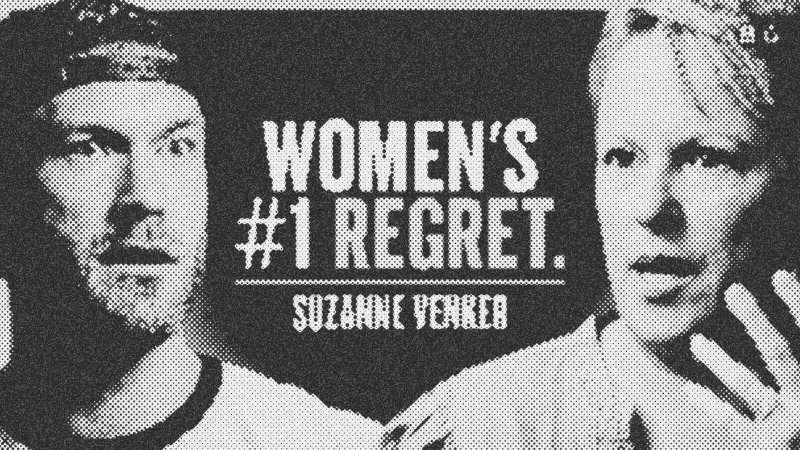
To understand why so many highly capable, successful women find themselves stuck in their early thirties, we must examine the choices they make in their twenties. Dr. Venker identifies three primary areas where young women consistently make choices that compromise their future flexibility: professional, relational, and financial.
The Professional Alignment Mistake
Instead of playing the long game, young women are told to choose careers based solely on prestige, status, or raw earning potential. They enter high-stress, low-flexibility fields like corporate law, investment banking, or demanding medical specialties. These fields require twenty-four-seven commitment. Dr. Venker argues that women should do the exact reverse: put family goals at the nucleus and design a career that orbits around that center. This means actively selecting fields with high lateral mobility, low barriers to part-time transitions, or opportunities for independent consulting and remote work. Choosing a rigid, demanding career in your twenties is a decision that strips you of options when your priorities shift a decade later.
The Relational Footing Oversight
In an era dominated by rhetoric about female independence, screening potential partners for financial stability has become socially taboo. Young women are told they do not need a provider. Consequently, they often form relationships with men who have not found their professional footing. This creates a severe demographic mismatch. Data shows the top twenty percent of female earners frequently marry down socioeconomically, while lower-earning men marry up. While this arrangement looks equal on a spreadsheet, it creates a relational trap. When a woman has children, her desire to provide professionally naturally drops, while her desire to nurture rises. If her partner cannot support the family financially, she is forced back into the workforce. She is trapped by the economic dependency she sought to avoid.
The Debt Anchor
The American student debt crisis is not merely a financial issue; it is a major relational bottleneck. Well-meaning parents encourage their daughters to take on six-figure loans to secure elite degrees, promising they can easily pay them back. But debt acts as a powerful anchor. By the time a woman establishes her career and begins paying down her loans, she is entering her prime childbearing years. The financial pressure makes it virtually impossible to step back from full-time work. She cannot afford to stay home with her children, not because she lacks the desire, but because her monthly debt obligations demand a dual-income household.
The Great Maternity Lie and the Myth of Quality Time
When women attempt to combine high-powered careers with full-time motherhood, they quickly run into physical limits. The modern response to this conflict is to outsource childcare and rely on "quality time." High-profile executives like Skims CEO Emma Greed have popularized the idea of the "three-hour maximum" with their children, claiming that focused, intense interactions on the weekend are enough to make up for a week of absence.
Dr. Venker dismisses this theory as a convenient myth designed to soothe maternal guilt. Children do not operate on a schedule of pre-arranged intimacy. They do not care about quality time; they require massive amounts of quantity time. Secure attachment is built during the mundane, quiet, unstructured moments of daily life. It is established when a parent is physically present and available, not just during high-energy, weekend play sessions.
Attempting to run a demanding business while raising multiple children is like trying to be a doctor and a lawyer at the same time. They are two full-time, resource-heavy callings that inherently clash. When a woman tries to do both, something must give. Typically, the price is pushed down the line, showing up decades later as relational dysfunction and attachment issues when those children enter adulthood.
Moving With the Biological Tide
Modern culture operates on the assumption that societal progress can override biology. But human instinct is remarkably stubborn. Dr. Venker’s guiding principle for women is simple: "Move with the biological tide, not against it." When you fight your natural inclinations, you create constant internal friction and unhappiness.
The Polar Shift of Parenthood
When a child is born, the psychological trajectories of mothers and fathers naturally diverge. A mother’s instinct pulls her toward protection, nurturing, and physical proximity to her infant. A father’s instinct pulls him outward, driving him to provide, protect, and secure the family’s physical environment. This is not a social construct; it is a biological reality.
When couples enter parenthood with a rigid, fifty-fifty expectation of equal division of labor, they set themselves up for resentment. They turn their home into a business partnership, tracking tasks, comparing hours worked, and keeping score. This tit-for-tat dynamic is highly toxic to intimacy. It ignores the natural synergy that occurs when partners embrace complementary, rather than identical, roles.
The Hidden Price of Public Praise
Society highly values and publicly praises women who achieve corporate status and financial independence. But as host Chris Williamson notes, "What you're praised for in public, you pay for in private." The accolades of the marketplace do not translate into peace, warmth, or intimacy at home.
Women who bring their masculine, type-A, professional energy into their relationships often find that it acts as a repellant. The assertiveness, skepticism, and disagreeableness required to negotiate a pay raise are disastrous when applied to a partner. To build a healthy, harmonious home, women must learn to cultivate softness, receptivity, and vulnerability. These traits are often denigrated by corporate culture but are essential for long-term romantic happiness.
Reclaiming the Value of the Domestic Sphere
The modern Western world is intensely materialistic and individualistic. It measures human value almost entirely by economic output and status. Because domestic labor, caregiving, and child-rearing do not generate immediate financial returns, they have been culturally devalued.
This shift has had severe societal consequences. The dramatic rise in childhood obesity, mental health struggles, and developmental issues over the past fifty years aligns closely with the mass exit of mothers from the home. The kitchen, once the center of family health and connection, has been replaced by fast food and convenience culture because working parents simply do not have the energy to cook after a ten-hour workday.
Creating a stable, loving, and orderly home is a highly valuable endeavor. It is a complex calling that requires deep emotional intelligence, organization, and dedication. When we treat domestic life as a minor chore to be outsourced to low-wage workers, we undermine the foundation of healthy child development.
For young women looking to build a satisfying life, the path forward requires courage. It demands that they ignore the loud, career-obsessed messaging of social media and modern media. Instead, they must align their early decisions with their long-term relational goals. By choosing flexible professions, picking partners they can depend on, and avoiding unnecessary debt, women can protect their options. They can build lives of genuine purpose, security, and lasting happiness, rooted in the families they create rather than the careers they leave behind.
- Chris Williamson
- 20%· people
- Emma Greed
- 20%· people
- How to Build a Better Life
- 20%· books
- Suzanne Venker
- 20%· people
Women Work So Hard For Lives They Don’t Want - Suzanne Venker
WatchChris Williamson // 1:57:20
