How To Fix Your Brain: A Masterclass in Cognitive Resilience and Limitless Learning
Reclaiming Your Mind in the Age of Digital Overload
Modern life feels like taking a sip of water from a fire hose. We are currently navigating a world where information doubles at dizzying speeds, yet our biological hardware—the human brain—hasn't received an upgrade in millennia. This constant data deluge leads to what Jim Kwik describes as an ‘assault’ on our mental faculties, manifesting as chronic distraction, forgetfulness, and a persistent state of information anxiety.
The problem isn't necessarily technology itself, but how it amplifies our natural tendencies toward task-switching and context-fragmentation. When we spend our days reacting to the pings, rings, and dings of notifications, we are training our brains to have a shorter attention span. We are effectively habituating ourselves into a state of functional ADHD. This guide is designed to help you exit that reactive loop. By understanding the underlying psychology of cognitive performance and applying structured, science-backed strategies, you can transition from a ‘thermometer’ that merely reacts to the environment to a ‘thermostat’ that sets the temperature of its own mental life.
Tools for the Limitless Mind
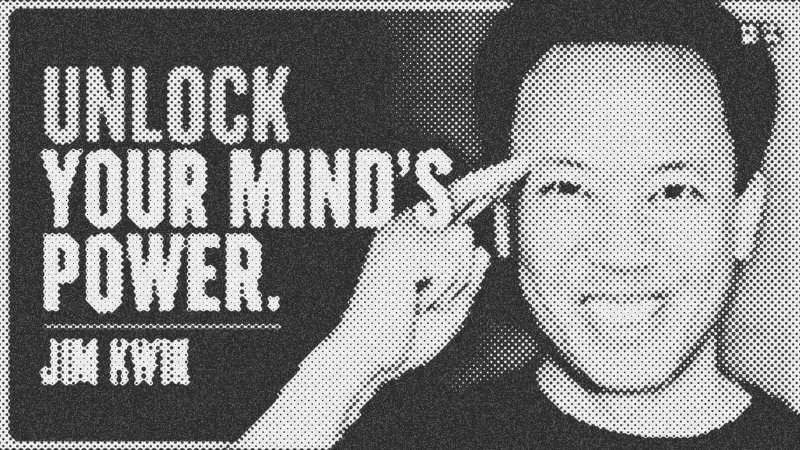
To begin this process of cognitive restoration, you don't need expensive equipment, but you do need intentionality. Gather these internal and external resources:
- The 321 Rule Mindset: A commitment to structured evening boundaries.
- High-Quality Neuro-Nutrition: Access to whole foods like avocados, blueberries, and walnuts.
- A Memory Palace Map: A familiar physical location (like your home) to use as a mental filing system.
- Refined Curiosity: The willingness to ask ‘Active Questions’ while consuming any content.
- Strategic Supplementation: Consideration of dhas, Creatine, and colinergics like Alpha GPC after consulting a professional.
- Environmental Cues: Tools for ‘clean’ living, including air purifiers or natural light sources.
Step 1: Dismantle the Lies of Learning
Before you can fix your brain, you must remove the ‘LIES’—Limited Ideas Entertained. The most damaging lie is the belief that genius is born, not built. This deterministic view of intelligence creates a fixed mindset that causes you to sabotage your own efforts. When you say, ‘I have a bad memory,’ you are programming your internal supercomputer to fail. Your brain is a supercomputer, and your self-talk is the program it runs.
Shift your language immediately. Instead of saying ‘I'm not good at this,’ add the word yet. This small linguistic tweak maintains the possibility of growth. Remember that genius is largely a result of pattern recognition and deep work. Like a counselor carrying piglets up a flight of stairs, your mental strength grows through consistent, incremental resistance. If you fight for your limitations, you get to keep them. Stop arguing for your limits and start arguing for your potential.
Step 2: Implement the 10 Keys to Brain Performance
To achieve peak performance, you must move ten specific ‘levers’ that influence your brain health. While genetics account for about one-third of your cognitive function, two-thirds remain entirely within your control.
- A Good Brain Diet: Your brain is an energy hog, consuming 20% of your nutrients despite being only 2% of your body mass. Prioritize ‘brain berries’ (blueberries), avocados for healthy fats, and dark chocolate for focus.
- Killing ANTs: Eliminate Automatic Negative Thoughts. This is the practice of standing guard at the door of your mind to prevent self-deprecating cycles.
- Exercise: Physical movement is non-negotiable. As your body moves, your brain grooves. Strength training, in particular, stimulates Brain-Derived Neurotrophic Factor (BDNF), which acts like fertilizer for new neurons.
- Brain Nutrients: Supplement where your diet falls short. Focus on Omega-3 fatty acids, B-vitamins, and Magnesium L-Threonate to support the colinergic system.
- Positive Peer Group: You are the average of the people you spend the most time with. Mirror neurons ensure you pick up the habits and thoughts of your social circle.
- Clean Environment: A cluttered desk equals a cluttered mind. Ensure your air, light, and physical workspace are organized to minimize ‘visual fatigue.’
- Sleep: This is the period when your brain cleans out neurotoxins and consolidates short-term memory into long-term storage. Use the 321 Rule: No food 3 hours before bed, no liquids 2 hours before, and no screens 1 hour before.
- Brain Protection: Protect your physical hardware from injury. Fragility is the price of our complex biology.
- New Learnings: Longevity studies, such as the famous study on aging nuns, show that lifelong learning adds ‘life to your years.’ Seek novelty daily.
- Stress Management: Chronic stress shrinks the human brain and locks you into ‘survival mode,’ hijacking your executive function. Practice mindfulness or body work to lower cortisol.
Step 3: Master the Mechanics of Memory
Memory is not something you have; it is something you do. It consists of three phases: Encoding, Storage, and Retrieval. Most people fail at retrieval because they never properly encoded the information. To make data ‘sticky,’ you must tie it to emotion and visualization.
Use the Memory Palace technique. Take a list of items you need to remember and mentally place them in a familiar environment, such as your kitchen. Place avocados on the microwave and blueberries in the sink. Our ancestors didn't need to remember abstract numbers; they needed to remember where the clean water was. By using spatial locations, you tap into your evolutionary survival mechanisms. Additionally, use the ‘Explanation Effect’: Learn with the intention of teaching the material to someone else. This shifts your brain from passive consumption to active processing.
Step 4: Optimize Focus through Speed and Filtration
Concentration is often a function of speed. If you find your mind wandering while reading, it is likely because you are reading too slow. You are starving your brain of stimulus, so it seeks entertainment elsewhere. By increasing your reading speed, you force your brain to engage more deeply with the material to keep up. Speed equals focus, and focus equals comprehension.
To avoid information overload, apply the ‘Good Sh*t Sticks’ rule. You don't need to remember everything. Your job is to discern what is specifically applicable to your life. Use your Reticular Activating System (RAS) by asking active questions before you start reading or listening. Questions like ‘How can I use this?’ or ‘Why must I use this?’ act as a mental filter, shining a spotlight on relevant data while letting the useless noise fall away.
Troubleshooting and Expert Tips
- The Zygarnik Effect: If you feel overwhelmed by unfinished tasks, your brain is likely stuck in ‘open loops.’ Close these loops by either completing the task or writing it down in a trusted system to signal to your brain that the ‘order’ has been taken.
- State-Dependent Learning: If you are stressed while studying, you will likely forget the information when you are calm, and vice versa. Try to mirror the internal state and environment of where you will need to perform. If you can't, use a scent trigger—like a specific essential oil—during both study and performance to anchor the memory.
- The Brain Type Trap: Don't force yourself into a learning style that doesn't fit your ‘Brain Animal.’ If you are an Owl, you need logic and deep work. If you are a Cheetah, you need fast implementation. If you are an Elephant, seek collaborative and empathetic environments. Forcing an Owl to learn like a Cheetah leads to burnout.
Conclusion: The Introduction to Your New Self
Fixing your brain is not a one-time event; it is a daily practice of reclaiming your agency. When you prioritize neuro-nutrition, master memory techniques, and manage your environmental inputs, you stop being a victim of the digital age and start becoming its master. The expected outcome is not just better grades or higher productivity, but a profound sense of self-awareness and sovereignty. There is a version of yourself that is patiently waiting for you to step into your full potential. By taking these intentional steps, you aren't just improving your memory—you are introducing yourself to the hero you were always meant to be.
- Alpha%20GPC
- 7%· products
- Chris%20Williamson
- 7%· people
- Cognizin
- 7%· products
- Creatine
- 7%· products
- Other topics
- 67%
How To Fix Your Brain - Jim Kwik
WatchChris Williamson // 1:37:48
