David Goggins warns success makes you soft
The Paradox of the Cozy Mind
We live in an era obsessed with friction reduction. Every new technological advancement promises to remove an obstacle, shave off a second of waiting, or shield us from discomfort. Yet, as a lifelong observer of human development, I see a dark side to this effortless existence. When you remove all friction from life, you also remove the very stimulus required for cognitive and spiritual growth. The mind behaves much like a biological muscle. Without resistance, it undergoes rapid atrophy.
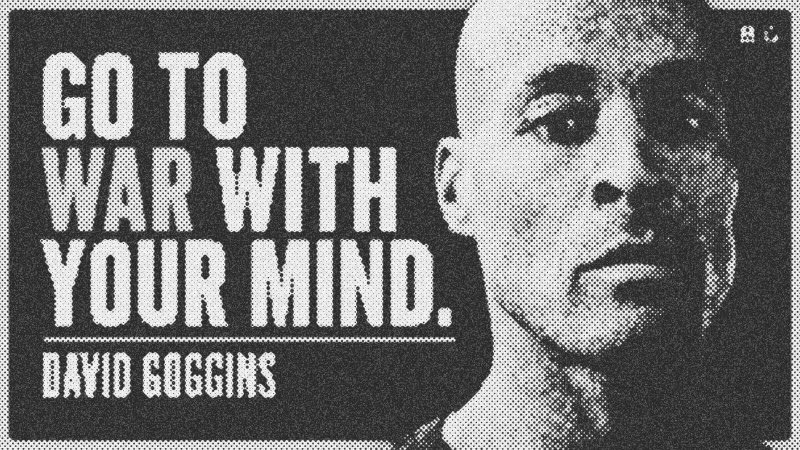
This is the precise psychological trap that Chris Williamson explores in his conversation with David Goggins on the Modern Wisdom podcast. The central challenge of our times is not how to acquire comfort, but how to survive it. When you become successful, the world conspires to make you soft. It offers you warmer blankets, praise, and endless avenues of escape. If you accept these gifts blindly, you sign the death warrant of your own potential. We must learn to look at comfort not as a reward, but as a subtle form of cognitive decay.
To understand this, we must examine what happens to our internal drive when the immediate threats of survival disappear. In early development, external pressure forces action. You work because you must pay rent. You run because you want to escape poor health. But what happens when the bank account is full, the accolades are constant, and the physical environment is perfectly controlled? The natural biological setting of the brain is to conserve energy. Left to its own devices, your mind will choose the couch every single time. Goggins terms this danger the temptation of becoming a "part-time savage"—someone who relies on past achievements rather than present execution.
True intellectual and psychological expansion demands that we resist this evolutionary gravity. We must intentionally inject difficulty back into our lives. If we do not, our horizons shrink. We become prisoners of our own success, terrified of losing the comforts we have built. The real work of personal development begins only when you no longer need to do it. It is easy to find discipline when you are starving. The true test of character is finding that same discipline when you are completely full.
Why Your Brain Needs Trained Humility
One of the most fascinating concepts to emerge from Goggins' recent work in his book Never Finished is the idea of "trained humility." In our culture, we often associate success with self-congratulation. We are told to display our trophies, write our memoirs, and establish ourselves as experts. But intellectual expertise can easily mutate into dogmatic arrogance. The moment you believe you have arrived, your capacity for learning stops dead in its tracks.
To counter this intellectual stagnation, we must look at the remarkable story of William Crawford. Crawford was a humble janitor at the United States Air Force Academy. For years, young cadets walked past him, seeing only an old man sweeping floors and cleaning toilets. They had no idea that this quiet custodian was actually a recipient of the Medal of Honor, the nation's highest military decoration for extreme heroics under fire. Crawford had tucked his medal away in a closet and picked up a broom. He did not let his past glory dictate his present identity. He chose the path of service and quiet execution.
The Anatomy of the Mental Lab
This brand of humility is not about weakness or self-deprecation. It is a highly strategic, active state of mind. Goggins describes this as returning to the "mental lab" at scratch. When you step into this lab, your past achievements mean absolutely nothing. Your bank account is zeroed out. Your resume is shredded. You are simply a human being facing a difficult task.
Why is this structure so vital for lifelong learning? It strips away the ego-defense mechanisms that prevent us from taking risks. When you are a highly respected professional, you hate looking like a beginner. You avoid new disciplines because you are terrified of failing in public. But by training yourself in humility, you give yourself permission to be terrible at something new. You allow yourself to be a student again. This is how Goggins justifies working a grueling job as a wildland firefighter in British Columbia for meager pay, despite having access to millions of dollars in corporate speaking fees. The dirt, the cold, and the manual labor keep his ego in check, ensuring his mental lab remains clean and functional.
The One-Second Decision Rules the Mind
We often think of life-altering choices as grand, cinematic events. We imagine ourselves standing at a massive crossroads, weighing options over weeks or months. In reality, the trajectory of your life is decided in tiny, microscopic increments of time. It is decided in the single second when your alarm goes off at four in the morning, or when the freezing water of an obstacle course hits your face.
This is the "one-second decision." When pain, cold, or exhaustion strikes, your brain immediately enters a state of high panic. The amygdala screams for safety. It floods your system with urgent reasons to quit: "You are too tired," "You will hurt your knee," "You have already done enough." This reaction is not a sign of personal failure; it is a hardwired evolutionary mechanism designed to keep you alive. However, in the modern world, this survival instinct is often our greatest enemy.
Evolutionary Panic Response (Amygdala Control)
  ↳ Sensation of Pain/Cold ──> Immediate Flight Impulse ──> Quitting

The Strategic One-Second Pause (Prefrontal Cortex Control)
  ↳ Sensation of Pain/Cold ──> 1-Second Decoupling ──> Logical Assessment ──> Continued Execution
To bypass this biological panic, you must learn to decouple your physical presence from your mental reaction. During moments of extreme stress, Goggins physically remains in the difficult environment while mentally retreating to a place of cool, logical assessment. If you can pause for just one second, you allow your prefrontal cortex to catch up with your panicked amygdala.
In that single second, you can ask yourself a series of rational questions:
- Where will I go if I quit right now?
- What will I say to myself tomorrow when I am warm and dry?
- Is this physical pain actually damaging me, or is it just highly uncomfortable?
By dragging your brain out of its immediate emotional reaction, you regain sovereignty over your actions. You realize that discomfort is not a permanent state; it is merely a sensory input that can be managed. If you fail to master this one-second pause, you will spend the rest of your life reacting to comfort, running away from any environment that threatens to make you sweat.
Building Proof Instead of Chasing Motivation
Our culture has a bizarre obsession with motivation. We consume endless self-help books, listen to energetic audio tracks, and repeat positive affirmations in front of the mirror. We treat motivation like a drug, constantly seeking our next dose so we can finally start working on our goals. But this is a fundamentally flawed strategy.
Motivation is a highly volatile chemical state. It depends on your sleep, your diet, your hormones, and the weather. If you only perform when you feel motivated, you will be wildly inconsistent. True intellectual development and personal growth cannot survive on such a shaky foundation. You must learn to perform when you are least motivated, when the world is dark, cold, and entirely unsupportive.
The Undeniable Resume
To replace the fragile concept of motivation, we must construct what Goggins and others call an undeniable resume of proof. You do not build genuine confidence by lying to yourself in the mirror. You cannot trick your subconscious mind into believing you are strong if you have a history of breaking promises to yourself. Your brain knows the truth. It remembers every time you hit the snooze button, every time you skipped a workout, and every time you quit when the task became difficult.
To build authentic, unshakable confidence, you must stack up cold, hard facts. You must point to specific moments in your past where you faced a difficult challenge and refused to back down. This is why Goggins points to his three hell weeks, his grueling races, and his academic struggles. When his mind tries to tell him he cannot do something, he does not rely on empty positive thinking. He looks at his history and says: "I have already survived worse than this. The proof is right here."
If you want to cultivate this level of self-belief, start small. Make a promise to yourself today—something minor but challenging—and keep it. Do this again tomorrow. Over weeks and months, these kept promises form a solid bedrock of evidence. When doubt inevitably creeps in, your history of execution will silence the voice of fear.
Facing Your Family Demons to Learn Autopsy
We cannot talk about personal growth without addressing the heavy weight of our past. Many of us carry deep-seated psychological wounds from our childhoods. We have experienced isolation, neglect, or active trauma. The natural human response to this pain is to bury it. We build defensive walls, adopt masks of tough self-sufficiency, and pretend our history cannot touch us.
But repression is a highly expensive cognitive process. It takes a massive amount of mental energy to keep your demons locked in the basement. As long as you are running from your past, you are not truly free. Your decisions are not guided by conscious choice; they are driven by a desperate desire to avoid your old wounds.
To resolve this, we must perform what Goggins calls a "live autopsy" on our lives. In medicine, an autopsy is performed after death to determine what went wrong. A live autopsy, however, is an active psychological examination of your history while you are still alive. It requires you to dig up your old traumas, lay them out on the table, and study them with the cool detachment of a scientist.
Breaking the Cycle of Generational Trauma
This is why Goggins made the shocking decision to return to Buffalo to face his highly abusive father one last time before the man died. He was not looking for an apology. In fact, he realized that an apology would have been a trap, giving him a convenient excuse to remain a victim. Instead, he went back to understand the chain of generational trauma. He discovered that his father had been brutally beaten by his own father. The abuse Goggins suffered was not a personal indictment of his worth; it was simply a poison passed down from one generation to the next.
By understanding this, Goggins was able to act as a circuit breaker. He took the generational pain, absorbed its force, and refused to pass it on to the next generation. This is the ultimate purpose of lifelong learning. We do not acquire knowledge simply to score points on tests or show off at dinner parties. We acquire knowledge to understand the human condition, to make sense of our pain, and to build a better future.
When you stop hiding from your past, you strip it of its power. You can look at your old bullies, your past failures, and your deepest insecurities and see them as raw data. They are not barriers to your growth; they are the exact raw materials you must use to construct your new self.
The Solitary Path of Self-Correction
There is a deep, profound loneliness that accompanies elite performance and deep self-analysis. When you decide to live by a higher standard, you will find that very few people are willing to walk that path with you. The crowd loves comfort, and they will often resent you for choosing a more difficult existence. Your discipline will hold up a mirror to their laziness, and their natural response will be to try to drag you back down to their level.
We see this in the online critique of high achievers like Elon Musk or elite military units. Spectators sit in comfortable chairs, complaining that the training is too harsh or the work expectations are too demanding. But these critics do not understand the sheer reality of the world. They forget that the battlefield of life does not care about your feelings. If you are underprepared, the world will break you without a second thought.
To survive this isolation, you must become your own coach, your own critic, and your own support system. You must find a way to thrive in solitude. When Goggins runs for hours in the dark, he is not seeking the approval of social media or the applause of a crowd. He is refining his own internal engine. He is proving to himself that he is willing to do the work when nobody is watching.
The Standard of One
To implement this in your own life, you must establish an individual ethos—a personal code of conduct that is entirely independent of external circumstances. Your standard of performance cannot drop because you are having a bad day, or because the people around you are slacking off.
Consider this standard as an absolute law. If your personal code says you read for an hour every night, then you read, regardless of how tired you are. If your code says you treat people with integrity, you do so even when they treat you poorly. By living this way, you shift from being a reactive creature, tossed around by the whims of the environment, to a self-determined individual. You become the author of your own character.
The Peace Found in the Struggle
Many people embark on the path of personal growth with the hope of eventually reaching a peaceful, struggle-free destination. They think that if they run enough miles, make enough money, or read enough books, they will finally earn the right to sit back and relax forever. But this is a fundamental misunderstanding of human happiness.
True peace is not the absence of struggle. Peace is found directly inside the struggle. It is the deep, quiet satisfaction that comes from knowing you are actively facing your challenges, that you are not running away from your potential, and that you are living in alignment with your values.
When Goggins looks back at his younger, stuttering self, he does not feel shame. He feels an overwhelming sense of peace because he knows he left nothing on the table. He took a broken, terrified kid and forged him into an ultimate competitor. That journey was not comfortable, and it was certainly not easy, but it was incredibly meaningful.
Stop waiting for life to become easy. Stop hoping for a magic pill that will solve your problems without requiring effort. Embrace the friction. Step into your own mental lab, clean out the clutter of your mind, and make the one-second decision to face your challenges head-on. You are the ultimate project of your life. Do not let the comfort of the world steal your opportunity to find out who you truly are.
- Andrew Huberman
- 11%· people
- Chris Williamson
- 11%· people
- David Goggins
- 11%· people
- Elon Musk
- 11%· people
- Joe Rogan
- 11%· people
- Other topics
- 44%
David Goggins - How To Defeat Laziness & Build Relentless Focus (4K)
WatchChris Williamson // 1:53:00
