Beyond the Surface: Life Hacks and Hard Truths for Personal Evolution
Your greatest power lies not in avoiding challenges, but in recognizing your inherent strength to navigate them. Growth happens one intentional step at a time, often through the accumulation of small, seemingly insignificant shifts in how we view our reality. As we look back on the lessons of the past year, it becomes clear that the most effective 'life hacks' aren't just about efficiency; they are about reclaiming our attention, deepening our self-awareness, and aligning our actions with our deepest values. This exploration isn't a mere summary of tips—it is a supportive coaching session designed to help you navigate the complexities of modern existence with resilience and insight.
The Architecture of Attention: Reclaiming Your Mind
In an age where every notification is a silent scream for your dopamine, the most radical act of self-care is the intentional management of your focus. We often think of productivity as doing more, but true effectiveness is about doing the right thing with a calm, clear mind. This starts with understanding that our relationship with technology is often a battle of attrition. Tools like Brick are not just gadgets; they are physical boundaries for a digital world that has none. By requiring a physical near-field communication tap to 'unbrick' your phone, you introduce a friction point that forces you to confront your mindless scrolling habits. This isn't about deprivation; it's about creating a 'sacred space' for deep work and genuine connection.
Building on this, the Waking Up app by Sam Harris offers a psychological framework that transcends simple meditation. It’s about the 'fundamentals'—understanding the theory of why we sit in silence. Harris uses a poignant analogy: we are all in a dream about being a human being, trapped in a prison cell of our own thoughts. Most of us spend our lives trying to rearrange the furniture in that cell to make it more comfortable, rather than realizing the door is unlocked. True resilience comes from 'waking up' and recognizing that you are the observer of your thoughts, not the thoughts themselves. This shift from 'being the cloud' to 'being the sky' is the ultimate hack for emotional stability.
To complement this internal work, the 'Chess Clock' methodology—popularized by writer Tim Urban—provides a brutal but necessary mirror for our time management. The goal isn't an eight-hour workday; it's four hours of pure, undistracted focus. By hitting the clock every time you check a Slack message or grab water, you stop lying to yourself about how much 'work' you’re actually doing. This level of honesty is the foundation of high agency. It allows you to move from being a passenger in your own life to being the driver, aware of every detour and distraction.
Henry’s Mirror and the Documented Life
The tragedy of the human experience is not that we suffer, but that we forget. George Mack introduces the haunting concept of 'Henry's Mirror,' based on the true story of a man who lost the ability to form new memories. Every morning, he was shocked by his aging reflection because, in his mind, he was still twenty-five. We all suffer from a micro-version of this amnesia. We forget the insights we've gained, the obstacles we've overcome, and the repetitive loops of our own overthinking. Without documentation, our lives are an Etch A Sketch that the universe shakes clean every few days.
This is why journaling, specifically through apps like Day One, is not a hobby but a survival strategy for the soul. When you look back at a decade of entries, you realize a sobering truth: the problems you have today are often the same ones you had ten years ago. This realization can be nihilistic, or it can be empowering. It proves that life is a 'spiral curriculum.' The universe will keep hitting you with the same lesson until you finally absorb it and change your behavior. By documenting these patterns, you gain the 'Idea Handles'—language to name your struggles and, eventually, the leverage to move past them. Taking photos and videos of the mundane isn't vanity; it’s an insurance policy against the fading of your own history.
Chasing the Right Shadows: The Purpose of Hard Goals
There is a common misconception that achieving a goal will finally bring peace. We chase the six-pack, the revenue milestone, or the social status, only to find that the 'win' feels remarkably similar to the 'before.' However, the value of the goal isn't the destination; it's the person you become in the process. Chasing difficult things requires delayed gratification, emotional regulation, and a level of discipline that compounds over time. Even if the goal itself proves hollow—the 'James Smith' realization that the finish line doesn't change your internal state—the traits you developed while running the race are evergreen.
We must distinguish between 'Call of Duty' goals and 'War' reality. We often envy the 1% highlight reel of someone else's success (the 'Call of Duty' version) without being willing to endure the litigation, the stress, and the mundane grind that constitutes their daily 'War.' If you aren't willing to fight the war, you shouldn't covet the victory. True personal growth involves a 'Head to Heart' journey. It's moving from the 'Fuck your feelings' hustle culture—which Chris Williamson notes he once contributed to—to a more integrated state where you acknowledge your internal landscape without letting it paralyze you. Hard work driven by a sense of 'insufficiency' is a dirty fuel that eventually destroys the engine. The goal is to work from a place of 'enoughness,' where the effort is an expression of potential rather than a desperate attempt to fill a void.
The Unteachable Wisdom of Experience
One of the most profound realizations of the year is that 'unteachable lessons' are, by definition, unteachable. You can be warned that fame won't fix your self-esteem or that money won't buy happiness, but these truths only land when they are felt in the marrow of your bones. We all possess a 'cute narcissism' that makes us believe the rules don't apply to us—that we will be the ones to dance through the minefield without a scratch. When you eventually find that the warning was correct, don't meet yourself with shame. Meet yourself with self-compassion. You are in excellent company; even the most brilliant minds in history had to walk into the fire to know it was hot.
As you move forward, remember the wisdom of Franz Kafka: 'Sleep properly and go for walks.' Most of our psychological turmoil can be mitigated by these two fundamental human needs. Don't overcomplicate your evolution. Use your 'Deep Sparring' partners—those few friends who can give you an objective 20-point IQ boost—to navigate the puzzles (not problems) of your life. Recognize that just because a weight is heavy doesn't mean you must lift it. Your resilience is a gift, but it shouldn't be a cage that keeps you in situations that no longer serve your growth. The path to achieving your potential isn't about adding more; it's about stripping away the illusions and standing firmly in your own truth.
Moving Toward Your North Star
Personal growth is not a destination you reach, but a way of traveling. It requires the courage to experiment, the humility to document your failures, and the wisdom to know when to rest. As you integrate these insights, ask yourself: what would eighty-year-old me appreciate about my life today? Often, it’s the things we overlook—the ability to walk, the presence of our parents, or the excitement of a new project. Use this perspective to anchor yourself. Life is a series of problems to be solved, but it is also a beautiful, terrifying, and awe-inspiring journey. Choose to be an active participant in your own unfolding. Start today, one intentional step at a time.
- AG1
- 6%· products
- Andrew Huberman
- 6%· people
- Brick
- 6%· products
- Chris Williamson
- 6%· people
- Day One
- 6%· products
- Other topics
- 71%
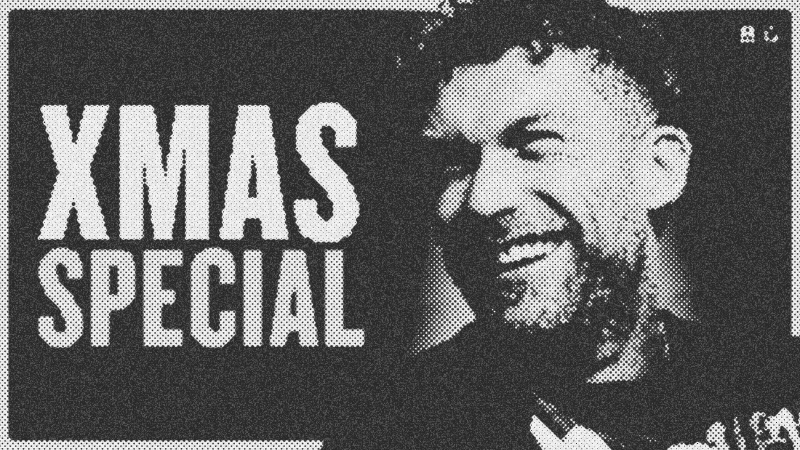
Life Hacks: A Christmas Special (2025)
WatchChris Williamson // 2:10:38
