Israetel warns ego lifting blocks muscle growth, lists ten vital exercises
The Convergence of Biology and Intent
To construct the human physique is to participate in an ancient dialogue between evolutionary biology and conscious intent. For generations, physical culture relied on folklore, inherited wisdom, and subjective sensation. Gym floors operated as spaces of initiation, where veterans passed down dogmatic protocols without mechanistic explanation. Yet, as with any domain of human development, the application of rigorous empirical inquiry transforms subjective practice into structured science.
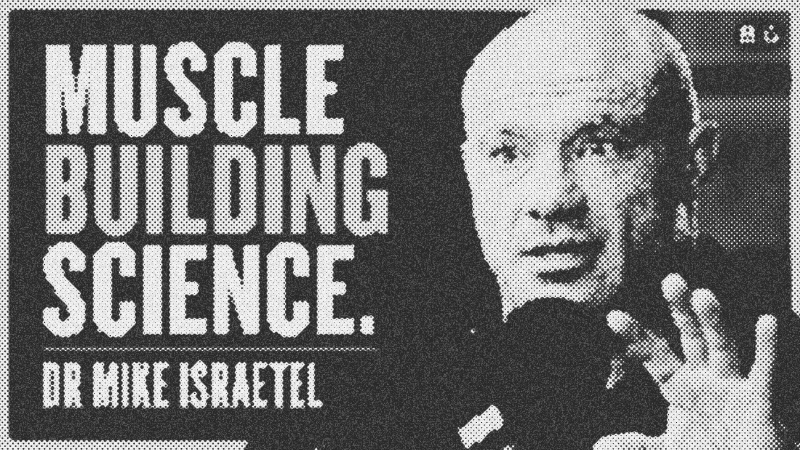
Mike Israetel, a professor of exercise and sport science, joined host Chris Williamson on the Modern Wisdom podcast to dissect the physiological realities of muscle hypertrophy. Their conversation dismantles the myths of physical training, replacing bro-science with rigorous sport science. The core truth of hypertrophy is simple yet profound: the body adapts to precise mechanical disruptions, not arbitrary suffering. To understand these mechanisms is to approach physical growth not as an act of raw willpower, but as a systematic exploration of human physiology.
Many physical culture enthusiasts treat training as a separate, isolated endeavor. True intellectual development requires us to see it as an extension of biological systems, resource management, and behavioral psychology. The body remains a deeply conservative, resource-saving organism. It resists building metabolic tissue like muscle unless forced by undeniable mechanical stimulus. Understanding this resistance is key to breaking through plateaus.
The Cost-Benefit Architecture of Muscle Stimulus
Defining the Stimulus to Fatigue Ratio
Every physical action in the gym carries a biological cost. In sport science, this balance is captured by the Stimulus to Fatigue Ratio (SFR). The SFR serves as an analytical lens for evaluating training choices. Stimulus refers to the localized signals that trigger muscle growth, while fatigue is the systemic toll that drains the body's resources. An ideal training program maximizes local muscle stimulation while minimizing systemic wear.
Fatigue occurs in three distinct layers:
- Local Muscular Fatigue: The temporary depletion of energy substrates and accumulation of metabolic waste within the target muscle.
- Joint and Connective Tissue Wear: The mechanical stress placed on tendons, ligaments, and cartilage.
- Systemic or Central Nervous System (CNS) Fatigue: The drain on the nervous system that reduces the brain's ability to signal motor units effectively.
Some popular exercises carry high systemic costs for very little local muscle reward. The conventional deadlift is a prime example. While it recruits a massive amount of muscle, it places immense pressure on the spine and CNS. This central fatigue limits your ability to perform other productive exercises later. By replacing high-fatigue movements with more targeted options, you can stimulate muscle growth with a fraction of the joint wear.
The Illusion of Sensation
Many lifters mistake joint pain or overall exhaustion for a productive workout. Sensation alone is a poor indicator of muscle stimulation. If an elbow machine causes joint pain rather than a deep muscular burn, it has a poor SFR for that individual. We must look at objective signs of muscle stimulation instead:
- Localized Tension: Feeling the target muscle stretch and contract under load.
- The Metabolic Burn: The buildup of lactic acid and metabolic waste during high-rep sets.
- The Pump: The temporary swelling of muscle tissue as it fills with fluid during training.
- Temporary Weakness: A distinct drop-off in strength in the target muscle immediately after a set.
These signs serve as biological markers of a high-quality stimulus. If a movement fails to produce these markers but leaves you systemically exhausted, it is a poor choice for your program. Training is an exercise in resource allocation; you have a limited recovery budget, and every set must justify its cost.
Ten Essential Exercises for Lifetime Growth
When asked to narrow the vast library of physical movements down to just ten exercises for lifetime hypertrophy, Israetel selected options based on their exceptional SFR, deep stretch, and structural stability. This list reflects a deep understanding of human biomechanics and skeletal function.
+-----------------------------------+-----------------------------------+
| Exercise Name                     | Primary Target Muscle(s)          |
+-----------------------------------+-----------------------------------+
| High Bar Squat                    | Quadriceps, Adductors, Glutes     |
| Standing Overhead Barbell Press   | Anterior Deltoids, Triceps        |
| Barbell Skull Crusher             | Triceps Brachii                   |
| Overhand Pull-Up                  | Latissimus Dorsi, Upper Back      |
| Deficit Barbell Bent Row          | Latissimus Dorsi, Mid-Back        |
| Stiff-Legged Deadlift             | Hamstrings, Glutes, Erectors      |
| Cambered Bar Bench Press          | Pectoralis Major (Deep Stretch)   |
| Weighted Dip                      | Lower Pectorals, Triceps, Delts   |
| Super ROM Lateral Raise           | Lateral Deltoids                  |
| Seated Incline Dumbbell Curl      | Biceps Brachii (Lengthened State) |
+-----------------------------------+-----------------------------------+
The Power of the Deep Stretch
Several selections on this list, such as the cambered bar bench press and the seated incline dumbbell curl, are chosen specifically for their ability to load muscles in a fully stretched position. Recent clinical studies show that training a muscle at longer lengths produces significantly more hypertrophy than training it in a shortened position. This is known as stretch-mediated hypertrophy.
Using a cambered bar, which has a curved center, allows you to lower your hands past normal chest level. This extra range of motion places a powerful stretch on the pectorals at the bottom of the movement. Similarly, the seated incline dumbbell curl places the biceps in a deep stretch before contraction even begins. By prioritizing movements that stretch the muscle under load, you get far more growth out of every single repetition.
Stability as a Driver of Force
Stability is another key factor in these selections. The brain acts as a safety governor for the musculoskeletal system; if it senses instability, it automatically dials down force production to prevent injury. Exercises performed on highly unstable surfaces, such as a bosu ball, reduce muscle recruitment.
To build muscle, you need stable setups that allow you to push your muscles to their true limits. Pushing your feet into the floor during an incline press stabilizes your torso, allowing your nervous system to recruit the maximum number of motor units. Exercises should be chosen for their structural stability, ensuring your target muscles—not your balance—limit your performance.
The Mechanics of Effective Technique
Controlling the Ecentric Phase
Many lifters treat the lowering phase of a lift—the eccentric portion—as a passive transition, simply letting the weight drop. This is a massive mistake. The eccentric phase is highly hypertrophic and requires less energy from the nervous system than the lifting phase. This means controlling the descent offers a high stimulus with very little systemic fatigue.
Letting weights crash down wastes valuable muscle-building opportunities. A controlled, two-to-three-second descent ensures your muscles do the work of slowing the load, maximizing mechanical tension. Controlling the eccentric phase also keeps the weight in the correct path, reducing your risk of sudden injury.
The Science of Pausing at the Bottom
Pausing for a full second at the bottom of a movement, where the muscle is fully stretched, offers several physiological benefits. First, it eliminates elastic momentum, ensuring your muscles must contract from a dead stop to move the weight. This increases mechanical tension.
Second, the transition from lowering to lifting is the most common point for joint and tendon injuries. By pausing in the deep stretch, you reduce the sudden spike in force that occurs when you bounce a weight. Pausing makes your workouts safer while forcing you to use lighter, more manageable weights to get the same muscle-building stimulus.
Calibrating Training Variables
Understanding the Hypertrophy Rep Range
For decades, lifters believed that muscle growth only occurred in the classic range of eight to twelve repetitions. Modern exercise science has completely debunked this myth. We now know that as long as sets are taken close to muscular failure, any rep range between five and thirty repetitions produces similar muscle growth.
5 Reps <------------------ Ideal Hypertrophy Range ------------------> 30 Reps
  (Heavy Loads/Joint Stress)                        (Light Loads/High CNS Burn)
This wide range allows you to customize your training based on how your joints feel and what exercises you are doing. Heavy sets of five to eight reps work well for large movements like squats, where high-rep sets can leave you too out of breath to finish. Conversely, lighter sets of fifteen to twenty-five reps are perfect for isolation movements like lateral raises, where heavy weights can cause joint irritation. Using a variety of rep ranges across your weekly program stimulates different muscle fibers and keeps your joints healthy.
The Margin of Failure: Reps in Reserve
To trigger muscle growth, a set must be taken close to failure. In sport science, this closeness is measured using Reps in Reserve (RIR). An RIR of zero means you could not complete another rep, while an RIR of three means you could do exactly three more reps before your muscles gave out.
+---------+----------------------------+----------------------------------+
| RIR     | Sensation                  | Hypertrophic Value               |
+---------+----------------------------+----------------------------------+
| 3 RIR   | Moderately challenging     | Good; excellent recovery ratio   |
| 2 RIR   | Very difficult             | High; standard working zone      |
| 1 RIR   | Extreme effort             | Very high; minor systemic drain  |
| 0 RIR   | Muscular failure           | Maximum stimulus; high fatigue   |
+---------+----------------------------+----------------------------------+
While training to absolute failure (0 RIR) provides a powerful growth signal, it also causes a massive spike in fatigue. Stopping one to two reps shy of failure (1-2 RIR) offers nearly the same muscle-building benefits with a fraction of the recovery cost. This allows you to perform more high-quality sets over the course of your training week.
The Four-Factor Rest Model
How long should you rest between sets? Many online guides recommend a rigid timer, such as exactly ninety seconds. However, a fixed timer ignores the massive differences between exercises. Resting ninety seconds after a set of heavy squats is not nearly enough, while resting ninety seconds after calf raises is a waste of time.
Instead of a timer, use a four-factor checklist to determine when you are ready for your next set:
- Cardiovascular Recovery: Your breathing has returned to normal, ensuring your lungs will not limit your next set.
- Psychological Readiness: You feel focused and ready to give a maximum effort.
- Synergist Recovery: Supporting muscles have recovered. For example, your lower back is no longer too pumped to support you during a set of squats.
- Target Muscle Recovery: The muscle you are training has cleared its metabolic burn and can complete at least five high-quality repetitions.
When all four boxes are checked, you can begin your next set. This approach ensures every set is limited by the muscle you are trying to build, not your breathing or supporting joints.
Periodization, Splits, and Troubleshooting
Managing Fatigue Over Time
As you train hard week after week, fatigue gradually builds up in your joints, nervous system, and muscles. Eventually, this fatigue will mask your fitness gains, causing your strength to stall. This is when you need a structured recovery period, known as a deload.
A deload week typically involves cutting your training volume and weights in half for several days. This brief break allows your joints to heal, resets your nervous system, and restores your enthusiasm for training. Most hard-training lifters need a deload every four to eight weeks to ensure long-term, injury-free progress.
The Art of the Training Split
Your training split—how you organize your workouts across the week—is highly customizable. There is no single "best" split. Whether you prefer a push-pull-legs routine, an upper-lower split, or full-body workouts, your split should focus on two key rules:
- Ensure Muscle Group Recovery: Give each muscle group forty-eight to seventy-two hours of rest before training it again.
- Maintain High Session Quality: Avoid pairing high-fatigue movements that interfere with each other. For example, avoid heavy deadlifts the day before a heavy squat session, as your lower back will be too fatigued to support your spine.
Troubleshooting a Progress Plateau
If your muscle growth has stalled, use this simple checklist to identify and fix the issue:
- Verify Strength Progress: Is your repetition strength actually flatlining, or are you just impatient? True muscle growth is always accompanied by steady strength gains over time.
- Audit Your Nutrients: Muscle growth requires a surplus of building blocks. If your body weight is not slowly increasing, you are likely not eating enough protein or calories to build new tissue.
- Assess Your Sleep: Chronic sleep deprivation raises stress hormones and cripples your body's ability to repair tissue. If you are sleeping less than seven hours a night, your training progress will suffer.
- Evaluate Your Effort: Are you truly pushing your sets to one or two reps shy of failure? Many lifters underestimate how hard they can push, leaving easy reps on the table and limiting their growth.
The Psychology of Lifelong Commitment
Ultimately, physical transformation is as much a psychological challenge as a physiological one. The initial excitement that drives a person to start training eventually fades, leaving them to rely on discipline and habit. Cultivating a deep passion for the training process itself is key to long-term success.
When you stop viewing the gym as a chore and begin seeing it as a space for personal growth, consistency becomes effortless. You learn to appreciate the small victories: a single extra repetition, a slight increase in weight, or a perfectly controlled set. These tiny, daily improvements compound over months and years, leading to incredible physical changes. By applying scientific principles to your training, you remove the guesswork, ensuring your hard work translates into lifelong progress.
- Brad Schoenfeld
- 20%· people
- Chris Williamson
- 20%· people
- Jared Feather
- 20%· people
- Mike Israetel
- 20%· people
- Modern Wisdom
- 20%· podcasts
18 Rules for Lifting Like a Pro - Dr Mike Israetel (4K)
WatchChris Williamson // 1:59:53
