Houpert: elite charisma takes less work than building muscle
The Interdisciplinary Architecture of Social Influence
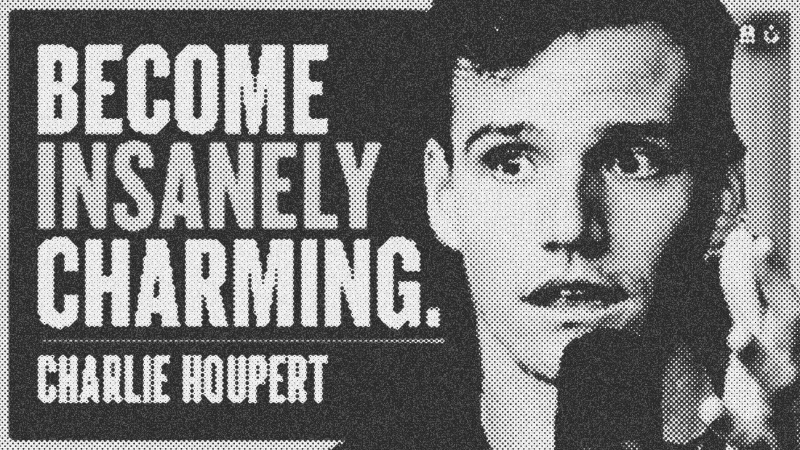
To understand charisma, we must first strip away the external variables that often masquerade as magnetic personality. In the taxonomy developed by Charlie Houpert, the founder of Charisma on Command, social influence is the baseline goal. However, true charisma is specifically personality and character-driven influence. It is distinct from the raw power of wealth, the immediate compliance generated by physical beauty, or the technical awe inspired by talent. While Elon Musk may influence markets through first-principles thinking, his stuttering and stumbling communication style is not what one should emulate for social mastery. Instead, we look toward archetypes that leverage specific psychological levers to move people.
Charlie Houpert identifies five primary archetypes that serve as the foundation for interdisciplinary social study:
- The High Conviction Type: Exemplified by Conor McGregor or Steve Jobs. These individuals possess a level of belief that borders on the prophetic. Because most humans live in a state of chronic uncertainty, they are naturally drawn to the gravity of someone who seems to know the future.
- The Authentic Type: Seen in Joe Rogan. This style builds deep trust by intentionally taking social disadvantages—expressing unpopular opinions or admitting faults—which signals to the observer that the speaker is not a social climber, but a truth-teller.
- The Energetic Type: Represented by Will Smith. These individuals act as emotional thermostats, setting the vibe of a room through sheer volume and kinetic presence.
- The Empathetic Type: Personified by Oprah Winfrey. This archetype masters the "bubble of safety," making a single individual feel like the center of the universe even in a crowded studio.
- The Humorous Type: Such as Kevin Hart, who uses wit to bypass natural power differentials, like height or status, to command attention.
Tools for the Social Alchemist
To rebuild your social self, you do not need genetic advantages; you need a specific set of psychological frameworks and behavioral habits. Think of these as the "software" updates for your "hardware."
- Sentence Completion Exercises: Derived from Nathaniel Branden's work, these force the subconscious to identify gaps in integrity and action.
- The "One Sentence Extra" Rule: A progressive exposure tool for the shy, requiring a single non-utilitarian comment in every transactional interaction.
- Vibe Priming: Using media (stand-up comedy, high-energy films) to shift your internal state before entering a social arena.
- Value-Based Narratives: Moving beyond logistical answers (e.g., "I am a consultant") to answers that reveal the why (e.g., "I grew up poor and wanted to provide for my family").
Step-by-Step Instructions for Social Transformation
Phase I: Unlearning the 13-Year-Old You
Most people view their personality as a sacred, immutable essence. In reality, your social habits are often the calcified survival strategies of your middle-school self. If you were shy at 13, you likely developed a high mental filter that blocks thoughts from reaching your tongue because you deemed them "unworthy."
- Step 1: Identify the Filter. Recognize that "having nothing to say" is a myth. Your brain is generating thoughts; your internal censor is simply suppressing them.
- Step 2: Practice Lowering the Threshold. Start with cashiers or taxi drivers—people you will never see again. Say one thing that isn't required for the transaction. Mention the weather, a magazine cover, or an earring. The goal isn't to be clever; it's to teach your brain that the world doesn't end when you speak.
- Step 3: Finish Your Sentences. Shyness often manifests as a trailing off at the end of a thought. Commit to maintaining the same decibel level from the first word to the last. Do not yield the floor until you have hit a period.
Phase II: The Mechanics of Flirting and Tension
Flirting is often misunderstood as a series of "lines." Charlie Houpert breaks it down into a three-part process that balances interest with autonomy.
- Step 4: Establish Playful Interest. Use "world-building" to create shared, ridiculous fantasies. If a woman mentions Jamaica, don't ask about the flight; tell her you're both leaving tonight to sell cigarettes on the beach to fund a scuba diving expedition. This signals that you are there to "vibe," not to conduct a logistical interview.
- Step 5: Demonstrate Genuine Standards. Charisma requires the ability to say "no." A man who likes everything about a woman has no value because his approval is cheap. If she is rude to a waiter, call it out. Expressing a standard (e.g., "I love affectionate people") makes your eventual interest feel like an earned reward rather than a desperate default.
- Step 6: Hold the Tension. This is the most difficult step. Learn to sit in the silence of a gaze. Smirk, maintain eye contact, and resist the urge to crack a joke to relieve the "awkwardness." That awkwardness is actually sexual tension, and your ability to manage it determines your attractiveness.
Troubleshooting the "Social Muscle" Development
One common pitfall is the "System 2 Overload." This occurs when you are so focused on new rules—where to stand, how to look, when to smile—that you vanish from the actual conversation. You become a robot executing code.
The Solution: Follow the Tiger Woods model. When Tiger Woods rebuilt his swing, he had to get worse before he got better. He focused on one element at a time—the grip, then the hips, then the follow-through. In social settings, choose one habit per day. On Monday, focus only on eye contact. On Tuesday, focus only on volume. Do not try to be Russell Brand in a single night. Brand's "lexical jujitsu" is the result of years of immersion; your goal is the "beginner gains" that come from simply trying when no one else is.
Conclusion: The Spiral of Lifelong Evolution
The ultimate benefit of social mastery is not just getting more dates or better sales figures; it is the acquisition of sovereignty. By expanding your degrees of freedom—knowing you could be the loudest person in the room—you can finally make a free choice to be the quietest. As Charlie Houpert discovered, even after building an elite social brand, he realized his introverted essence still required solitude for recharging. The difference is that he now stays home out of a genuine preference, not out of a fearful lack of options.
True personal growth is a spiral. You may start by learning how to be the "alpha" to escape the pain of being ignored, but eventually, you must unlearn the "alpha" armor to find authentic connection. Whether it's through Charisma University or deep introspective work like MDMA therapy with family, the goal remains the same: moving from a reactive life to an intentional one. The social world is a gym that most people have never entered; if you show up once a week, you are already exceptional.
- Charlie Houpert
- 14%· people
- Tiger Woods
- 7%· people
- Ayahuasca
- 4%· products
- Ben Shapiro
- 4%· people
- Bill Clinton
- 4%· people
- Other topics
- 68%
You Can Become Socially Confident Pretty Quickly - Charlie Houpert
WatchChris Williamson // 1:42:31
