George Mack reveals why we mistake social conditioning for human nature
The Invisible Architecture of Accidental Standards
We live inside systems we did not build. We follow rules we never approved. Most of what we call common sense is merely geographical happenstance, a series of survival tricks that petrified into permanent dogma. If you look closely at human behavior across epochs, the line between biological necessity and social agreement begins to dissolve entirely.
Consider the French philosopher Michel de Montaigne. He understood this plastic nature of human reality better than most. Montaigne kept detailed records of what various civilizations deemed normal, moral, or beautiful. His lists serve as a cold shower for cultural chauvinism. In one society, filial duty meant killing your father at a specific age. In another, love was demonstrated by grinding deceased relatives into a powder, mixing them with wine, and drinking them at the funeral. In certain corners of history, a wedding was judged successful only by the number of the groom's friends who slept with the bride.
These practices sound shocking to modern ears. But modern normality is equally bizarre when viewed from a distance. Consider what is normal in the early twenty-first century. Normal is consuming seventeen teaspoons of added sugar every single day. Normal is carrying over one hundred thousand dollars in personal debt. Normal is staying indoors for twenty-two hours out of every twenty-four, soaking in the blue glare of screens. Normal is spending more time sitting on a porcelain toilet than moving your body through space. We do not question these metrics because we are born into them. They are our defaults.
Our environments shape our behavior far more than our conscious choices do. Change your geography, change your life. It sounds like cheap self-help advice, but it is a fundamental ecological truth. If you change the gym you attend or the office where you work, your entire routine resets without a massive expenditure of willpower. We are deeply mimetic creatures. We copy the cadence of our peers. When we pretend that our localized standards are universal biological truths, we close ourselves off to the vast possibilities of human configuration.
How Fan Fiction Corrupts the Mechanical Mind
We are currently building artificial minds in our own image, and the results are revealing our own intellectual laziness. A fascinating scandal recently hit the literary world. A prestigious short story prize was awarded to a piece of fiction that analysts highly suspect was generated by an artificial intelligence. When experts examined the text, they found something remarkable. The story was littered with jarring, clunky metaphors, such as describing a character as having "the patience of a reptile."
How did a machine trained on the sum of human knowledge produce such weirdly empty prose? The answer lies in the data it ingested. This specific phrase does not appear in classical literature. It does, however, appear in online fan fiction based on the Japanese manga Naruto. This exposes the fundamental weakness of Large Language Models. They learn by scanning massive datasets. By sheer volume, bad writing vastly outnumbers good writing. If you train a robot to play soccer by making it watch every human on Earth, it will become terrible at soccer. Why? Because most people are bad at soccer.
This is why coding models currently outperform creative writing models. Code is binary. It compiles or it fails. The feedback loop is immediate and objective. A button appears on the screen, or it does not. Writing has no such clean feedback loop. It is deeply subjective. When an AI attempts to write a story, it does not search for the greatest works of Shakespeare or Melville. It scours the digital dumping grounds of the internet, pulling phrases written by exhausted teenagers at two in the morning.
This tells us something profound about human language. True eloquence is incredibly rare. The vast majority of human text is highly repetitive, formulaic, and predictable. When machines mimic us, they do not mimic our highest artistic achievements. They mimic our average output. They mirror our clichés. If we want artificial minds to produce beauty, we must first learn how to curate our own digital legacy.
The Survival Value of Guilt and Vulnerable Tears
Why do we feel bad when we survive a disaster that claimed others? Survival guilt seems evolutionary counterproductive. If the goal of natural selection is individual survival, then surviving should trigger pure joy. Yet, survivors of trauma often experience deep, debilitating anguish.
To understand this, we must look at the tribal context of ancestral human history. Humans did not survive as rugged individuals. We survived as highly cooperative groups. If you survived a tragedy while your tribal allies died, showing indifference would be a social death sentence. Your peers would view you as a selfish parasite. Survivor guilt is an adaptive signal. By showing genuine distress, you prove to the remaining tribe members that you are still a committed partner. You signal that you did not hoard resources or abandon your posts for selfish gain. It is a costly, unfakeable proof of loyalty.
This cooperative focus explains why we cry. Human emotional tearing is a bizarre physiological reaction. When we are overwhelmed by grief or joy, our eyes fill with water, blurring our vision. From a survival standpoint, this is highly dangerous. You cannot see threats. You cannot defend yourself. You are utterly vulnerable.
That vulnerability is precisely the point. Tears are an honest signal of submission and a plea for help. You cannot easily fake tears of intense emotion. By blinding yourself in front of another person, you are showing your throat. You are saying, "I am so wounded by this experience that I am willing to drop my defenses in your presence."
Interestingly, the chemical composition of emotional tears is vastly different from basal tears used for simple eye lubrication. Emotional tears contain high levels of prolactin, ACTH, and leucine-enkephalin, a natural painkiller. When these tears dry on a microscope slide, they crystallize into wildly complex patterns. The physical shape of our sorrow looks entirely different from the shape of our joy. Our bodies literally manifest our internal state in the geometry of our bodily fluids.
The Double Agent Who Built a Fictional Empire
Sometimes, the most profound displays of human agency occur when an individual completely rejects the options presented to them. Consider the story of Juan Pujol García, a Spanish chicken farmer who became the most successful double agent of World War II. In 1941, Pujol wanted to fight fascism. He walked into the British Embassy in Madrid and offered to spy for them. The British turned him down.
Instead of giving up, Pujol pivoted. He went to the German Embassy and offered to spy for the Nazis, inventing a passionate hatred for Great Britain. The Germans bought it. They trained him, gave him invisible ink, and sent him off. Pujol then went back to the British and said, "I am now a valuable German spy. Do you want my help?"
Under the code name Garbo, Pujol created an entirely fictional network of twenty-seven sub-agents inside Britain. He wrote hundreds of detailed, fake reports that kept the German high command completely misinformed. His crowning achievement was convincing Adolf Hitler that the D-Day landings would happen at Calais, rather than Normandy. This single-handed deception saved thousands of Allied lives. Pujol was so convincing that he received the Iron Cross from Germany and an MBE from Britain.
This is the power of extreme personal agency. When Pujol faced rejection, he did not continue knocking on the same closed door. He understood what his target wanted and created the exact conditions that made him indispensable. Most people mistake a closed door for a lack of opportunity. High-agency individuals simply build a new door.
We see a similar level of raw, physical agency in the story of Shavarsh Karapetyan, an Armenian fin-swimming champion. In 1976, Karapetyan was finishing a training run when a trolleybus crashed into a deep reservoir, sinking thirty feet to the bottom. Without hesitation, Karapetyan dove into the freezing, dark, sewage-filled water. He kicked out the back window and began pulling people out of the sunken vehicle, one by one.
He made dozens of dives over twenty minutes, saving twenty lives. The cost to his own body was immense. The broken glass shredded his skin, and the polluted water caused severe pneumonia and blood poisoning, ending his athletic career. Karapetyan did not hesitate. He had a highly specialized skill, and when the moment demanded it, he deployed it at supreme personal cost. That is the essence of civilian heroism. It is the absolute refusal to look away when you are the only person capable of action.
The Hidden Friction in Modern Masculine Bonds
There is a strange, unresolved tension in the modern conversation surrounding men's mental health. We are constantly told that men must open up, express their emotions, and show vulnerability. Yet, when men actually do this in public spaces, the reception is often cold.
Crucially, this rejection does not only come from women. It frequently comes from other men. Men are, on average, highly intolerant of other men's emotional weakness. This stems from ancient evolutionary programming. In ancestral times, an emotionally volatile man was an unreliable ally. If your survival depends on the man standing next to you during a hunt or a battle, you need him to be highly regulated. If he breaks down in tears under pressure, he puts the entire group at risk. When men see another man lose control of his emotions, it triggers a visceral disgust. It is a survival mechanism warning us that our partner is unstable.
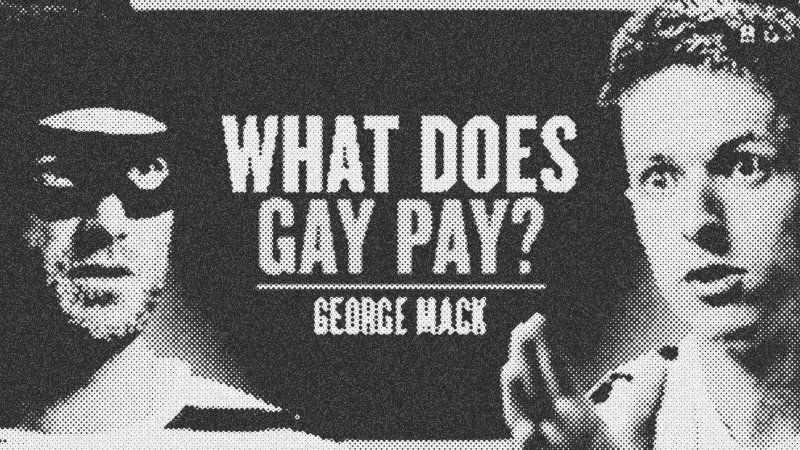
This explains why some researchers suggest that what we call homophobia is often actually "femophobia." The hostility is not necessarily directed at sexual preference, but at the presentation of feminine traits by a male. We expect men to show control, aggression, and stoicism. When they do not, it disrupts our expectation of what a reliable protector should look like.
This tension was famously exploited by Peter Thiel in his systematic takedown of the media company Gawker. Thiel, a prominent investor, was outed as gay by Gawker in 2007. He did not react publicly. He waited. He watched. He spent nearly a decade secretly funding a series of lawsuits against the company, culminating in Hulk Hogan's successful privacy suit over a leaked tape. As Ryan Holiday detailed in his book, "Conspiracy," Thiel's long-term planning was a masterclass in calculated retribution. It was the ultimate display of masculine, stoic patience. He did not throw an emotional tantrum on social media. He waited until he could strike a fatal, systemic blow.
If we want men to be more emotionally open, we must acknowledge this deep-seated biological friction. We cannot simply tell men to open up without preparing them for the social costs. It requires work to overcome our primal disgust at male vulnerability.
Designing Your Desires in a World of Noise
We are bombarded with information, yet starved for wisdom. We scroll through social media, encountering brilliant insights, only to forget them three minutes later. The ancient Greeks and Romans had a term for this state of forgetfulness. They fought against it by keeping personal books of daily reminders, meditating on a single sentence each morning to prepare for the challenges of the day.
If you were to keep a similar notebook of lessons you repeatedly underprice, what would you write?
First, write this: no amount of worrying will change the future. Worry is highly addictive because it masquerades as progress. It feels like you are doing work, but it is merely mental friction. Studies show that over ninety percent of our worries never come true. Yet, we ruminate anyway, trapped in the illusion that our anxiety keeps us safe. It does not. It only robs us of our present energy.
Second, understand the concept of pleasure anxiety. Excitement and anxiety feel almost identical in the human body. When you are on the verge of a major positive breakthrough, your body will trigger a high-arousal state. Do not mistake this excitement for fear. Learn to sit with the physical discomfort of positive anticipation.
Finally, remember that you are not advertising to a standing army; you are advertising to a moving parade. This classic marketing insight applies to all of life. We believe everyone is watching us, judging our mistakes, and remembering our past failures. In reality, people are barely paying attention. They are wrapped up in their own moving parades, worrying about their own lives.
If you do not take the time to consciously design your desires, the world will design them for you. You will inherit the anxieties, debts, and unhealthy habits of your peers. Step back from the group. Question your first thoughts. Become the watcher of your own mind. Only then can you begin to build a life based on genuine understanding, rather than accidental consensus.
- Chris Williamson
- 10%· people
- Gawker
- 10%· companies
- George Mack
- 10%· people
- Hulk Hogan
- 10%· people
- Juan Pujol García
- 10%· people
- Other topics
- 50%
The Hidden Danger of Accepting Social Norms - George Mack
WatchChris Williamson // 1:22:36
