The Resilience of the Creative Spirit: HARDY on Trauma, Nashville, and the Power of Character
The Hierarchy of Human Connection: Why Being a 'Good Hang' Outshines Talent
In highly competitive environments, we often obsess over technical mastery. We believe the virtuoso, the genius, or the disruptor wins by sheer force of ability. However, the trajectory of HARDY (Michael Hardy) suggests a different foundational truth: character is the ultimate multiplier. His career philosophy centers on a deceptively simple hierarchy: be nice first, and work hard second. This isn't about being a pushover; it is about the psychology of the 'good hang.'
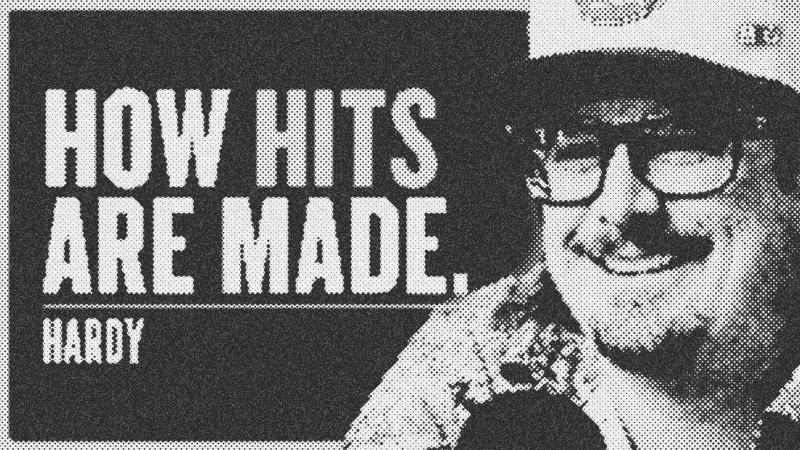
Nobody wants to spend fourteen hours on a tour bus or in a locked writing room with a brilliant egoist. Success in any collaborative field is built on social capital. When the pressure is high—after three back-to-back shows or during a creative drought—the person who maintains morale becomes more valuable than the person who merely hits the right notes. Talent may be the ticket into the room, but being a person others actually want to be around is what keeps you there. This perspective challenges the trope of the 'tortured, difficult artist.' Being a jerk isn't a byproduct of genius; it is a character flaw that success temporarily masks. True professional longevity requires an intentional commitment to making others feel appreciated and comfortable.
The Nashville Engine: Inside the World’s Most Productive Songwriting Machine
Nashville operates with a distinct industrial rhythm that separates it from the more atmospheric, 'vibe-heavy' scenes of Los Angeles or New York. It is a songwriting factory in the best sense of the word. At any given moment, hundreds of rooms are active, with creators standing on each other’s shoulders to build the next hit. This ecosystem relies on a high-volume, collaborative work ethic where the song—not the ego—is the primary focus.
In this environment, the 'topliner' or storyteller is king. Country Music is uniquely lyric-driven, prioritizing the narrative arc over musical arrangement. While other genres might lead with a riff or a production trick, Nashville writers focus on the 'hammer'—the line that will make a listener pull over their car and cry. This machine-like efficiency doesn't kill creativity; it refines it. By treating songwriting as a professional craft rather than a sporadic lightning strike of inspiration, artists like HARDY can generate a massive volume of work without sacrificing the emotional core that connects with a global audience.
Creativity Without the 'Crumbs': Managing the Flow of Inspiration
The creative process is often romanticized as a mystical experience involving candles and sage, but for the most prolific creators, it looks remarkably like a standard office job. HARDY describes a process of 'radical transparency' within the writing room. When you enter a session, the goal is to lower inhibitions and lean on collaborators. If one person is empty, they trust the others to carry the weight. This communal approach to creativity removes the paralyzing pressure of individual perfectionism.
One of the most fascinating aspects of this process is the 'Big Reveal.' There is a strategic psychological advantage to keeping the best work close to the vest until it is ready for release. In a town like Nashville, 'buzz' is a form of currency. By withholding a 'slammer'—a high-potential hit—from the general public and even close friends, the eventual release creates a concentrated explosion of interest. This disciplined management of creative output ensures that when a song finally drops, it has the maximum possible impact on both the industry and the fans.
The Gravity of Sadness: Why Dark Songs Tell the Truth
There is a peculiar psychological pull toward melancholia in music. While happy songs provide temporary relief, dark songs provide companionship. HARDY notes that dark songs often feel more 'truthful' because they address the parts of the human experience we usually bury. Sadness has a unique gravitational force; it is pro-social. When someone expresses anger, others tend to retreat. When someone expresses sadness or vulnerability, it triggers a 'care-taking' response in the community.
This is why heartbreak, mortality, and failure are such fertile ground for songwriters. These themes offer a 'mirror' for the listener’s own repressed emotions. For the artist, writing about these topics is an act of service. When a song like 'Wait in the Truck' is written, the goal is to 'destroy' the listener—not out of malice, but to provide a cathartic release for experiences that are otherwise lonely. The 'emo' or dark side of creativity isn't about whining; it is about acknowledging the fragility of life, which in turn makes the joyful moments feel more earned.
Trauma and the Delayed Response: The Psychology of a Near-Death Experience
Trauma rarely makes its full impact known in the immediate aftermath of a crisis. Following a catastrophic bus accident that left him and his team mangled, HARDY initially stayed in 'survival mode.' He got married, went on a honeymoon, and continued his career, believing he was 'fine.' However, the brain stores trauma in ways that logic cannot always access. It wasn't until a year later, triggered by the changing of the seasons and the cooling weather, that the psychological toll manifested as crippling panic attacks.
This delay is a common feature of Post-Traumatic Stress. The mind suppresses the horror of the event to allow the individual to function, but eventually, the 'bill' comes due. For HARDY, the path to recovery involved EMDR (Eye Movement Desensitization and Reprocessing). This therapy allows the brain to 'rewire' traumatic memories, shifting them from terrifying, live-wire experiences to distant, logically processed history. It is a powerful reminder that resilience isn't just about 'toughing it out'; it is about having the courage to seek professional intervention to clear the wreckage from the subconscious.
Redefining Masculinity: Vulnerability as a Performance Enhancer
The cultural archetype of the 'Country Boy' often involves burying emotions deep. This 'flare-up' view of mental health—treating depression like a passing rash rather than a systemic issue—is slowly being dismantled by the current generation of male artists. Vulnerability is no longer seen as 'soft'; it is increasingly recognized as a prerequisite for authentic connection.
When high-profile men speak openly about anxiety and trauma, it removes the shame that often exacerbates these conditions. For an artist, this transparency is a 'performance enhancer.' It allows them to navigate the unnatural pressures of fame, adrenaline, and isolation without collapsing under the weight of a manufactured persona. By admitting to the struggle, they invite their audience into a more honest relationship, proving that the greatest strength lies in the willingness to be seen in one's entirety—staples, scars, and all.
Conclusion: The Intentional Step Forward
Growth is a series of intentional steps taken in the face of uncertainty. Whether it is navigating the cutthroat rooms of Nashville, surviving a literal wreckage, or facing the 'invisible' wreckage of a panic attack, the path forward is always the same: stay kind, work hard, and remain vulnerable. The future of any creative endeavor depends on the artist's ability to remain present, even when the 'flow state' makes memories fleeting. By embracing both the 'slammers' and the 'darkness,' we find a version of success that is not just lucrative, but deeply and sustainably human.
- HARDY
- 26%· people
- Nashville
- 17%· places
- Blake Shelton
- 4%· people
- Bristol
- 4%· places
- Chris Williamson
- 4%· people
- Other topics
- 43%
The Personal Pain of Country Music - HARDY (4K)
WatchChris Williamson // 1:02:56
