The Price of Principle: Navigating Conflict, Free Speech, and the Fabric of Reality
The Architecture of Authenticity and Public Backlash
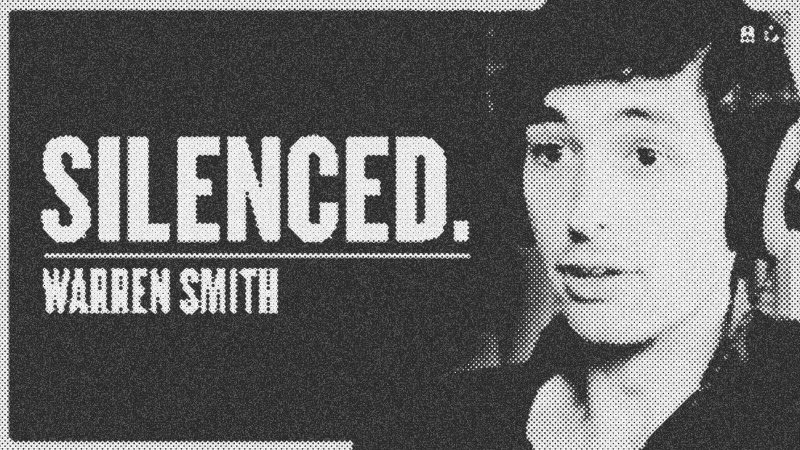
True growth often emerges from the most painful fractures in our lives. When Warren Smith found himself at the center of a viral storm following a classroom discussion about J.K. Rowling, he wasn't just facing a career crisis; he was entering a crucible of character. The backlash against figures like Rowling highlights a disturbing trend in our cultural climate where authenticity is frequently sacrificed at the altar of opportunistic signaling.
Rowling has become a lightning rod because her work defines a generation, yet her personal stances challenge the current ideological orthodoxy. Her insistence on biological reality and the protection of women's spaces is often framed as bigoted, yet as Smith points out, many find her positions to be grounded in common sense. The friction occurs when a figure of her magnitude refuses to bow to the shifting winds of social trends. When we observe celebrities like Emma Watson potentially adjusting their stances based on the cultural weather vane, it underscores the rarity of individuals who prioritize their internal compass over public approval. Authenticity requires a willingness to withstand the heat of the spotlight without melting.
Narrative Law and the Value of Adversity
We are all heroes in our own stories, and every compelling story requires obstacles. In the psychological framework of personal development, adversity acts as the necessary resistance that builds resilience. Smith’s experience of being fired and publicly scrutinized mirrors the hero's journey found in classic screenplays. Without the struggle, there is no transformation.
Consider the difference between a person handed an opportunity and one who survives a trial by fire. The latter possesses a depth of character that cannot be manufactured. This narrative law suggests that we should not seek to avoid challenges but rather recognize them as the raw material for our evolution. When we face professional betrayal or social ostracization, we are walking a knife's edge. It is terrifying, yet it offers the potential to catch the ball on a much larger field of influence. If you make one adjustment to avoid the pain, you might also avoid the purpose that comes with it.
The Devaluation of Human Connection Through Low-Resolution Speech
Communication is becoming increasingly hypertrophied in its reliance on the written word while neglecting the profound depth of non-verbal cues. Words are merely boats floating on the surface of a deep ocean of intent. When we communicate exclusively through text or short video clips, we lose the pacing, the tone, and the emotional resonance that define human understanding. This "low-resolution" communication creates a vacuum where empathy should exist.
Without the ability to sit across from another human and sense their peace, agitation, or sorrow, we begin to treat them as abstractions rather than people. This digital thinning of the human experience makes it far easier to demonize others. We are currently living through a "Navy SEAL boot camp for feeling feelings," where we must re-learn how to engage with the subtext of our interactions. If we continue to squeeze our communication through narrow digital apertures, we will inevitably fail to see the humanity in those who disagree with us.
The Escalation of Political Violence and the Skill Gap in Conflict Resolution
There is a disturbing rise in the acceptance of violence as a legitimate response to speech, particularly among Gen Z. Recent data suggests a significant portion of college students believe shouting down speakers or even physical blockades are justifiable actions to prevent "hate speech." This is not just a political shift; it is a profound skill issue in conflict resolution.
When young people are taught that words are violence, they begin to believe that physical violence is a defensive necessity. This inversion of logic replaces rational conversation with kinetic force. If we stop talking, the only tools left are destruction and silencing. The tragedy of figures like Charlie Kirk facing threats or violence highlights this escalation. When the solution to conflict—rational dialogue—is itself met with lethal intent, the social fabric begins to unravel. We are seeing a generation that views the world through a lens of "good versus evil," leaving no room for the nuanced negotiation required for a stable society.
Postmodernism and the Erosion of Objective Truth
At the heart of our current cultural divide lies the clash between the belief in an objective reality and the postmodern assertion that everything is a social construct. Postmodernism suggests that there is no shared meta-narrative, no ideal behavior, and no ultimate truth to strive for. This worldview is inherently dangerous because it removes the target we are supposed to aim for.
If knowledge is merely a reflection of power dynamics and perspective, then there is no ground for common decency or universal rights. To combat this, we must return to the idea of the "fabric of reality." Even if we cannot perfectly achieve the ideal, we must acknowledge its existence. Rationality requires us to follow logic step-by-step, even when it leads to uncomfortable conclusions. When we abandon the pursuit of truth for the comfort of affirmation, we lose the ability to correct our course. The legal framework remains our last line of defense in defining where the rubber meets the road—the objective lines that protect our shared existence.
Ego, Dehumanization, and the Loss of the Individual
Success and notoriety often come with a hidden cost: the loss of one's humanity in the eyes of the public. Once a person crosses a certain threshold of fame, they cease to be viewed as a human being and instead become a totem for an ideology. Whether it is Jordan Peterson, Joe Rogan, or Joe Biden, these individuals are often treated as rhetorical punching bags because they possess "story armor."
Dehumanization is a byproduct of ego. When we feel the need to prove ourselves or defend our tribe, we strip our opponents of their personhood. This tribalism allows us to sling arrows at "characters" rather than brothers and sisters. We see this in the way people celebrate the misfortunes or even the deaths of those on the opposite side of the political aisle. To restore our humanity, we must keep our egos in check and recognize that behind every avatar is a person with a family, a history, and the capacity for pain. The path forward requires us to be "unreliable allies" to our tribes so that we can be faithful servants to the truth.
- Antifa
- 6%· people
- Charlie Kirk
- 6%· people
- Chris Williamson
- 6%· people
- Emerson College
- 6%· organizations
- Emma Watson
- 6%· people
- Other topics
- 71%
J.K. Rowling & The Cost of Speaking Freely - Warren Smith
WatchChris Williamson // 1:11:56
