The Courage to be Direct: Reclaiming Your Needs in a World of Approval-Seeking
The Invisible Contract of the Nice Guy
Many of us walk through life under the weight of a heavy, invisible burden: the belief that our needs are secondary to the comfort of others. This isn't just a personality trait; it is a survival mechanism wired into the nervous system before we even had the words to describe it. When you grow up in an environment where caregivers are inconsistent or overwhelmed, you learn a dangerous lesson. You learn that to be safe and loved, you must become needless. You become an expert at reading the room, anticipating the desires of others, and burying your own requirements so deep they eventually become unrecognizable even to you.
This creates the architecture of the "Nice Guy" syndrome. The hallmark of this condition is the covert contract. It is an unspoken agreement that says: "If I am good, and if I take care of everyone else, then they will take care of me without me ever having to ask." The tragedy of this strategy is that it never works. People cannot read your mind, and when they fail to meet the needs you never expressed, you feel resentful. This resentment poisons your relationships, leading to passive-aggressive behavior and a chronic sense of being unappreciated. Breaking this cycle requires more than a tactical shift; it requires a fundamental rewriting of your internal operating system.
Refilling an Empty Bucket
You cannot give from a dry well, yet so many of us try to be the ultimate provider, partner, or friend while our own emotional reserves are at zero. We mistake self-neglect for heroism. We think it’s romantically noble to say, "I don't need anything," while we are secretly starving for connection and validation. The reality is that prioritizing yourself is the least selfish thing you can do. When your bucket is full and overflowing, you have a surplus to give to the world. When it’s empty, you become a "vacuum hose," desperately trying to suck energy and approval out of everyone you encounter.
Start by acknowledging that your needs are valid. This begins with basic self-stewardship: sleep, nutrition, and movement. It expands into social connection and professional boundaries. If you find yourself reflexively giving to others just to earn their favor, stop. Challenge yourself to a period of "self-giving." If you see something that someone else would like, buy something for yourself first. Go to the dentist. Book that trip. By making yourself a priority, you signal to your own nervous system—and to the world—that you are a person of value. This isn't about becoming a narcissist; it's about becoming a functional adult who takes responsibility for their own well-being.
Stepping Outside the Washing Machine of the Mind
The human brain is a master of rumination, often acting like a washing machine on a permanent agitation cycle. We get spun around by regrets from the past, anxieties about the future, and brutal comparisons in the present. This "ruminating brain" is often an inherited trait or a response to trauma, and it convinces us that its constant spinning is productive. It tells us that if we just rehash that missed opportunity from college one more time, we might finally solve the puzzle of why our lives aren't perfect.
To break free, you must practice being the observer, not the believer, of your thoughts. You are not the noise in your head; you are the one listening to it. When the inner critic starts its scolding monologue, step back. Imagine yourself standing outside that spinning washing machine, watching the clothes tumble. You can notice the thought—"I'm not doing enough"—without accepting it as an absolute truth. This cognitive distance is the beginning of freedom. It allows you to move from a place of reactive shame to a place of intentional action. Remember, no one ever made a significant, lasting change from a place of self-hatred. Growth requires the oxygen of self-compassion.
The Myth of Productive Suffering
We live in a culture that worships at the altar of hard work, often confusing exhaustion with worth. This is particularly true for high-achievers who suffer from "productivity debt." They wake up every morning feeling as though they are already overdrawn, believing they must flagellate themselves through a brutal schedule just to earn the right to a half-hour of peace before bed. While hard work is a reliable path to success, it is not a panacea. If your work is driven by a fear of insufficiency, no amount of achievement will ever feel like enough.
We must distinguish between "smart hard work" and the masochistic pursuit of suffering. There is no nobility in misery. Many of the hardest-working people on the planet remain in poverty because they lack leverage or are working in service of someone else's dream. Real success comes from finding your "sweet spot"—those areas where your natural curiosity and joy align with your efforts. When you work from a place of alignment, you aren't "driven" by demons; you are pulled by purpose. You can be consistently productive without being a slave to an internal tyrant. Build gaps into your day. Take the siesta. Do nothing for thirty minutes. These aren't signs of weakness; they are the practices of a man who respects his own energy.
Maturity Beyond Approval
A man truly matures the moment he stops seeking the approval of women. For many, this is a radical concept because we have been conditioned since infancy to look to the feminine—starting with our mothers—as the ultimate arbiter of our worth. This translates into the dating world as a desperate, "pick me" energy that is fundamentally unattractive. When you chase approval, you make the other person the "alpha" and yourself the "beta." You give away your power, hoping that by being perfectly pleasing, you will be granted affection.
Authentic attraction thrives on tension, honesty, and a man being comfortable in his own skin. It’s about being outcome agnostic. This means being equally okay with whether a woman likes you or not. When you are no longer terrified of rejection, you become uninhibited. You can be playful, spontaneous, and direct. You can test for interest and walk through open doors rather than pounding on closed ones. This shift from "seeking" to "living" changes your entire vibration. You become a person who is engaged with the world, someone who says "yes" to adventure and "no" to bad fits. This is the path to genuine connection: not by molding yourself to fit someone else's expectations, but by standing firmly in your own truth.
The Power of the Clean Break
One of the most overlooked skills in personal growth is the ability to be a "good Ender." We often stay in relationships, jobs, or habits far past their expiration date because we are afraid of the unknown or we don't want to be the "bad guy." Nice Guys, in particular, will hang on for dear life because they fear they’ll never find another opportunity. But being a poor Ender is a disservice to everyone involved. It leads to years of stagnation and eventual messy, resentful explosions.
Becoming a better picker requires becoming a better Ender. Dating is, by definition, the process of making multiple "bad picks" until you find a right one. If a first date doesn't click, end it. If a three-month relationship shows fundamental misalignments, end it. Do it sooner rather than later. This is an act of integrity, not cruelty. By ending a mismatch quickly, you free up both people to find a connection that actually works. It requires the courage to face temporary discomfort in exchange for long-term peace. When you master the art of the clean break, you no longer have to fear the dating market or the changing tides of life, because you know you have the strength to navigate them with honesty.
- Chris Williamson
- 8%· people
- David Deida
- 8%· people
- M. Scott Peck
- 8%· people
- Matthew Hussey
- 8%· people
- Michael Singer
- 8%· people
- Other topics
- 58%
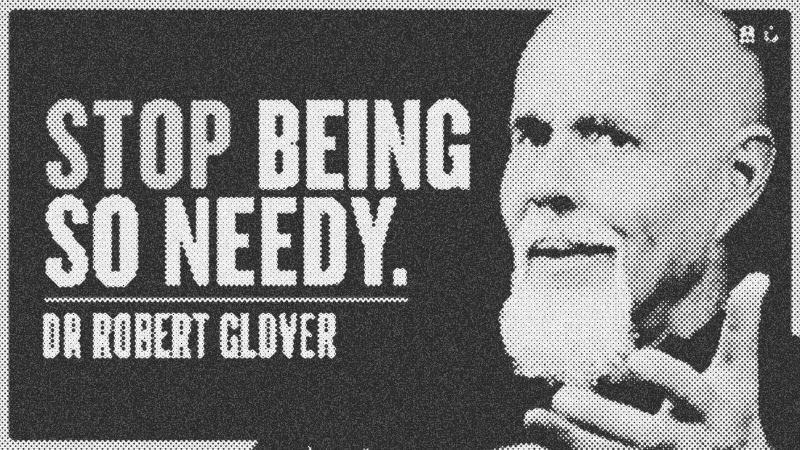
Stop Asking for Permission to be a Man - Dr Robert Glover
WatchChris Williamson // 1:58:43
