Huberman: stop trying to think your way out of stress
The biological bridge between physical state and mental control
When we are trapped in the throes of high-intensity emotional states like anxiety, panic, or deep sadness, we often attempt to use our intellect to talk ourselves out of the experience. We try to rationalize away the fear or meditate through the misery. However, Andrew Huberman suggests this is fundamentally a losing battle. The nervous system operates on an autonomic continuum—a biological seesaw that governs alertness and calm. When this system is pushed to its extremes, the mind essentially becomes a runaway train. In these moments, the most effective way to regain control of the mind is not through thinking, but through the body.
The autonomic nervous system connects the brain to every major organ. It is a two-way street where physical behaviors can forcefully shift the internal environment. When you are stressed, your visual field narrows into a "soda straw" view, making it physically impossible to see the big picture. This narrowing is mirrored in your thoughts; you become obsessive, focused only on the threat. By leveraging specific physical interventions—such as the physiological sigh or deliberate temperature changes—you can mechanically adjust the autonomic seesaw. Once the body is moved toward a calmer state, the mind follows, allowing for the reintroduction of rational thought and a broader perspective on the situation.
Mechanics of fear and the friction of growth
Fear is not a singular emotion but a complex physiological process funneled through the hypothalamus, amygdala, and the autonomic nervous system. While most people spend their lives avoiding this discomfort, Andrew Huberman explores the concept of limic friction—the internal resistance felt when trying to act while stressed or when trying to perform while exhausted. High performers like David Goggins treat this friction as a training ground rather than an obstacle. By leaning into friction, individuals can train their ability to tolerate high levels of adrenaline while maintaining cognitive clarity.
This training is often achieved through stress inoculation protocols like cold water immersion or cyclic hyperventilation. These behaviors trigger a massive release of epinephrine (adrenaline) in both the brain and the body. However, because the individual initiates the stressor voluntarily, it changes the context of the adrenaline. It moves from something being done to you to something you are navigating through. This raises the stress threshold, meaning that when real-world stressors occur—like a near-accident on the highway or a difficult social confrontation—the physiological spike is familiar. You have already practiced staying calm inside the storm of your own adrenaline.
Decoding the neuroscience of heartbreak and grief
Loss and heartbreak are among the most debilitating human experiences, often dismissed as purely emotional. In reality, they are deeply rooted in the brain's mapping of three specific variables: space, time, and closeness. Andrew Huberman describes this as a tripod of attachment. When a loved one is lost through death or a breakup, the "closeness" component remains high, but the "space" and "time" coordinates are obliterated. The person still feels close, but they are nowhere in space, and there is no predictable time when they will be seen again.
This creates a state of intense motivational conflict. Brain imaging of people in grief reveals activity identical to those experiencing extreme hunger or those prevented from reaching a mate. Grief is a highly motivated state where the brain is desperately trying to bridge the gap in time and space to find the missing person. Healing involves the painful process of fracturing that map. This is why social media is particularly toxic during breakups; it provides a false sense that the person is still available in time and space, preventing the brain from completing the necessary remapping. Moving through trauma or heartbreak requires confronting the reality of the loss directly, as avoidance or distraction only serves to prolong the biological state of yearning.
Dopamine cycles and the danger of effortless rewards
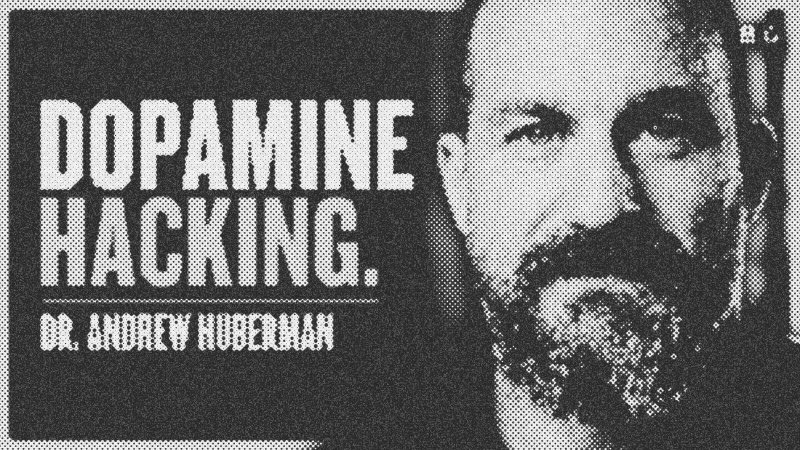
Dopamine is frequently mischaracterized as the molecule of pleasure. In truth, it is the molecule of pursuit, motivation, and craving. It is the fuel that drives human evolution, keeping us seeking food, mates, and knowledge. The modern environment, however, has hijacked this system through "random intermittent reward" schedules, most notably in smartphones and social media. When we scroll, we aren't necessarily enjoying ourselves; we are trapped in an obsessive-compulsive loop, seeking a hit of novelty that rarely arrives.
The most critical distinction Andrew Huberman makes regarding this system is that dopamine arriving without prior effort is destructive. Drugs like cocaine or behaviors like chronic pornography consumption provide massive dopamine peaks with zero physical or mental exertion. This destroys the baseline levels of dopamine, leading to a state of "pain" where the individual feels unmotivated and miserable unless they are engaging in the addictive behavior. Conversely, dopamine earned through hard work—milestoning toward a goal—actually builds the capacity for further action. It is the precursor to adrenaline, meaning that successful pursuit generates the very energy needed to keep going.
Hormonal architecture and environmental impacts
Human behavior is heavily dictated by the underlying hormonal landscape. There is currently significant concern regarding the global decline in testosterone and sperm counts, which Andrew Huberman attributes to environmental factors like phthalates and pesticides. These substances act as endocrine disruptors, particularly when exposure occurs in utero or during puberty. They can alter the activating effects of androgens, leading to physiological shifts that are often difficult to reverse.
Beyond environmental toxins, lifestyle choices regarding light and temperature play a massive role in hormone regulation. Simple acts like getting natural sunlight in the eyes within the first three hours of waking set in motion a cascade of cortisol and eventually melatonin. Andrew Huberman highlights that even 20 minutes of sunlight on the skin can substantially raise testosterone and estrogen levels. These are not "hippie science" claims; they are biological realities of how the skin acts as an endocrine organ. By managing light exposure, temperature (sauna and cold), and eating windows, individuals can anchor their biological clocks, providing a stable foundation for mental performance and emotional resilience.
The expectation effect and the power of belief
While biology provides the hardware, our expectations act as a powerful software layer that can override physical reality. Andrew Huberman points to the work of Aaliyah Crum and David Robson to illustrate how the "Expectation Effect" functions. In studies where participants were given identical milkshakes but told different calorie counts, their bodies produced actual physiological responses—like the suppression of the hunger hormone ghrelin—based solely on what they believed they were consuming.
This extends to stress and aging. Those who view stress as a mechanism for growth actually experience better health outcomes than those who view it as purely destructive. Similarly, the vocabulary we use to describe our own aging predicts our longevity. These are not mystical phenomena but psychophysiological responses where the forebrain’s interpretation of data directs the body's chemical output. If you believe a challenge will grow you, your body prepares for growth; if you believe it will break you, it prepares for failure. Integrating these biological and psychological tools allows for a complete shift in how one navigates the human experience.
- Andrew Huberman
- 30%· people
- Aaliyah Crum
- 4%· people
- Anna Lembke
- 4%· people
- Countdown
- 4%· books
- David Goggins
- 4%· people
- Other topics
- 52%
Breakups, Sadness, Focus & Rebuilding Yourself - Andrew Huberman (4K)
WatchChris Williamson // 2:39:02
