The Ghost in the Machine: Navigating the Deconstruction of Music in the Age of AI and Algorithmic Curation
The Great Mirage: Peeling Back the Curtain on Modern Songwriting
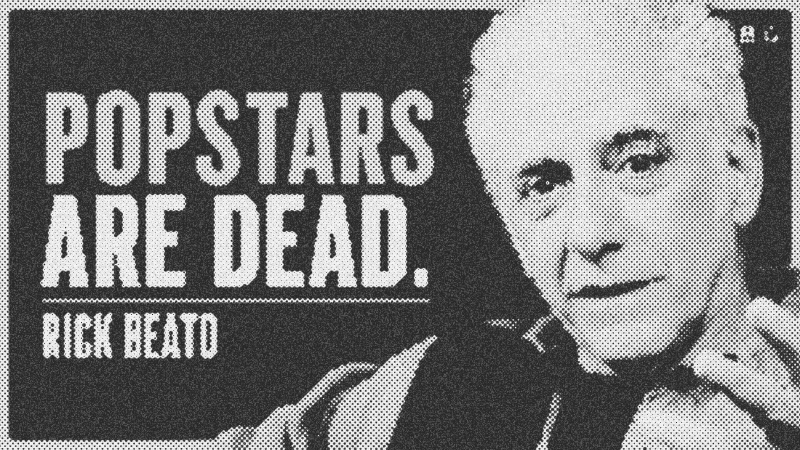
We often cling to the romanticized image of a solitary artist pouring their soul into a journal, translating raw heartbreak into a melody that captures the human experience. While that archetype still exists in pockets of the industry, the reality of contemporary pop music is a sophisticated, industrial-scale operation. Rick Beato highlights a staggering shift in how songs are constructed, noting that the "artist" is often the final piece of the puzzle rather than the architect. In the modern music factory, tracks are frequently "producer-driven," built by teams of specialists before a singer ever enters the room. This process isn't just about efficiency; it's about a fundamental change in the value proposition of the pop star.
The distinction between an artist-driven song and a producer-driven one is critical for understanding the current cultural landscape. When Max Martin or Dr. Luke craft a hit like "Since U Been Gone" for Kelly Clarkson, they aren't just facilitating her vision—they are providing the vision. The lyrics, the sonic textures, and the rhythmic hook are prefabricated. The artist brings their vocal performance and, perhaps more importantly, their brand. This deconstruction of the creative process raises profound questions about authenticity. If fifteen people wrote a song, who does the emotion belong to? While some argue this is "gaslighting" the audience into believing their idols are more creative than they truly are, it is perhaps more accurate to see it as an evolution of the performer's role. Today's pop stars are not necessarily songwriters; they are athletes of the stage and masters of the digital image.
The Athleticism of Fame and the Social Media Mandate
If the modern pop star isn't always the primary creator of the music, what are they bringing to the table? The answer lies in a blend of extreme athleticism and digital savvy. Tate McRae, for instance, exemplifies the new breed of artist who is a professional-level dancer and a self-contained promotion department. Success in the current era requires being "famous before you are a pop star." This is why the Disney channel and TikTok have become the primary farm systems for the music industry. Sabrina Carpenter, Selena Gomez, and Demi Lovato all established a base of human connection through acting or social media before the music machine was ever activated.
This shift demands a different kind of resilience from creators. In the past, a band like The Beatles could focus almost exclusively on the music, releasing three albums in a single year because they were effectively trapped in the bubble of their own fame. Today, an artist must be a master of the 15-second loop. They must lip-sync, dance, and cut their own videos on their phones to feed the TikTok algorithm. The music has become the soundtrack to the brand, rather than the brand being built around the music. This constant demand for "content" rather than "art" creates a frantic environment where the juice of creativity is often squeezed dry by the age of thirty. When the pressure to be a viral sensation outweighs the pressure to be a great musician, we see a homogenization of sound as everyone chases the same "tick-tockable" moment.
The Algorithmic Silo and the Death of Shared Narrative
One of the most profound changes in our relationship with music is the move from a shared cultural narrative to algorithmically siloed experiences. In the era of dominant radio and MTV, a band like Nirvana could change the world overnight. When "Smells Like Teen Spirit" hit the airwaves, it didn't just reach individuals; it moved an entire generation simultaneously, effectively killing "hair metal" in a matter of months. That kind of singular, transformative moment is nearly impossible in the age of Spotify.
Today, we are fed a diet of "similar artists" based on data points. If you like Bad Omens, you are pointed toward Sleep Token. While this helps listeners find music they will likely enjoy, it also flattens the peaks of experimentation. Subcultures—those vibrant, messy pockets of rebellion like Goth or Emo—struggle to ossify because the algorithm moves too fast. As soon as a trend shows a spark of life, it is commodified and smoothed over to appeal to the widest possible demographic. This "vanilla ice cream" approach to production is further exacerbated by the ease of modern recording. When everyone uses the same digital modeling amplifiers and the same drum samples, the sonic palette becomes a singular, unvarying gray. The lack of "happy accidents"—the mic falling over or the amp blowing a fuse—removes the human grit that once made records feel alive.
The Rise of the Philosophical Zombie: AI and the Ethics of Creation
The arrival of generative AI in music, represented by platforms like Suno and Udio, marks the final frontier of this deconstruction. We are now seeing the emergence of "fake bands" like The Velvet Sundown, which garner hundreds of thousands of followers despite having no human members and no verifiable history. This is the era of the "philosophical zombie" in music: it sounds like a human, it evokes human emotion, but there is no one behind the curtain.
The ethical implications are dizzying. For musicians who have spent decades mastering an instrument, the ability of an AI to replicate a soulful saxophone solo or a complex drum pattern feels like a personal affront. However, the industry is already trending toward a reality where music is just another utility, like light or water. If Spotify can fill its "Focus" or "Deep Sleep" playlists with AI-generated tracks that they don't have to pay royalties on, the financial incentive to use human artists vanishes. We face a future where we may find ourselves "catfished" by a song, weeping over a lyric that was never felt, only calculated. This forces us to ask: do we value the art, or do we value the human soul behind it? If the goal of music is simply a "vibe," then the robots have already won. But if the goal is connection, we must find new ways to verify the organic origin of the sounds we consume.
The Future of Resilience: Live Music as the Final Moat
Despite the encroaching digital tide, there remains one area where the human element cannot be faked: the live experience. While AI can generate a perfect studio recording, it cannot yet replicate the visceral, unpredictable energy of a live performance. This is why touring has become the primary financial engine for the modern musician. Whether it's the high-stakes pyro of a Metallica show or the intimate connection of an Ed Sheeran loop-pedal performance, the stage is where the "moat" of human skill remains widest.
For the modern artist, the path to survival is no longer just about the song; it is about building a multifaceted ecosystem. Success today looks like Tosin Abasi of Animals as Leaders, who combines virtuosic playing with a guitar company and digital plugins. It looks like the "VIP meet-and-greet" and the limited-edition merchandise shelf. The musician of the future must be an entrepreneur, a content creator, and a performer all at once. It is a grueling, exhausting mandate, but it also offers a new kind of independence. By leveraging technology rather than being replaced by it, the resilient artist can still find their audience in the noise. The challenge for us as listeners is to remain intentional—to seek out the "organic" and the "human" in an increasingly synthetic world.
- Spotify
- 6%· products
- TikTok
- 6%· products
- 11 Labs
- 3%· products
- Apple
- 3%· companies
- Bernie Taupin
- 3%· people
- Other topics
- 77%
How AI and TikTok Are Breaking the Music Industry - Rick Beato
WatchChris Williamson // 2:01:35
