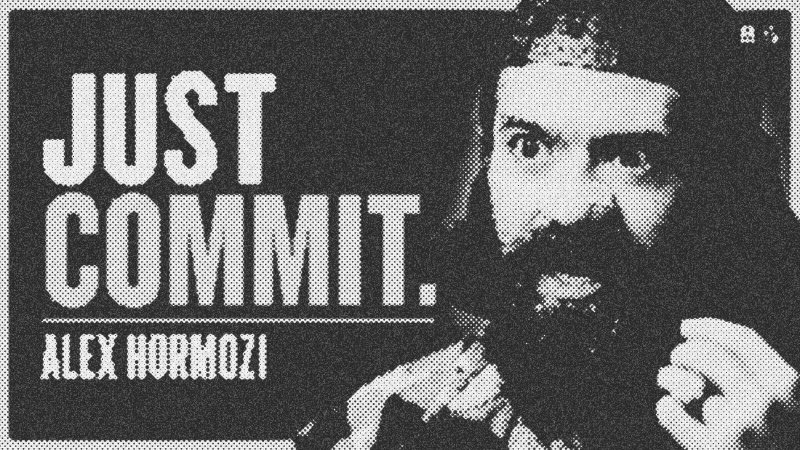
Hormozi warns keeping your options open is destroying your potential
The Trap of Selective Toughness
Many high achievers mistake physical endurance for psychological fortitude. They wake up at dawn, jump into ice baths, and run marathons. They build an identity around doing hard things. Yet, these same individuals often freeze when they must have a difficult, vulnerable conversation with a spouse, partner, or business associate. They can withstand physical agony but crumble under emotional weight.
This discrepancy exists because hardship is highly specific to its environment. Suffering in the gym does not automatically teach you how to tell the truth when the stakes are high. Unless you intentionally convert physical discipline into a broader identity label—convincing yourself that because you finished that race, you are now someone who refuses to back down from any uncomfortable situation—the skill remains locked in the weight room.
We publicly applaud the obvious, highly visible acts of toughness. It is easy to post a marathon finish online and collect praise. It is far more difficult to sit across the table from someone you love, look them in the eye, and make a decision you have avoided for months. If you only select the hardships that allow you to look good publicly, you are avoiding the private work that actually dictates your trajectory. True strength is not performative. It is decisive.
Why Decision Paralysis is Slow-Motion Self-Sabotage
Young people are routinely praised for keeping their options open. They collect degrees, accumulate certifications, and try to keep every door ajar. But options are only valuable when you cash them in. Keeping every door open means you are standing in the hallway, moving nowhere.
This obsession with optionality is a modern sickness. It leads to severe decision paralysis. In your attempt to avoid making a bad choice, you make the worst choice of all: standing still. Inaction is not a neutral position. It is a highly active decision to let your current reality drift. Your circumstances change anyway. Doors close on their own. Opportunities rot.
To move forward, you must accept the pain of trade-offs. Commitment is, by definition, the elimination of alternatives. When you choose one path, you must actively kill off the others. This is the difference between maximizing your potential and realizing it. Realized potential requires you to make permanent, un-refundable trades. You cannot enjoy the benefits of a deeply committed marriage while trying to maintain the freedom of a single person. You cannot build a massive enterprise if you are unwilling to stop pursuing four other side projects. Mature growth requires you to pull the future forward by choosing one path and walking it relentlessly.
The High Cost of Unspoken Standards in Relationships
Most relationship conflicts stem from inaccurate maps of reality. People walk around highly confused because their expectations do not align with what actually happens. When reality disagrees with their desires, they complain. But complaining is simply a symptom of a broken model. Reality is undefeated. It does not care about your expectations.
This mismatch is particularly damaging in personal and professional relationships when you prioritize intention over output. Many people tolerate chronic dysfunction because the other person "means well." This is well-intentioned harm. If someone drives down the street texting and runs over your spouse, the outcome is identical to someone who hit them on purpose. In your personal life, you are the one who suffers the consequences. You must strip away intentions and look purely at outputs.
When evaluating who belongs in your circle, assess the data. Is your life measurably better with this person in it? Are you in better shape? Is your business healthier? Do you feel more grounded? If their presence repeatedly correlates with decline, their good intentions are irrelevant. They are simply incompetent at doing good for you. You are not obligated to be the collateral damage of their well-intentioned incompetence.
To prevent this, you must eliminate unspoken standards. Unspoken expectations are premeditated resentments. If you want a partner to act a certain way, you must translate your vague desires into granular, observable behaviors. If you want "love" or "respect," define what those look like in reality. Do not force the people around you to guess your rules of behavior and then punish them when they guess wrong.
How to Tell the Difference Between Pushing and Pivoting
When you are in the thick of a struggle, you will face an internal question: When do I push through, and when do I pivot?
This is where pattern recognition is vital. To make this judgment, look at the fundamental assumptions of your endeavor. If you started a business based on the belief that a specific market wanted a specific product, and you have spoken to a hundred potential buyers who have zero interest, your assumption has been proven false. This is a pivot situation. Pushing harder on a broken premise is simply stubbornness.
If, however, the market wants the product but you are struggling to reach them, that is an execution problem. That is a push situation. You do not need a new path; you need more volume and better skill.
Losing will always teach you something, but you must ensure you learn the correct lesson. If you hire an employee who performs poorly, the lesson is not that all employees suck. The lesson is that your screening process or your training system needs revision. If you learn the wrong lesson, you build compensatory mechanisms that restrict your future progress. You become hyper-vigilant and slow down your own growth to avoid a pain you could have managed with better systems.
The Hidden Fuel in Our Deepest Fears
Before achieving any level of public success, you must pass through the lonely chapter. This is the period when nobody around you understands your goals. Your friends mock your choices. Your family tries to talk you off the cliff. They urge you to be practical and realistic.
What they are really doing is trying to force you back into the collective mold. Your new standards highlight their failure to change theirs. When you stop drinking, stop going out, or start working fifteen-hour days, you become a mirror that they do not want to look into.
During this phase, fear is inevitable. The breakthrough occurs when you turn that fear around and use it as fuel. Instead of fearing the temporary discomfort of failing or looking foolish, learn to fear the permanent tragedy of a wasted life. Be more terrified of looking back at eighty and realizing you never tried. Run harder away from that empty future than you run away from the short-term discomfort of today's challenges.
To survive this transition, you must change your physical environment. Your brain is wired to repeat behaviors based on environmental cues. If you stay in the same town, hang out with the same crowd, and visit the same places, your habits will remain locked. To change your thinking, change your geography. Move across town, change your gym, or work from a different coffee shop. Physical distance creates cognitive space.
Earning Respect Without Becoming a Tyrant
Respect is a specific psychological currency. It is letting someone else's word change what you do even when they have no power to force you. It is the opposite of fear-based compliance.
To earn respect in any group or organization, you must display consistent behavioral patterns. This begins with public sacrifice. You must pay the cost for the group where they can see it, bearing the hardships so they do not have to. You must also deliver undeniable outcomes, demonstrating repeated competence that directly improves their condition. Your word must be flawless; what you say will happen must happen.
Enforcement is your floor. You must hold people to your standards, but you must do so without making it about their identity. If an associate fails, address the behavior, not the person. Define the standard clearly, make sure they have the capacity to meet it, and then apply escalating, consistent consequences if they choose not to. When you pair this firm enforcement with restraint—holding back your anger when you have the power to destroy someone—you build lasting authority.
Ultimately, you have to risk being disliked to build anything of value. Egos hold back more dreams than failure ever will. You have to risk looking broke to get rich. You have to risk looking weak to get strong. You have to risk looking desperate to get loved. If you are unwilling to put your current comfort on the altar, you are simply choosing to sacrifice your future potential instead.
- Alex Hormozi
- 13%· people
- Bill Perkins
- 13%· people
- Chris Williamson
- 13%· people
- Jocko Willink
- 13%· people
- Leila Hormozi
- 13%· people
- Other topics
- 38%
33 Brutal Truths To Stop Wasting Your Potential - Alex Hormozi
WatchChris Williamson // 4:08:55
