Victorian Leclanché cell powers modern electronics after 150 years in attic
There is a certain magic to bringing a machine back to life. Taking a piece of history that spent over a century gathering dust in an ancient attic and making it run again is the ultimate hardware fix. The Leclanché cell, invented in 1866, represents the precursor to our modern dry cell batteries. Reviving one requires some basic chemistry and a respect for vintage engineering.
Tools and Materials Needed
To reconstitute a historic wet cell, you need the original glass jar, the porous ceramic pot containing the carbon rod and manganese dioxide, and a zinc rod electrode. For the electrolyte, source some ammonium chloride (ammonium chloride) and clean water. Keep a wire brush handy for cleanup, alongside a digital multimeter and a low-voltage boost circuit to utilize the power.
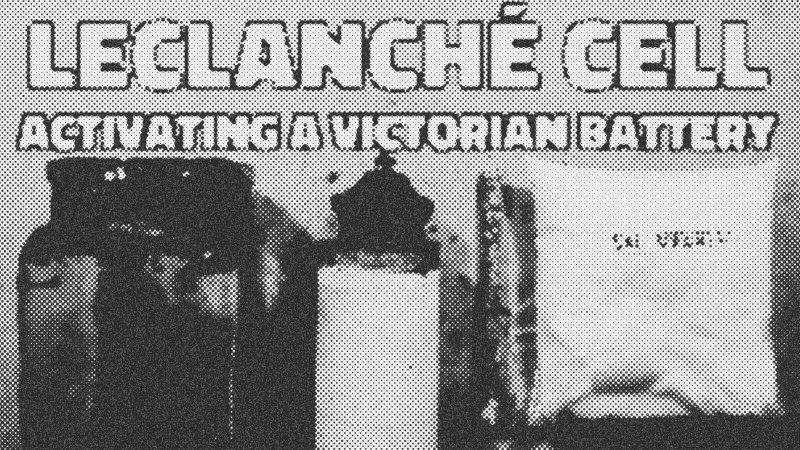
Step-by-Step Restoration
First, clean the elements. Give the zinc rod a vigorous scrub with a wire brush to expose the bare metal. Do not use mercury to amalgamate the surface; modern safety protocols make this vintage trick obsolete. Ensure the vent tubes on the ceramic pot are entirely clear to prevent gas buildup.
Next, mix the electrolyte. Combine water and ammonium chloride in a strict 4:1 ratio by weight. Stir until the solution is completely clear. Pour the mixture into the glass jar, then carefully lower the ceramic pot and the zinc electrode into the liquid.
Finally, test the output. Connect your multimeter leads to the terminal. You should see a prompt reading of approximately 1.5 volts as the electrolyte soaks through the porous ceramic.
Heavy Loads and Voltage Sag
These cells excel at providing short bursts of power, historically running doorbells and telegraphs. Under a continuous heavy load, hydrogen bubbles form on the carbon electrode, blocking the current flow. This polarization causes the voltage to drop rapidly. Using a small boost converter allows you to step the dropping voltage back up to a usable 5 volts, enabling this antique battery to run modern LED indicators.
- ammonium chloride
- 33%· products
- zinc rod
- 33%· products
- Leclanché cell
- 17%· products
- manganese dioxide
- 17%· products
Reactivating an 1800's Victorian Leclanché cell
Watchbigclivedotcom // 10:20

The trashiest electronic channel on YouTube. We test and use affordable electronic soldering equipment and tools to build, teardown, modify (and sometimes destroy) random electronic stuff. A British TV licence is NOT required to view my videos or almost every other video on YouTube. Many of the builds and projects featured here operate at full mains voltage and carry a high risk of shock and fire. As such they're really intended for either entertainment value or for those who do similar stuff. The videos are generally uncensored and may contain tasteless jokes, profanities and even blood and electric shocks when things go wrong. So just like a normal workshop really. So kick back, grab a beer and enjoy the ride.