Muscle wire lock shrugs off magnets to beat traditional solenoids
The shift from magnets to shape memory alloys
Traditional electronic locks usually rely on a solenoid—a heavy coil of copper wire around a steel slug—to pull a latch. While effective, these mechanisms are bulky and notoriously vulnerable to external magnetic interference. A savvy thief with a high-powered Neodymium Magnet can often trick a solenoid into releasing. The Muscle-wire cabinet lock replaces that clunky coil with a strand of Nitinol, a shape-memory alloy that contracts when heated. This swap eliminates the magnetic vulnerability entirely, creating a lock that is both physically smaller and more secure against external tampering.
Internal mechanics of the thermal actuator
The magic happens through heat. When current passes through the Nitinol, the material's resistance generates internal heat, causing the wire to shrink. In this specific locker mechanism, the wire is anchored around metal bushes that double as heat shields for the plastic housing. As the wire contracts, it pulls a lever that releases a spring-loaded pawl. This release allows the main hasp to "ping" outward, physically pushing the door open. Testing reveals that while the lock is rated for 5V, running it at 1V slows the process enough to see the wire physically creep as it reaches its transition temperature.
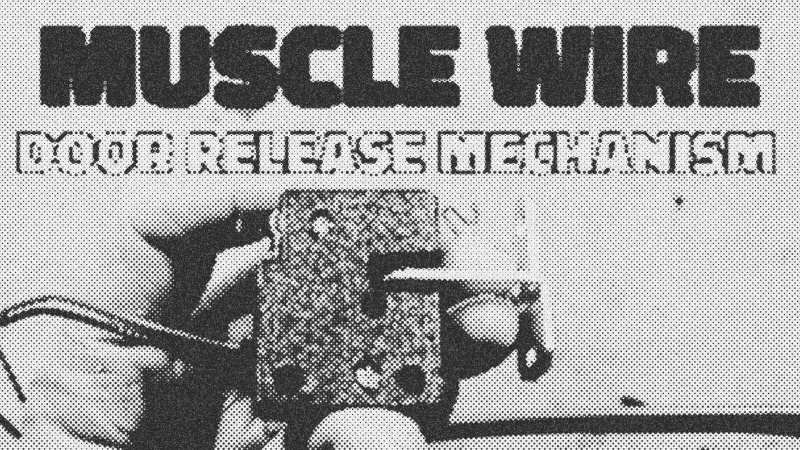
Smart power management via internal switching
One risk with thermal actuators is overheating; if current continues to flow after the wire has already contracted, the material can lose its "memory" or melt the surrounding plastic. This device solves that with a clever integrated switch. The moment the latch releases, it physically moves a contact that breaks the electrical circuit. This ensures the wire only receives power for the millisecond required to actuate. It's a simple, fail-safe feedback loop that protects the electronics and extends the lifespan of the nitinol strand to millions of cycles.
Practical physics of shrinking metal
The electrical properties of the lock shift as it operates. Cold, the wire shows a resistance of roughly 2.86 ohms. As it heats up and contracts—becoming slightly thicker in the process—the resistance actually drops to 2.5 ohms. At the standard 5V operating range, this transition happens almost instantaneously, making the lock feel as snappy as any magnetic counterpart. For builders, this means the device requires a power supply capable of handling a brief but significant current spike, usually around 2 amps at 5V, to ensure the door pops every time.
- Nitinol
- 33%· products
- AliExpress
- 17%· companies
- Amazon
- 17%· companies
- Muscle-wire cabinet lock
- 17%· products
- Neodymium Magnet
- 17%· products
Muscle-wire cabinet lock
Watchbigclivedotcom // 6:11

The trashiest electronic channel on YouTube. We test and use affordable electronic soldering equipment and tools to build, teardown, modify (and sometimes destroy) random electronic stuff. A British TV licence is NOT required to view my videos or almost every other video on YouTube. Many of the builds and projects featured here operate at full mains voltage and carry a high risk of shock and fire. As such they're really intended for either entertainment value or for those who do similar stuff. The videos are generally uncensored and may contain tasteless jokes, profanities and even blood and electric shocks when things go wrong. So just like a normal workshop really. So kick back, grab a beer and enjoy the ride.