The Ghost of 1945: Navigating London’s Modern Jungles in a Bedford Lorry
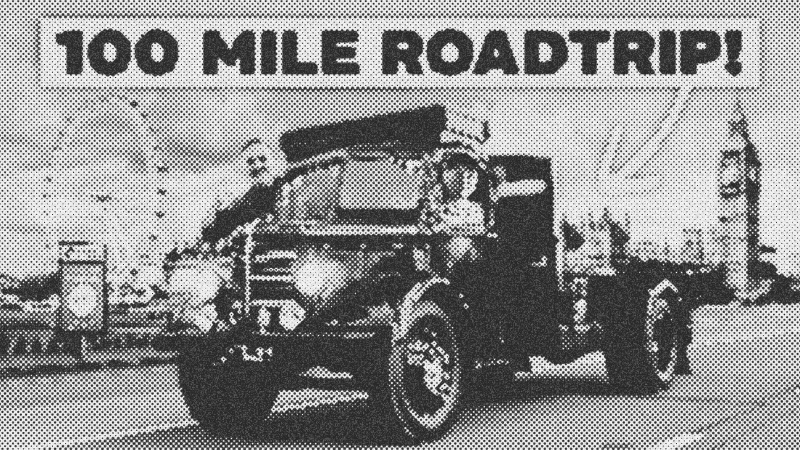
The morning air in Reading felt thick with more than just humidity; it carried the weight of an engineering era long since passed. Standing before a 1945 Bedford O-Type lorry, nicknamed Clifford, you don't just see a vehicle. You see a raw, unyielding testament to post-war grit. It cost a mere £1,000, yet its heartbeat is a 3.5-liter straight-six petrol engine that refuses to quiet down. This isn't just a drive; it's a 40-mile tactical insertion into the heart of central London. No seatbelts, no power steering, and a four-speed gearbox that feels like stirring a bowl of thick soup. The mission is simple but mechanically daunting: prove that this historic relic can conquer the M4 Motorway and navigate the narrow, congested arteries of the capital.
The Engineering of a Post-War Workhorse
Respecting the engineering starts with acknowledging that Clifford wasn't built for comfort; he was built for survival. The cabin is a masterclass in minimalism. There are no safety nets here—no airbags, no crumple zones. The driving position is a physical challenge, with a brake pedal positioned so far from the accelerator that every stop requires a pre-planned leg movement. As we pulled away from the yard, the first gear revealed its true nature: incredibly short, designed for hauling heavy loads up muddy inclines rather than brisk suburban starts. Moving to second gear early became the secret to a smoother departure. At 17 mph in fourth gear, the lorry jiggles and rattles, a reminder that every bolt must be checked and every fluid level monitored. The steering is remarkably vague, requiring constant micro-corrections just to maintain a straight line, a stark contrast to the precision of modern hydraulic or electric systems.
High-Stakes Velocity on the M4 Motorway
Taking an 81-year-old vehicle onto a major motorway is usually a recipe for disaster, but Clifford had other plans. Merging onto the M4 at 37 mph is arguably the most terrifying experience a modern driver can face. You are a slow-moving island in a sea of high-speed commuters. However, the 1945 Bedford holds its own. We managed to push the straight-six to 41 mph, finding a rhythm that, while loud, felt sustainable. The cooling system, which I had filled to the brim earlier, began to vent through the overflow pipe—a common sight for those who overfill vintage radiators. It wasn't a failure, just the engine finding its natural level. The sheer size of the vehicle actually worked in our favor; truck drivers could see us from a mile away, giving us the wide berth that a historic piece of machinery deserves. Despite the lack of a fifth gear, the temperature remained stable, proving that the cooling architecture of the 1940s was more robust than most give it credit for.
Field Repairs and the Reality of Old Iron
A pit stop at the Heston services brought the first real mechanical debrief. Vintage engines are living, breathing things that require constant attention. We discovered a slight oil leak, which upon closer inspection, was coming from a loose plate on the engine block. In the world of DIY mechanics, this is where the real work happens. You don't call a recovery truck; you crawl underneath with a wrench and nip up the bolts. We found several that had vibrated loose during the high-speed motorway run. Then there was the "mayonnaise" under the oil filler cap—a sight that usually signals a blown head gasket. But with Clifford, context is everything. After years of short starts and storage, this was likely just condensation trapped in the system. We topped it off with 10W-60, the same thick oil used in an BMW M5 E60, and refitted the air filter that had literally been blown off by a carburetor backfire. This is the essence of maintaining old iron: monitor, adjust, and keep moving.
Conquering the Streets of Mayfair and Beyond
Entering central London, the challenge shifted from speed to geometry. Navigating Sloane Square and the backstreets of Mayfair in a five-ton lorry is a game of inches. The transmission tunnel becomes a heater, radiating enough warmth to burn your leg if you aren't careful. We passed the Natural History Museum and headed toward Harrods, where the sight of a 1945 Bedford caused more of a stir than the surrounding Lamborghinis and Bentleys. The turning circle is abysmal, making every corner a calculated maneuver that often requires bumping up onto the curb just to clear the rear end. Yet, the reward is the reaction of the public. This lorry is a rolling piece of history that brings a smile to even the most jaded Londoner. By the time we reached Buckingham Palace and the London Eye, Clifford had proven himself. He is exempt from the ULEZ and road tax, making him an ironically practical choice for a city run—provided you have the physical stamina to manhandle the steering wheel.
The Verdict on the Daily Driver Experiment
As we sat in the shadow of Big Ben, the realization hit: we had covered over 60 miles in a vehicle we knew nothing about just hours prior. The Bedford O-Type is remarkably fuel-efficient for its age, using very little petrol despite the heavy-handed driving required on the motorway. It proved more reliable than many modern cars in our fleet. But can you daily drive a 1945 lorry? For a single day of adventure, it is a triumph. For a month-long commute, it would be a physical ordeal that most would regret by day three. The lesson here is about the soul of the machine. Modern cars insulate us from the mechanics of travel; Clifford forces you to participate in every combustion cycle and gear change. It reminds us that before you wrench on anything, you must respect the engineering and understand the cause of every drip and rattle. Precision and patience turned a £1,000 gamble into a successful crossing of the capital, proving that with a little bit of "nipping up," even the oldest workhorses can still run with the best of them.
- Alex Kersten
- 6%· people
- Bedford O-Type
- 6%· products
- Big Ben
- 6%· places
- BMW M5 E60
- 6%· products
- Buckingham Palace
- 6%· places
- Other topics
- 72%
We Attempted To Drive My Classic Lorry Into Central London
WatchAutoalex Cars // 40:30
