Benchmarking Claude Sonnet 4.6 vs Opus 4.6: Efficiency vs Engineering Depth
The Battle for Laravel Supremacy
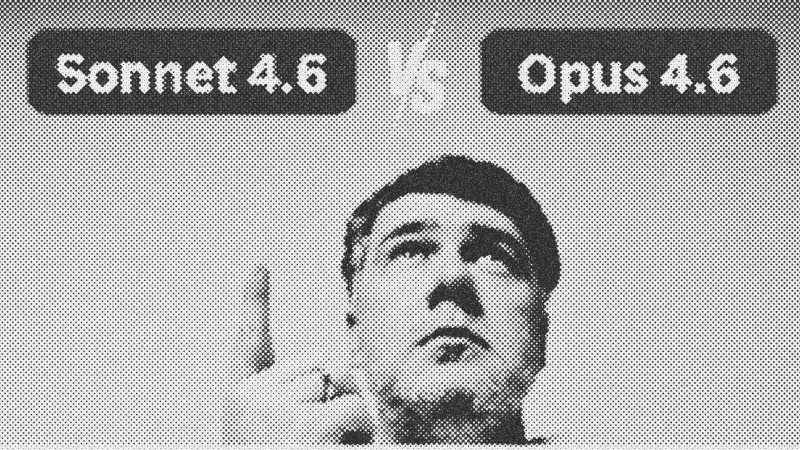
Anthropic recently dropped Sonnet 4.6, a model touted to rival Opus 4.6 in raw intelligence while maintaining the speed advantage of the Sonnet line. To cut through the marketing fluff, I ran both models through a rigorous battery of tests across seven Laravel projects, including React, Vue, and Livewire starter kits. The results reveal a fascinating trade-off between speed-to-market and deep architectural adherence.
Performance Metrics: Speed and Token Economy
The data paints a clear picture of operational efficiency. Running all seven tasks took 39 minutes with Opus, while Sonnet finished in just 26 minutes. More importantly, the token usage disparity is massive. On a Claude Max plan, Opus consumed 37% of the session limit compared to Sonnet's much leaner profile. If you are building rapidly or working within tight API budgets, Sonnet presents a compelling economic case without sacrificing core functionality.
Code Quality: Cutting Corners vs Best Practices
While both models produced working code, their philosophies differ. Opus functions like a senior architect; it implemented the latest Inertia.js features and object-oriented validation rules. Sonnet, conversely, occasionally "cut corners" by using older, string-based validation syntax. However, Sonnet unexpectedly outperformed Opus in UI implementation. It integrated Flux library components and icons more effectively, whereas Opus often defaulted to standard Tailwind CSS tables.
Final Verdict: Choosing Your Daily Driver
For 95% of standard development tasks—CRUD generation, UI styling, and routine refactoring—Sonnet 4.6 is the clear winner. It is faster, cheaper, and its "short-cuts" rarely impact the final product's viability. Reserve Opus 4.6 for high-complexity architectural shifts or mission-critical debugging where you need a model that consults the latest documentation rather than relying on its first instinct.
I Tested New Sonnet 4.6 vs Opus 4.6: Speed, Token Usage, Code Quality
WatchAI Coding Daily // 12:35

This channel is not for vibe-coders. It's for professional devs who want to use AI as powerful assistant, while still keeping the control of their codebase. My name is Povilas Korop, and I'm passionate about coding with AI. So I started this THIRD YouTube channel, in addition to my other ones Laravel Daily and Filament Daily. You will see a lot of my experiments with AI: I will try new things and share my discoveries along the way.