Modern AI Security Audits: Prompt Engineering for Secure Codebases
The Shift to AI-Powered Security Audits
Automated security scanning traditionally relied on rigid, deterministic tools that flagged patterns based on pre-defined rules. However, the emergence of Claude Code has introduced a more dynamic approach. By utilizing the Claude 3.5 Sonnet model, developers can now perform high-level security reviews through natural language. This methodology doesn't just look for syntax errors; it attempts to understand the flow of data, much like a human auditor would during a peer review.
Custom Scrapers vs. General Prompts
A common starting point for many developers is creating a specialized command. For Laravel projects, a custom audit script might specifically target CSRF protection in Blade templates or check for mass assignment vulnerabilities in models. While these targeted prompts provide consistent results for framework-specific nuances, they can sometimes suffer from "tunnel vision." By focusing only on known patterns, they might miss broader architectural flaws that a more generalized prompt would catch.
The Power of Vague Inquiry
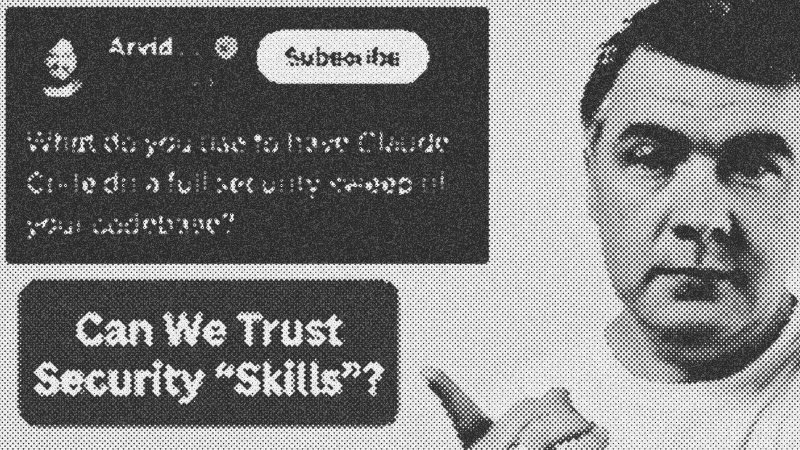
Interestingly, a broad prompt—like the one popularized by Arvid Kahl—can often outperform a hyper-specific one. When given a vague instruction to perform an OWASP security scan, Claude Code initiates parallel sub-agents to explore the codebase from multiple angles. This lateral thinking recently surfaced a stored XSS vulnerability in a JSON-encoded structured data field—a flaw that a more rigid, framework-specific scanner had overlooked. It proves that allowing the AI more creative agency can lead to discovering non-obvious attack vectors.
Embracing Non-Deterministic Results
The most critical takeaway for any developer using AI for security is that results are non-deterministic. Running the exact same prompt twice can yield different findings. In one test, an initial scan found six issues, while a subsequent run flagged only two. To mitigate this, practitioners should treat AI audits as an iterative process. Run scans multiple times, vary your prompts, and always supplement AI findings with deterministic, language-specific security tools to ensure a truly hardened production environment.
- Claude Code
- 25%· products
- Arvid Kahl
- 13%· people
- Blade
- 13%· products
- Claude 3.5 Sonnet
- 13%· products
- CSRF
- 13%· products
- Other topics
- 25%
I Tried Security Audit Code Review Skills/Prompts in Claude Code
WatchAI Coding Daily // 8:31

This channel is not for vibe-coders. It's for professional devs who want to use AI as powerful assistant, while still keeping the control of their codebase. My name is Povilas Korop, and I'm passionate about coding with AI. So I started this THIRD YouTube channel, in addition to my other ones Laravel Daily and Filament Daily. You will see a lot of my experiments with AI: I will try new things and share my discoveries along the way.