Zinman says software TAM will grow 100x despite SaaS market bloodbath
The public markets are currently treating the software sector like a terminal patient, but Eran Zinman isn't interested in the funeral rites. As the co-CEO of monday.com, Zinman has watched his company’s valuation compress even as fundamentals remain resilient. The disconnect between business operation and market sentiment has birthed a series of doomsday prophecies: that AI will allow everyone to build their own software, that foundation models will swallow the application layer, and that agents will render interaction platforms obsolete. Zinman dismisses the noise, arguing that we are entering the most aggressive growth phase in the history of technology.
Death of the seat-based economy
The most structural threat to the legacy SaaS model isn't just the existence of AI, but the collapse of the headcount-linked pricing model. For twenty-five years, software value was tethered to the number of human beings clicking buttons. If AI can perform 80% of the work previously done by humans, the traditional per-seat license becomes a liability for the vendor and a resentment for the customer. monday.com is currently navigating a pivot toward consumption-based pricing, acknowledging that value must be tied to output rather than payroll size. This shift is radical. It requires a total re-engineering of the go-to-market strategy, the product interface, and the revenue recognition models that investors use to judge health.
Critics argue that moving away from seats will cannibalize revenue, but this perspective ignores the massive expansion of the Total Addressable Market. Zinman contends that while headcount spend might decrease, software spend as a percentage of corporate budgets will skyrocket. Companies that currently spend 8% of their budget on software and 70% on humans will see those ratios invert. The opportunity isn't about protecting the existing $1.3 billion in revenue; it’s about capturing a piece of a market that is set to expand by two orders of magnitude as software moves from being a tool for tracking work to a tool for doing the work.
Vibe coding and the illusion of simplicity
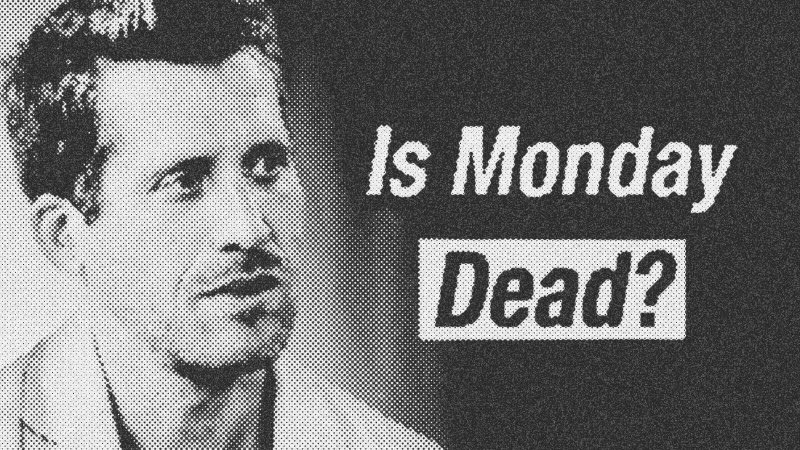
The concept of "vibe coding"—the idea that non-technical users can simply describe a software requirement to an AI and have it perfectly manifest—has become a viral existential threat. When a journalist built a functional clone of monday.com in a few hours using AI, it sent a shockwave through the investor community. Zinman views this as a fundamental misunderstanding of what makes enterprise software valuable. There is a massive delta between generating a user interface and maintaining a scalable, collaborative, and secure infrastructure that works across a ten-thousand-person organization.
Building the first 10% of a tool is easy; maintaining the remaining 90% through years of organizational change is where the value lies. While consumer-grade apps might be vulnerable to this democratization of development, enterprise environments demand a level of cohesion that fragmented, self-coded tools cannot provide. monday.com is positioning itself not as a tool that can be replaced by a vibe-coded script, but as the underlying operating system where those agents and scripts are orchestrated. The goal is to move from being a system of record to a system of action, where the complexity is managed in the background while the user focuses on the strategy.
Why the model companies won't kill the apps
A persistent fear in the VC world is that OpenAI, Anthropic, and Google will move up the stack and render application companies like Salesforce or monday.com irrelevant. History suggests otherwise. Zinman points to the early days of AWS, when skeptics predicted Amazon would capture all enterprise value because they owned the infrastructure. Instead, the ease of infrastructure created a boom in application development. The model providers are focused on the massive opportunity of being the "backbone" of intelligence. Selling, implementing, and supporting complex enterprise software requires a completely different DNA—a sales-heavy, handheld process that model companies are ill-equipped to execute at scale.
Furthermore, intelligence without context is useless. An LLM is brilliant but blind to the specific, undocumented strategies and workflows that live within a company's walls. The application layer provides that context. monday.com sees its future as the bridge between raw intelligence and the specific context of a business. By being the horizontal platform where humans and agents collaborate, they capture the data that makes the AI effective. The model providers might provide the engine, but the application layer provides the fuel and the steering wheel.
Playing offense in a defensive market
While most SaaS companies are cutting headcount and hunkerng down to survive the "SaaS Apocalypse," monday.com is maintaining a mid-teens headcount growth. This decision seems paradoxical to some, but Zinman views it as an offensive necessity. You cannot capture a 100x TAM expansion by playing defense. The company is aggressively integrating AI into its own internal operations—replacing its 100-person SDR team with agents and automating its customer support—not to reduce the total number of employees, but to reallocate human talent toward the high-leverage tasks of building the next generation of the product.
Internal morale during a 60% stock drawdown is a management hurdle, but Zinman uses the low valuation as a psychological reset. When the market prices your company at a level that implies the business is worth nearly zero after accounting for cash, the only response is to go "all in." This involves taking big, calculated risks on vertical offerings like CRM and Service, and betting the entire platform on an agentic future. The companies that emerge from this cycle as winners will be those that didn't just survive the transition, but used the chaos to rewrite the rules of their industry. For monday.com, the objective is to move past the era of being a work management tool and become the essential orchestration layer for a world where agents do the majority of the heavy lifting.
- monday.com
- 35%· companies
- AI
- 9%· products
- Amazon
- 4%· companies
- Anthropic
- 4%· companies
- AWS
- 4%· products
- Other topics
- 43%
Monday.com CEO on Is SaaS Dead: Will Everything Be Vibe Coded | Eran Zinman
Watch20VC with Harry Stebbings // 1:14:17

20VC, hosted by Harry Stebbings, takes you inside the world of Venture Capital, Startup Funding and The Pitch. Join Harry and discover how you can attain funding for your business by listening to what the most prominent investors are directly looking for in startups, providing easily actionable tips and tricks that can be put in place to increase your chances of getting funded. The Twenty Minute VC also provides an instructional guide as to what it takes to get employed in the Venture Capital industry, with VCs giving specific advice on how to get noticed from the crowd and increasing your chances of employment. Our amazing Venture Capitalists also provide their analysis of the current technology market, providing advice and suggestions on the latest investing trends and predictions. Join us so you can see how you can get big, powerful improvements, fast.