The Dislocation of Success: Why Identity and Vulnerability Drive the Ultimate Growth Model
The Success Mirage: When Achievement Outpaces Happiness
Many entrepreneurs operate under a fundamental misconception that happiness and success move in a perfectly linear, parallel trajectory. We tell ourselves that once we hit the exit, close the round, or secure the landmark deal, we will finally achieve a state of inner peace. Scott Braun, known to the world as Scooter, describes this as a profound dislocation. At 27, Braun surpassed his lifetime financial goal—a number he thought would take until age 50 to reach—and found himself hit with a wave of depression within thirty seconds of the realization.
This phenomenon isn't a glitch; it's a feature of the high-performance mindset. When your identity is entirely tethered to the result, the arrival at the destination feels hollow because the process of building was actually a form of avoidance. You aren't building a company; you are building a wall between your true self and the world. The lesson for founders is brutal: financial success only grants you the liberty to stop worrying about the mortgage so you can finally do the self-work you've been avoiding. Success is not the end of the struggle; it is the acquisition of better tools to deal with the inherent messiness of being human.
The Mask of the Mogul: Identity vs. Brand
There is a specific danger in the startup world of becoming the brand you've created. Whether it is the 'aggressive VC,' the 'visionary founder,' or the 'disruptor,' these masks serve a purpose during the early grind. They provide a sense of armor against a market that wants to see you fail. However, Scott Braun highlights a critical turning point where the brand, 'Scooter,' began to consume the person, 'Scott.' This occurs when we start to believe our own press releases. We become terrified of vulnerability because we think the mask is what people love, rather than the person who built it.
In reality, the 'messy' version of you—the one filled with fear, frustration, and history—is the one that actually possesses the strength to build the empire. When you hide behind the mask of achievement, you alienate the very people you are trying to lead and invest in. True authority comes from the courage to show up without the achievements as a crutch. If you can't be loved without the balance sheet, you haven't actually built anything sustainable. You've just bought an audience.
Harmonic Growth: Beyond the Fallacy of Balance
We need to kill the concept of work-life balance. It implies a zero-sum game where one side must lose for the other to win. Jeff Bezos offers a far more effective framework: harmonization. Instead of trying to keep your professional and personal lives in separate, competing silos, you must make them transparent to one another. If you are passionate about your startup, your children and friends should know why. If your family needs you, your board and employees should understand that they come first.
This transparency removes the cognitive load of living two lives. It also prevents the resentment that builds when you feel like you are 'sacrificing' for one at the expense of the other. The most effective leaders don't just work hard; they integrate their mission into their identity so that the energy from one fuels the other. When Scott Braun stopped trying to project the image of the 'perfect life' and started being honest about his turmoil during his divorce, his relationships with his children and his business partners actually deepened. Authenticity is the ultimate scalability hack.
The Surrender Experiment: Influence Over Control
Entrepreneurs are notoriously bad at faith because we are addicted to the illusion of control. We believe that if we stay up later, push harder, and micromanage every variable, we can manifest a specific outcome. But as Scott Braun notes, while we can participate in and influence the game, we do not control the board. This is a terrifying realization for someone who has built their life on 'the grind.'
Surrendering control isn't about giving up; it's about recognizing the limits of your agency. It's the difference between a basketball player practicing their shot (influence) and trying to control the wind (illusion). When you stop trying to force the universe to move at your speed, you actually become more observant. you see the opportunities you were too busy 'controlling' to notice. This shift from control to faith is the final evolution of a great leader. It allows you to move with the market rather than fighting it, leveraging the momentum of the universe rather than relying solely on your own depleted battery.
Actionable Practices for Radical Self-Awareness
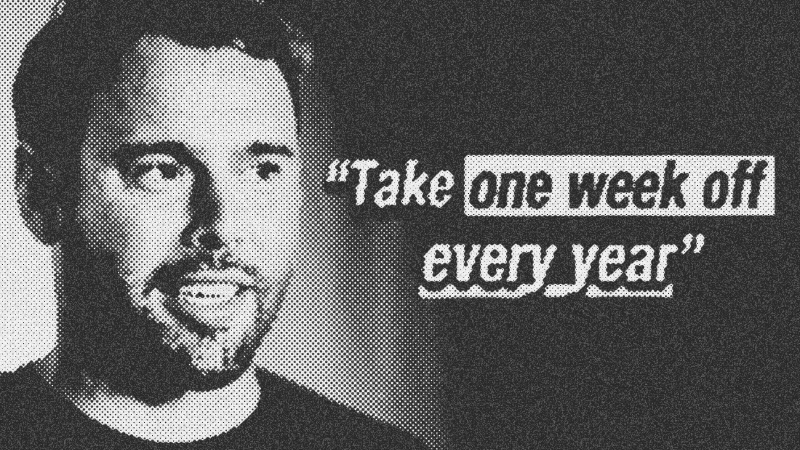
To avoid the 'Rock Bottom' catalyst, you must build intentional friction into your life. The high-performance world is designed to keep you moving so fast that you never have to look at the abyss. Scott Braun advocates for a radical practice: one week a year, no phone, no email, focused entirely on self-work. Whether it is the Hoffman Process or a silent retreat, the goal is to sit with the version of yourself that doesn't have a title or a bank account.
Additionally, examine your 'result-based' feelings. If your pride is only triggered by wins, you are training yourself to be a transactional human. Start practicing unconditional self-approval. This doesn't mean becoming complacent; it means decoupling your worth from your latest KPI. When you show up to a pitch or a board meeting already knowing you are 'enough,' you aren't desperate for their approval. That lack of desperation is precisely what makes you a formidable negotiator and a magnetic leader.
Mindset Shift: From Transactional to Relational
The ultimate goal of the entrepreneur isn't just to win; it's to win in a way that allows everyone involved to win. This is the David Geffen school of thought: in a hundred years, nobody will remember your name, so why carry the ego? When you shift from a transactional mindset—where you are constantly litigating the past or fearing the future—to a relational one, your quality of life skyrockets. You stop seeing people as tools for your achievement and start seeing them as partners in a journey. This is how you build a legacy that outlasts your involvement. It’s about impact, presence, and the courage to be seen as you truly are: a mess that is capable of greatness.
- Scott Braun
- 24%· people
- Amazon
- 5%· companies
- Ariana Grande
- 5%· people
- Ashton Kutcher
- 5%· people
- Daniel Eck
- 5%· people
- Other topics
- 57%
Scooter Braun on Being Enough, Insecurity, Wealth, Investing, Fame, Marriage and Much More
Watch20VC with Harry Stebbings // 1:42:20

20VC, hosted by Harry Stebbings, takes you inside the world of Venture Capital, Startup Funding and The Pitch. Join Harry and discover how you can attain funding for your business by listening to what the most prominent investors are directly looking for in startups, providing easily actionable tips and tricks that can be put in place to increase your chances of getting funded. The Twenty Minute VC also provides an instructional guide as to what it takes to get employed in the Venture Capital industry, with VCs giving specific advice on how to get noticed from the crowd and increasing your chances of employment. Our amazing Venture Capitalists also provide their analysis of the current technology market, providing advice and suggestions on the latest investing trends and predictions. Join us so you can see how you can get big, powerful improvements, fast.