Andrew Dudum says Hims cut GLP-1 prices by 80% in 18 months
The Public Market as a High-Octane Growth Engine
Most founders view the public markets as a necessary evil or a final exit, a place where innovation goes to die under the weight of quarterly earnings calls. Andrew Dudum, the visionary behind Hims & Hers, takes the opposite stance. He argues that the public markets are actually more fun and productive than staying private. Why? Because the public market is a 90-day bootcamp. It forces a level of predictability and consistency that private companies rarely achieve.
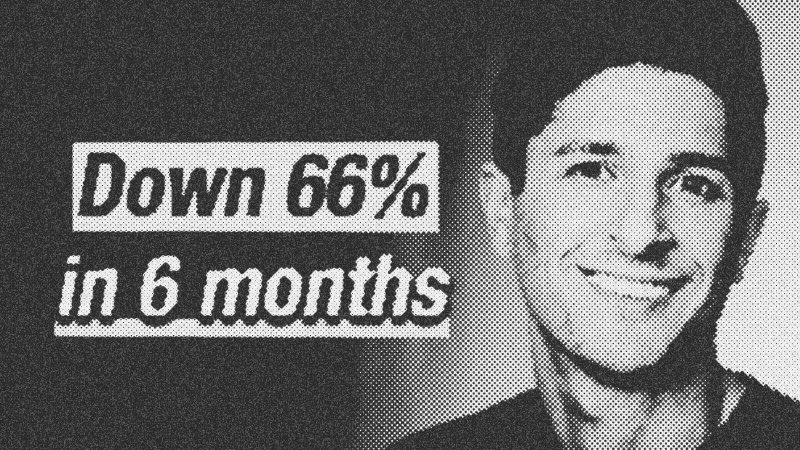
When a company is private, it is easy to get cozy. You have venture capitalists who might get stressed, but the external pressure is buffered. In the public arena, you are forced to deliver on high benchmarks every three months. This environment attracts a specific breed of talent—people who want to see a ten-year vision backed by concrete, quarter-to-quarter evidence of progress. Dudum points to tech titans like Google, Facebook, Apple, and Amazon, all of which went public within their first few years. For Hims, which went public just 36 months after launch, the transition served as a catalyst to figure out growth, efficiency, and narrative-building at an accelerated pace.
Hiring for Grit Over Credentials
In the journey of scaling a disruptive business, the temptation is to hire "credentialed" executives from established tech giants. Dudum warns that this is a fatal mistake. To disrupt an industry as entrenched as healthcare, you don't need strategy consultants; you need builders who have survived chaos.
The Hims leadership team is a testament to this philosophy. CFO Yemi Okupe (Yi) was a divisional CFO at Uber when the business vanished overnight due to the pandemic. The Chief Product Officer was at Robinhood during the GameStop short squeeze. Dudum actively seeks out "grit"—people who are comfortable being uncomfortable.
This leadership philosophy extends to the CEO role itself. Dudum believes a founder must replace themselves every twelve months. To scale, you must hire people smarter than you in every functional area. If you are afraid to hire someone better than you because you fear losing your purpose, you will fail. The goal is to move yourself to the highest-leverage focus area while trusting a team of gritty operators to handle the tactical execution.
Breaking the Paternalistic Healthcare Model
The American healthcare system is fundamentally paternalistic and convoluted. It relies on a complex web of PBMs, insurance reimbursements, and opaque pricing. Dudum is not interested in building a direct-to-consumer (DTC) company; he is interested in breaking the distribution model of healthcare entirely.
By moving healthcare through consumer channels, Hims introduces price transparency, on-demand access, and customer choice—elements that exist in every other modern industry but are conspicuously absent from medicine. The recent explosion in GLP-1 weight loss treatments serves as the perfect case study. In just 18 months, Hims helped drive the cost of these blockbuster drugs down by 80%, from $2,000 to roughly $150 cash-pay prices. This wasn't just a market shift; it was a result of applying massive regulatory and consumer pressure to traditional pharmaceutical distribution.
The Venture Incubator Strategy
While the headlines often pigeonhole Hims as an "ED business" or a "weight loss business," the internal reality is that of a venture incubator. Dudum runs the company as a portfolio of bets across a dozen different clinical categories. Each category functions as an independent business unit with its own customer segments and growth trajectories.
This modular approach allows Hims to be "patient to market" rather than just "first to market." Dudum emphasizes that being the best is more important than being the first. For new categories like peptides—specifically BPC-157 or TB-500—Hims waits until clinical protocols and supply chains are bulletproof before launching. The objective is to build a brand that signifies safety and quality so that when a product finally hits the platform, the trust is already established.
Artificial Intelligence and Physical Moats
In an era where OpenAI and Anthropic are threatening to commoditize information, Dudum remains bullish on the defensibility of physical infrastructure. Hims operates a million square feet of pharmacy fulfillment and employs hundreds of pharmacists and doctors. AI cannot ship medication or provide licensed oversight in all fifty states.
However, Hims is aggressively pushing AI into every other function. In marketing, AI allows the same team to deliver four times the creative output, iterating on thousands of variations of ads with minimal cost. On the clinical side, AI serves as an "intelligent brain" that helps standardize care across thousands of doctors, improving both efficiency and quality. While ChatGPT might expand the "top of the funnel" for health inquiries, Hims provides the specialized fulfillment that AI lacks.
Preventative Health as the Ultimate Loss Leader
The future of Hims lies in moving from reactive treatments to proactive prevention. Dudum envisions a "preventative front door" that is nearly free for members. The company recently acquired YourBio Health, which produces a painless at-home blood collection device.
By verticalizing lab processing and owning the hardware, Hims plans to offer sophisticated biomarker panels—testing for genetic predispositions like Lipoprotein a—at cost or for free. The philosophy is simple: information is the loss leader; treatment and long-term partnership are the business. If Hims can tell a 30-year-old they have a high genetic risk for heart disease, they become a trusted partner for the next four decades of that patient's life. This alignment of incentives—where the company only makes money if the patient stays healthy and happy—is the ultimate disruption to a system that currently profits from sickness.
- Amazon
- 4%· companies
- Andrew Dudum
- 4%· people
- Anthropic
- 4%· companies
- Apple
- 4%· companies
- BPC-157
- 4%· products
- Other topics
- 80%
How Hims & Hers Reached a $4.3BN Market Cap on $2.3BN of Revenue | Andrew Dudum
Watch20VC with Harry Stebbings // 1:03:41

20VC, hosted by Harry Stebbings, takes you inside the world of Venture Capital, Startup Funding and The Pitch. Join Harry and discover how you can attain funding for your business by listening to what the most prominent investors are directly looking for in startups, providing easily actionable tips and tricks that can be put in place to increase your chances of getting funded. The Twenty Minute VC also provides an instructional guide as to what it takes to get employed in the Venture Capital industry, with VCs giving specific advice on how to get noticed from the crowd and increasing your chances of employment. Our amazing Venture Capitalists also provide their analysis of the current technology market, providing advice and suggestions on the latest investing trends and predictions. Join us so you can see how you can get big, powerful improvements, fast.