The Lion and the Delivery Rider: A Lesson in Radical Human Connection
In the hyper-efficient corridors of Dubai, the city’s pulse is dictated by the hum of delivery motorbikes. These riders are the invisible sinews of the metropolis, navigating sweltering heat and unforgiving traffic to keep the wheels of commerce turning. Yet, for many of these men, the road is a monotonous loop of survival, far removed from the luxury they service. This was the reality for Waqar Akmal, a Pakistani expat who had spent four years away from his family, grinding out a living to send every spare dirham home to his mother and younger brothers. His world was defined by the handlebars of a bike and the blue light of a delivery app until a single, unexpected interaction shattered the routine.
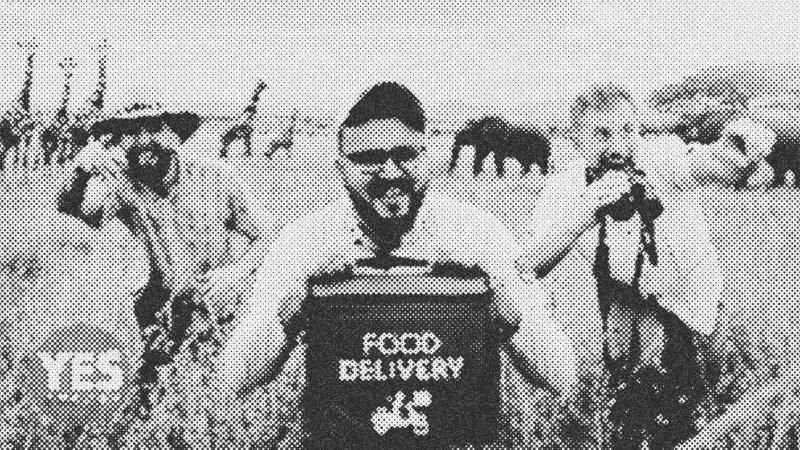
Staffan Taylor and the Yes Theory team, fresh from the rugged landscapes of Mongolia, sought to revive their founding ethos: the pursuit of the unknown through the eyes of a stranger. They began ordering food, not for sustenance, but for a connection. When Waqar arrived with a delivery of coconut water, he didn't just deliver a beverage; he brought a quiet resilience that resonated with the team. When asked if he wanted to step away from his bike and into an adventure of a lifetime, his answer was simple, rooted in a faith that transcends the logic of risk: "Allah told me to go."
The Friction of Global Borders
The transition from the streets of Dubai to the wilderness of Kenya was not merely a flight; it was a battle against the systemic frictions of the modern world. Survival, as I’ve learned in the most remote corners of the globe, often depends on navigating bureaucracy as much as it does navigating terrain. As the team attempted to depart, they hit a wall. Waqar’s employer, sensing an opportunity for exploitation, attempted to block his exit, demanding a ransom of $2,000 USD to let him travel. This was a stark reminder that for many, the "freedom to explore" is a luxury gated by those who control their livelihood.
While Staffan Taylor pleaded with immigration officials in a high-stakes race against the closing gate, another tragedy of modern travel unfolded. Waqar’s brother, whom the team had arranged to fly from Pakistan, was denied boarding in Lahore despite having perfect documentation. This is the reality of passport privilege. A Pakistani passport is currently ranked as one of the weakest in the world, creating a barrier that no amount of preparation can always overcome. The team faced a choice: succumb to the frustration or push forward. They chose the latter, sprinting through the terminal and boarding the plane with seconds to spare, leaving the baggage of the city behind for the raw truth of the savannah.
Descent into the Great Rift Valley
Landing in the Maasai Mara is a sensory assault. The air changes, carrying the scent of dry grass and ancient earth. To further elevate the experience for a man who had only ever known the struggle of the road, the team transitioned from commercial travel to a private plane. For Waqar, the sight of a cabin where seats swivel 360 degrees was as alien as the landscape below. This wasn't just about luxury; it was about the psychological shift from being a cog in a machine to being the protagonist of an epic.
They arrived at Angama Mara, a lodge suspended on the rim of the Great Rift Valley. In my expeditions, I have rarely seen a location that so perfectly balances human comfort with the terrifying proximity of the wild. There are no fences here. The animals have the right of passage, a fact that Ken, their guide, made clear with stories of lions taking down zebras within the lodge perimeter. For a man who had spent four years fearing traffic accidents, the new fear of a buffalo or elephant wandering past his bedroom door was a profound, almost spiritual, realignment of his place in the natural order.
Face to Face with the King
The objective of the expedition was clear: find the lion. For Waqar, the lion represented a dream nurtured by years of watching National Geographic, a symbol of power and freedom that stood in total opposition to his life as a delivery driver. The Maasai Mara delivered with brutal efficiency. From the vantage point of their safari vehicle, they witnessed the chaotic symphony of the plains—the goofy dance of cranes, the prehistoric weight of rhinos, and the territorial disputes of hippos in the river.
Then, they found them. A lion and a lioness, resting in the golden grass just meters from the vehicle. The silence that fell over the group was heavy. For Waqar, the moment was overwhelming. Seeing the apex predator of the African bush unbothered by their presence broke something open in him. It wasn't just the animal; it was the realization that he was there, standing on the soil of a continent he never thought he’d see, having survived the bureaucracy of Dubai and the exhaustion of his job to reach this pinnacle of human experience.
The Spirit of the Maasai and the Path Home
Wilderness survival is often about the physical, but true exploration is about the soul. On their final night, the Maasai people performed a traditional dance for the group. The rhythmic jumping and chanting served as a bridge between cultures, a reminder that despite the differences in our passports or our bank accounts, the human spirit speaks a universal language of celebration and community. Thomas Brag and the team utilized their "Spark" conversation cards to delve into the deeper layers of Waqar’s journey, revealing a man who, despite his own hardships, only wished to help others.
As the firelight flickered against the darkness of the Mara, the team delivered the final, most important surprise. They recognized that while a safari is a once-in-a-lifetime event, the true void in Waqar’s life was his four-year separation from his family. They announced they would be sending him home to Pakistan to reunite with his mother and brothers. The expedition ended not with a trophy or a summit, but with the restoration of a man’s connection to his roots. In the wilderness, we often find what we have lost in the city; for Waqar, he found his dignity, his brothers in spirit, and finally, a way back to the people who matter most.
- Maasai Mara
- 12%· places
- Pakistan
- 12%· places
- Staffan Taylor
- 12%· people
- Angama Mara
- 6%· companies
- Dubai
- 6%· places
- Other topics
- 53%
We Took Our Food Delivery Man on His First Vacation
WatchYes Theory // 45:33

We believe that life's greatest moments and deepest connections exist outside your comfort zone. Brand Partnerships: [email protected] Fan Emails: [email protected] Seek Discomfort: https://www.seekdiscomfort.com