Rules as a Weapon: How American Magic Revived Two-Boat Testing
The Death and Rebirth of Two-Boat Testing
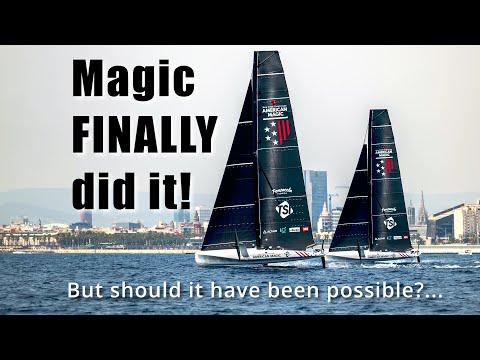
In the high-stakes world of the America's Cup, information is the only currency that matters. For years, organizers banned two-boat testing to curb runaway spending. The goal was simple: force teams to rely on simulation and single-hull data to level the playing field. However, American Magic just shattered that status quo in Barcelona. By deploying two AC40 yachts for side-by-side tuning runs, they have effectively brought back the most powerful development tool in sailing history.
Exploiting the LEQ12 Loophole
The technical backbone of this maneuver lies in the LEQ12 regulations—rules governing boats "less than or equal to 12 meters." These hulls are designated test platforms where engineers can experiment with proprietary foils, masts, and electronics. While the rules limit the number of custom components a team can build, American Magic realized they could split their equipment quota across multiple "in-class" AC40 hulls.
The Gray Area: In-Class Modifications
American Magic utilized a specific, obscure section of the AC40 class rules regarding "in-class modifications." These regulations allow teams to make changes that keep a boat within its class identity but render it "not race legal." This distinction is critical. It allows the team to mount LEQ12 test equipment on more than one hull without those hulls being reclassified as entirely new, restricted test boats. It is a masterclass in regulatory interpretation that provides a massive data advantage over teams like Luna Rossa Prada Pirelli who may have committed to a different developmental path.
Strategic Implications for AC37
This isn't just a technical win; it's a psychological one. While the AC40 was marketed as a cost-saving measure to invite youth and women into the sport, it has become a tactical shield for the best-funded programs. Teams that only purchased a single AC40 or focused early on proprietary LEQ12 builds are now at a disadvantage. They must hunt for speed in isolation while American Magic validates every minor adjustment against a real-world benchmark on the water.
- AC40
- 33%· products
- American Magic
- 27%· companies
- LEQ12
- 20%· products
- America's Cup
- 7%· companies
- Barcelona
- 7%· places
- Luna Rossa Prada Pirelli
- 7%· companies
It's official: TWO-BOAT testing underway
WatchTHE FOIL // 7:10

The Foil is a new wave of racing media. We are a fresh, all-new, proudly independent digital media brand dedicated to the sport of sail racing. Our focus is centred around the major peaks of the international sport: SailGP, the America’s Cup and the Olympic Games, plus offshore classes and events, and the diverse wider world of sailing competitions that take place around the globe. Become a member now: https://www.youtube.com/@WeAreTheFoil/join