The High-Stakes Arms Race: Tactical Shifts in America’s Cup Foil Design
Evolution of the Foil Architecture
In the high-stakes theater of the America's Cup, victory is won in the design office long before the first starting gun. We are seeing a massive divergence in design philosophy as teams move into their second and third iterations of test foils. While Emirates Team New Zealand sticks to a refined, sleek banana-radius profile that minimizes drag through sheer simplicity, other teams are making aggressive moves into complex, modular builds. This isn't just about making the boat go fast; it’s about controlling how the water behaves at the absolute limit of physics.
The Strategic Utility of the Spat
A critical tactical development is the emergence of the "spat"—a fairing located on the foil arm stock. Both American Magic and INEOS Britannia are experimenting with these massive fairings. From a coaching perspective, this is a masterful move in mass management. By housing actuation systems and lead weight in the foil arm rather than the bulb, teams reduce the volume of the components actually submersed in the water. This trade-off is calculated: you sacrifice a bit of righting moment leverage to gain a massive reduction in hydrodynamic drag. It’s a classic case of prioritizing efficiency over raw power.
Pressure Management and Intersection Separations
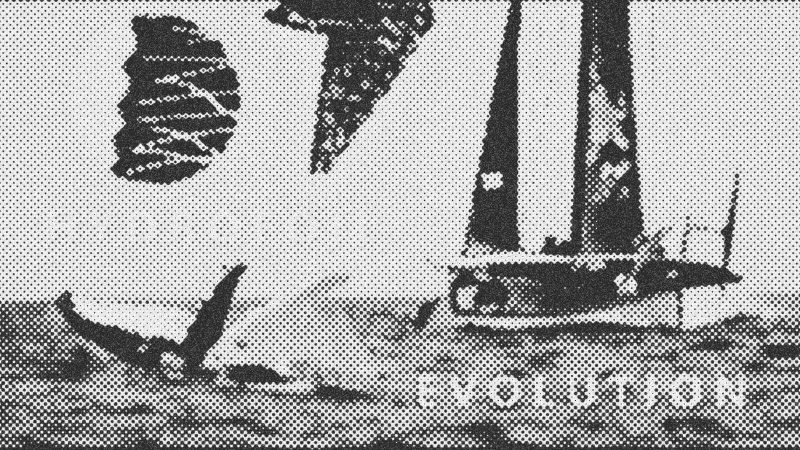
American Magic has shown us a brilliant tactical adjustment in their latest steel-finished foil. Their previous design had a significant overlap between the vertical arm and the horizontal lifting wing. Their new iteration removes this overlap entirely, creating a zero-offset junction. By separating the high-pressure ridge of the vertical arm from the pressure increase of the wing, they prevent these two zones from interfering with one another. This reduces the risk of cavitation and allows the foil to maintain grip during high-speed maneuvers. It shows a team focused on the minute details of balance and stability.
Bio-Mimicry and the Tubercle Gamble
The most radical move comes from Alinghi Red Bull Racing, who recently unveiled a foil featuring tubercles—serrated, wave-like bumps on the leading edge. This design, borrowed from the pectoral fins of humpback whales, is a bold play to delay stall and maintain lift at higher angles of attack. While difficult to manufacture, the strategic benefit is clear: if Alinghi Red Bull Racing can maintain control in tighter turns where other foils would lose flow, they gain a massive tactical advantage on the racecourse. We are seeing a transition from safe, conventional engineering to high-risk, high-reward innovation that could redefine the competitive hierarchy.
- Alinghi Red Bull Racing
- 25%· companies
- American Magic
- 25%· companies
- America's Cup
- 13%· events
- Emirates Team New Zealand
- 13%· companies
- INEOS Britannia
- 13%· companies
- Luna Rossa Prada Pirelli
- 13%· companies
Revolution by Evolution: *NEW* Cup foils analysed
WatchTHE FOIL // 19:04

The Foil is a new wave of racing media. We are a fresh, all-new, proudly independent digital media brand dedicated to the sport of sail racing. Our focus is centred around the major peaks of the international sport: SailGP, the America’s Cup and the Olympic Games, plus offshore classes and events, and the diverse wider world of sailing competitions that take place around the globe. Become a member now: https://www.youtube.com/@WeAreTheFoil/join