Victory Beneath the Surface: The Strategic Engineering of America's Cup Foils
The Rigid Box of Competition
In the America's Cup, victory isn't just won on the water; it is engineered in the design office. The AC75 foil is a masterpiece of constrained innovation. Teams must operate within a strict four-meter span limit and a mandatory symmetry plane. This creates a relentless pressure to find performance through fore and aft area adjustments alone. You don't just build a foil; you navigate a regulatory minefield where every millimeter of surface area must justify its existence in the pursuit of lift.
The Massive Weight of Execution
Strength and strategy collide in the physical mass of the equipment. Each foil arm weighs exactly 921 kilograms. When combined, these foils account for nearly one-third of the boat's total mass. This isn't just ballast; it is a structural necessity that complicates every movement. Because the rules strictly limit teams to six foils and demand a 20% mass distribution limit for modifications, the initial angle of attack becomes a high-stakes gamble. If INEOS Britannia or Emirates Team New Zealand miscalculate that angle, they cannot simply pivot—they must burn a precious development slot on an entirely new set of hardware.
The Single Flap Controversy
Complexity often hides in the fine print of rule interpretations. The standard requirement mandates two separate flaps—one on either side of the symmetry plane—each requiring its own mechanical linkages and actuators. However, a controversial interpretation regarding the "join" between flaps has redefined the competitive landscape. If a team can convince the Rules Committee that their central linkage is part of the control system rather than the foil body, they can consolidate mechanics into a single actuator. This reduces internal volume and drag, providing a decisive edge in the war of marginal gains.
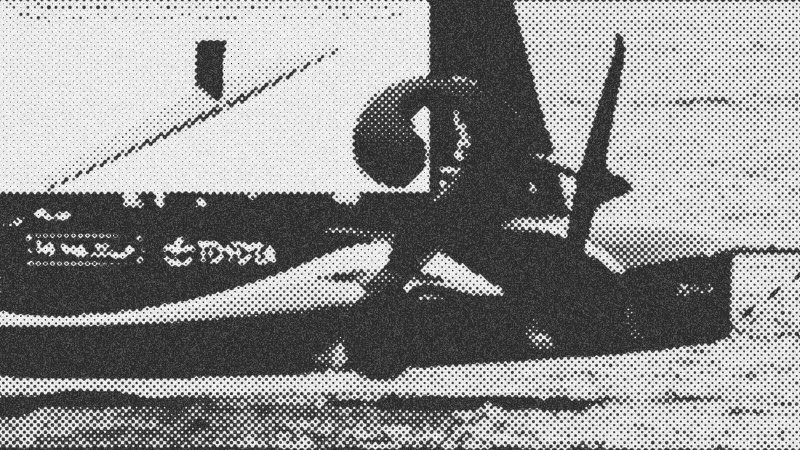
The Pivot of Performance
Reliability is the backbone of resilience. Rules restrict teams to single-pivot articulation, banning the complex double-pivot systems seen on commercial aircraft wings. This forces designers to focus on pure hydrodynamic efficiency without the crutch of extending chord lengths. Success in this arena requires more than just high-end CFD modeling; it demands the courage to commit to a design philosophy that balances material properties, mechanical housing, and the brutal physics of water pressure.
- AC75
- 14%· products
- America's Cup
- 14%· tv shows
- Emirates Team New Zealand
- 14%· companies
- INEOS Britannia
- 14%· companies
- Luna Rossa Prada Pirelli
- 14%· companies
- Other topics
- 29%
America's Cup Foil Problem and the ETNZ Rule Loophole
WatchTHE FOIL // 10:30

The Foil is a new wave of racing media. We are a fresh, all-new, proudly independent digital media brand dedicated to the sport of sail racing. Our focus is centred around the major peaks of the international sport: SailGP, the America’s Cup and the Olympic Games, plus offshore classes and events, and the diverse wider world of sailing competitions that take place around the globe. Become a member now: https://www.youtube.com/@WeAreTheFoil/join