Visual Strategy: Evaluating Multi-Camera Perspectives in High-Performance Sailing
The Quest for the Perfect Training Angle
In high-stakes racing, video review is a cornerstone of player development. If you can't see the mistakes, you can't fix them. Capturing the raw mechanics of an RS800 skiff requires more than just pointing a lens; it demands a tactical choice of perspective. This evaluation pits the traditional boom mount against the controversial head-mounted camera and the rack-view perspective to determine which tool actually builds a better athlete.
The Failure of the Head-Mounted Camera
Despite the popularity of POV footage, the Yi Lite Action Camera fails the team when mounted on the helmet. The results are erratic and visually jarring. In a sport where stability and clear horizon lines dictate strategy, the head cam transmits every micro-adjustment of the sailor's neck. It creates a 'terrible look' that obscures the bigger picture of boat trim and sail shape. For a coach, this footage is nearly useless for technical analysis because it lacks a fixed reference point.
Boom and Rack: The Tactical Superiority
When the GoPro is locked to the boom end, the perspective shifts from chaotic to clinical. This angle provides a stable view of the cockpit and the crew's footwork during critical transitions like the upwind tack. Similarly, the rack-mounted view offers the lateral depth needed to analyze leverage and weight distribution. These fixed points allow for a frame-by-frame breakdown of body mechanics that a wandering head-cam simply cannot match.
Final Verdict for the Modern Coach
Ditch the head-mount if you want real growth. It might feel immersive, but it sacrifices the clarity required for high-performance refinement. Stick to fixed-point cameras like the boom or rack mounts. These perspectives provide the objective data needed to execute perfect gybes and build the mental resilience required to win in low-power conditions. Stability is the foundation of excellence.
- GoPro
- 20%· products
- Hayling Island Sailing Club
- 20%· organizations
- Mozzy Sails
- 20%· organizations
- RS800
- 20%· products
- Yi Lite Action Camera
- 20%· products
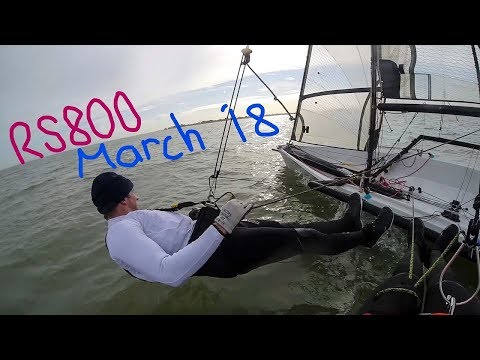
RS800 Sailing: Head cam is always a terrible look!
WatchTHE FOIL // 2:52

The Foil is a new wave of racing media. We are a fresh, all-new, proudly independent digital media brand dedicated to the sport of sail racing. Our focus is centred around the major peaks of the international sport: SailGP, the America’s Cup and the Olympic Games, plus offshore classes and events, and the diverse wider world of sailing competitions that take place around the globe. Become a member now: https://www.youtube.com/@WeAreTheFoil/join